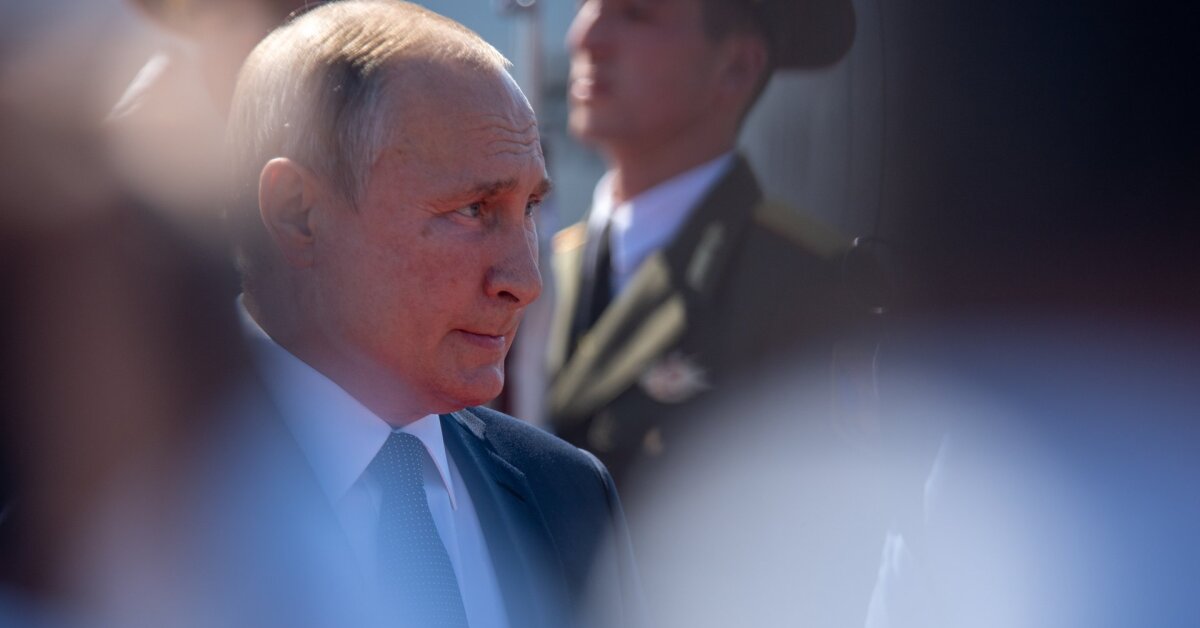
The ongoing conflict in Ukraine has not only reshaped the geopolitical landscape but has also prompted questions about the visibility and security of Russian President Vladimir Putin. Reports suggest a deliberate effort by the Kremlin to obscure Putin’s whereabouts, utilizing a network of decoys and multiple identical office sets. This strategy, revealed by independent investigations, raises concerns about the stability of the Russian leadership and the lengths to which the Kremlin will go to control information.
For over two decades, Vladimir Putin has cultivated an image of strength and control. But, since launching the full-scale invasion of Ukraine in February 2022, his public appearances have become increasingly curated and infrequent, fueling speculation about his health and security. The recent revelations about the existence of multiple “Putin offices” – nearly identical replicas located in Novo-Ogaryovo, Sochi and Valdai – offer a glimpse into the elaborate measures taken to maintain this carefully constructed image and potentially protect the president.
The Kremlin’s Decoy Strategy: Multiple Offices for a Single Leader
According to a detailed investigation by the independent Russian publication “Sistema,” analyzed Kremlin materials, video footage, and state television documents over the past decade, Putin utilizes at least three nearly identical cabinet sets. The primary office is located in his official residence in Novo-Ogaryovo, a sprawling estate outside Moscow. A second is situated in Sochi, at the Bocharov Ruchey residence, and a third in Valdai, Novgorod Oblast. These offices share a strikingly minimalist design – light wood interiors, bare walls devoid of artwork, and a sparse arrangement of items on the desk. This deliberate aesthetic is reportedly designed to focus viewers’ attention on Putin himself during televised broadcasts, minimizing distractions from the surrounding environment.
The first “clone” office reportedly emerged after the 2014 Sochi Winter Olympics. A former press center was transformed into a functional workspace with a representative cabinet. This Sochi location became a frequent backdrop during the COVID-19 pandemic, allowing Putin to maintain a visible presence while potentially minimizing risk. Journalists and camera crews traveling to Sochi were subjected to mandatory two-week quarantines, and their travel documents were often obscured, adding to the secrecy surrounding Putin’s location. The investigation highlights how these measures were implemented to control the narrative and limit independent verification of the president’s activities.
The Valdai office, first identified in 2018, served as the setting for a meeting following the Kemerovo tragedy, a devastating fire in a shopping mall that claimed dozens of lives. While appearing similar to the other offices, subtle differences were noted by journalists. State television employees’ records indicate that filming took place at the Valdai location on multiple occasions, even when official announcements stated Putin was working in Novo-Ogaryovo. For example, in the summer of 2020, while the Kremlin claimed Putin was at Novo-Ogaryovo, camera crews and directors were dispatched to Valdai.
Escalating Secrecy Amidst Rising Tensions
The level of secrecy surrounding Putin’s location intensified in the autumn of 2021, as Russia amassed troops along the Ukrainian border. During this period, Putin reportedly began to “disappear” from public view more frequently, relying heavily on pre-recorded broadcasts and carefully managed appearances. This heightened caution suggests a growing concern within the Kremlin about potential threats to the president’s safety as tensions with the West escalated. The use of decoys and multiple locations became increasingly prevalent, making it difficult to ascertain Putin’s true whereabouts at any given time.
The strategy of employing multiple office sets isn’t simply about physical security. It’s a sophisticated information operation designed to control the narrative and project an image of unwavering control. By creating a series of identical environments, the Kremlin can manipulate the perception of Putin’s activities, making it harder to track his movements and assess his decision-making processes. This tactic also allows the Kremlin to create a buffer between Putin and potential threats, reducing the risk of a direct attack or disruption.
International Reactions and Implications
The revelations about Putin’s decoy strategy have drawn criticism from international observers, who view it as a further indication of the Kremlin’s authoritarian tendencies and its willingness to deceive both its own citizens and the international community. The practice raises questions about the transparency of the Russian government and the reliability of information emanating from official sources.
Ukrainian President Volodymyr Zelenskyy remains open to a meeting with Putin to discuss critical issues, particularly those related to territorial disputes and the safety of the Zaporizhzhia Nuclear Power Plant, as stated on January 29, 2026, according to Delfi. However, the Kremlin has so far shown little interest in such a meeting. Ukrainian Foreign Minister Andriy Sybiha emphasized that Zelenskyy is prepared to address the most sensitive matters directly with Putin, but the lack of a response from Moscow suggests a continued unwillingness to engage in meaningful negotiations. Sybiha also noted that only the United States, and specifically President Donald Trump, currently possesses the leverage to compel Russia to end the war.
Russia is strengthening ties with China, as evidenced by the upcoming meeting between Putin and Chinese President Xi Jinping on May 8, 2025, in Moscow. Kremlin aide Yuri Ushakov announced that the two leaders will discuss the war in Ukraine and relations with the United States. This deepening partnership underscores Russia’s search for alternative alliances in the face of Western sanctions and international isolation. China has positioned itself as a neutral party in the conflict, but Western governments argue that its close ties with Russia provide crucial economic and diplomatic support to Moscow.
The Significance of the Xi Jinping Meeting
The upcoming meeting between Putin and Xi Jinping is particularly significant given the evolving geopolitical landscape. China’s economic and political influence is growing, and its support is vital to Russia’s ability to withstand Western pressure. The discussions are expected to focus on strengthening bilateral cooperation in areas such as trade, energy, and military technology. However, the meeting also comes amid growing concerns about China’s potential role in providing material support to Russia’s war effort. Ukraine has accused China of supplying weapons to Russia, a claim that Beijing has denied.
Looking Ahead: Uncertainty and Continued Secrecy
The Kremlin’s efforts to conceal Putin’s whereabouts and control the flow of information are likely to continue as the conflict in Ukraine drags on. The use of decoys and multiple office sets is a testament to the lengths to which the Russian leadership will go to maintain its grip on power and project an image of strength. The situation underscores the challenges of verifying information from Russia and the importance of independent journalism in holding those in power accountable.
As the war in Ukraine continues, the international community will be closely watching for any signs of a shift in Putin’s strategy or a willingness to engage in meaningful negotiations. However, given the Kremlin’s penchant for secrecy and deception, it remains difficult to predict the future course of events. The next key event to watch will be the outcome of the meeting between Putin and Xi Jinping on May 8th, and the potential impact on the ongoing conflict and broader geopolitical dynamics.
Key Takeaways:
- The Kremlin employs a network of decoy offices to obscure President Putin’s location and control information.
- At least three nearly identical cabinet sets exist in Novo-Ogaryovo, Sochi, and Valdai.
- The strategy has intensified since the start of the war in Ukraine, reflecting growing concerns about Putin’s security.
- International observers criticize the practice as a sign of authoritarianism and a lack of transparency.
- The upcoming meeting between Putin and Xi Jinping will be crucial in shaping the future of Russia’s foreign policy.
The situation remains fluid, and further developments are expected in the coming weeks. We will continue to monitor the situation closely and provide updates as they become available. Share your thoughts on this evolving situation in the comments below.
Keep reading