
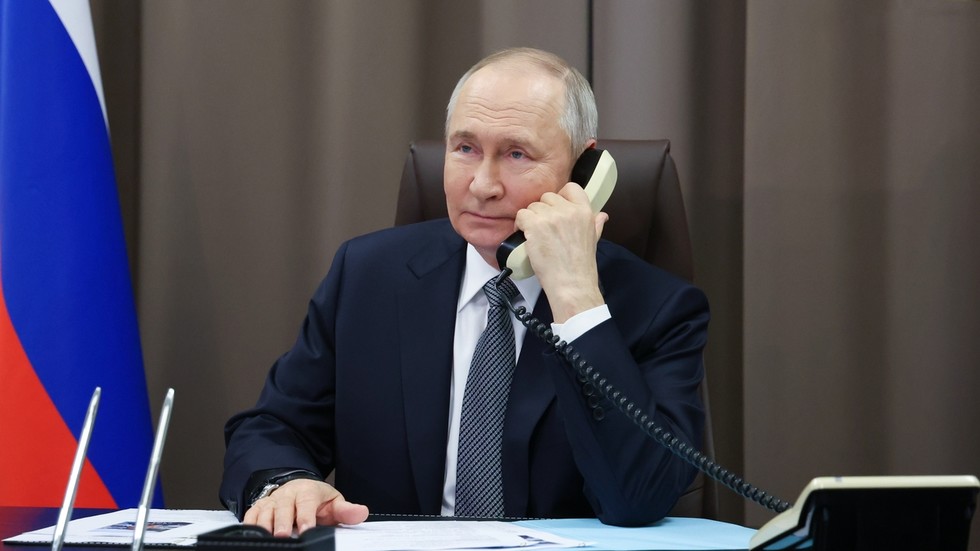
Putin and Trump Discuss Ukraine Conflict and Middle East Tensions
In a phone conversation on Wednesday, Russian President Vladimir Putin and U.S. President Donald Trump discussed the ongoing conflicts in Ukraine and the Middle East, according to a Kremlin aide. The lengthy discussion, initiated by the Russian side, also touched upon a recent attempt on President Trump’s life and the potential for a temporary ceasefire in Ukraine during upcoming Victory Day celebrations. This dialogue occurs amidst continued international efforts to de-escalate both crises and find pathways toward resolution, though significant obstacles remain.
Yury Ushakov, a Kremlin aide, detailed the conversation, stating that Putin expressed his support for Trump following the incident at the White House Correspondents’ Dinner on Saturday. Ushakov emphasized Putin’s strong condemnation of the event, underscoring that “political violence was unacceptable in any form.” This expression of support, whereas seemingly cordial, comes against a backdrop of strained relations between the two nations, marked by accusations of interference and differing geopolitical objectives. The incident at the White House Correspondents’ Dinner, while not detailed in Ushakov’s statement, prompted widespread security concerns and condemnation from across the political spectrum.

The conversation also addressed the escalating tensions in the Middle East, specifically concerning Iran. Putin reportedly backed Trump’s decision to extend a ceasefire with Iran, cautioning against renewed hostilities between the U.S., Israel, and Tehran. Ushakov stated that Putin warned of “inevitable, extremely dire consequences” for the region and the international community should military action be taken against Iran, particularly highlighting the unacceptability of a ground operation within Iranian territory. This stance reflects Russia’s consistent advocacy for de-escalation and diplomatic solutions in the region, and its close ties with Iran. Russia has positioned itself as a potential mediator in the standoff, maintaining contact with all parties involved.
Ukraine Conflict Remains a Central Focus
A significant portion of the call was dedicated to the conflict in Ukraine, with both leaders reportedly expressing “essentially similar assessments of the behavior of the Kiev regime led by [Vladimir] Zelensky,” according to Ushakov. The aide claimed both presidents believe Zelensky’s government is being “incited and supported by Europeans” to prolong the conflict. This characterization, while aligning with Russian narratives, is a contentious point, as Ukraine and its Western allies maintain that Russia is the primary aggressor and that European support is aimed at defending Ukraine’s sovereignty and territorial integrity. The International Institute of Sociology in Kyiv conducted a poll in late January 2026, finding that only 20 percent of Ukrainians believe the war will end by July, while 43 percent expect fighting to continue into 2027 or beyond.
Ushakov indicated that Trump emphasized the importance of a swift cessation of hostilities and pledged U.S. Readiness to facilitate a resolution. He added that U.S. Representatives would continue contacts with both Moscow and Kyiv. This commitment to continued dialogue, however, has been met with skepticism by some observers, given the lack of substantial progress in previous negotiations. The Atlantic Council reported in February 2026 that despite Trump’s initial vow to end the war within 24 hours of returning to office, a lasting peace agreement remains elusive.
During the 90-minute conversation, Putin proposed a temporary ceasefire in Ukraine coinciding with the upcoming Victory Day celebrations on May 9th, commemorating the surrender of Nazi Germany in 1945. Ushakov stated that Trump “actively supported this initiative,” noting the holiday’s significance as a shared victory over Nazism. This proposal, while potentially offering a brief respite from the fighting, raises questions about its long-term implications and whether it would be accompanied by meaningful progress toward a lasting peace agreement. Russia scaled back its annual Victory Day parade in Red Square, stating that no military equipment will be used amid its ongoing invasion of Ukraine.
Easter Truce and Potential for De-escalation
The call also saw Trump praising the recent Easter truce announced by Moscow. This truce, while welcomed by some as a positive step, has been viewed with caution by others, who question Russia’s sincerity and its commitment to a genuine de-escalation. The timing of the truce, coinciding with a major religious holiday, has also raised concerns about potential political motivations. Ukraine announced that its air defenses shot down more than 33,000 Russian drones of various types in March, a new monthly record in the four-year war.

The discussion between Putin and Trump underscores the complex and multifaceted nature of the ongoing conflicts in Ukraine and the Middle East. While both leaders appear to share a desire for de-escalation, significant differences remain regarding the underlying causes of the conflicts and the pathways toward resolution. The role of external actors, particularly European nations, also remains a point of contention, with Russia accusing them of prolonging the conflict in Ukraine. The United Kingdom expelled a Russian diplomat and summoned ambassador Andrey Kelin in response to Moscow’s expulsion of a British diplomat on accusations of spying last month.
The length of the call – over 90 minutes – suggests a degree of seriousness and a willingness on both sides to engage in a substantive dialogue. However, whether this dialogue will translate into concrete progress remains to be seen. The international community will be closely watching for any signs of a breakthrough in the coming weeks and months, as the human cost of these conflicts continues to mount.
Key Takeaways
- Presidents Putin and Trump held a lengthy phone conversation focusing on Ukraine and the Middle East.
- Putin expressed support for Trump following a recent security incident.
- Both leaders reportedly share similar assessments of the situation in Ukraine, blaming external influences for prolonging the conflict.
- Putin proposed a temporary ceasefire in Ukraine during Victory Day celebrations, which Trump reportedly supported.
- The conversation highlights the ongoing challenges in de-escalating both conflicts and finding a path toward lasting peace.
The situation in both Ukraine and the Middle East remains fluid and unpredictable. Further developments are expected in the coming days and weeks, as diplomatic efforts continue and military operations persist. World Today Journal will continue to provide comprehensive and up-to-date coverage of these critical global events. Readers are encouraged to share their perspectives and engage in constructive dialogue in the comments section below.