
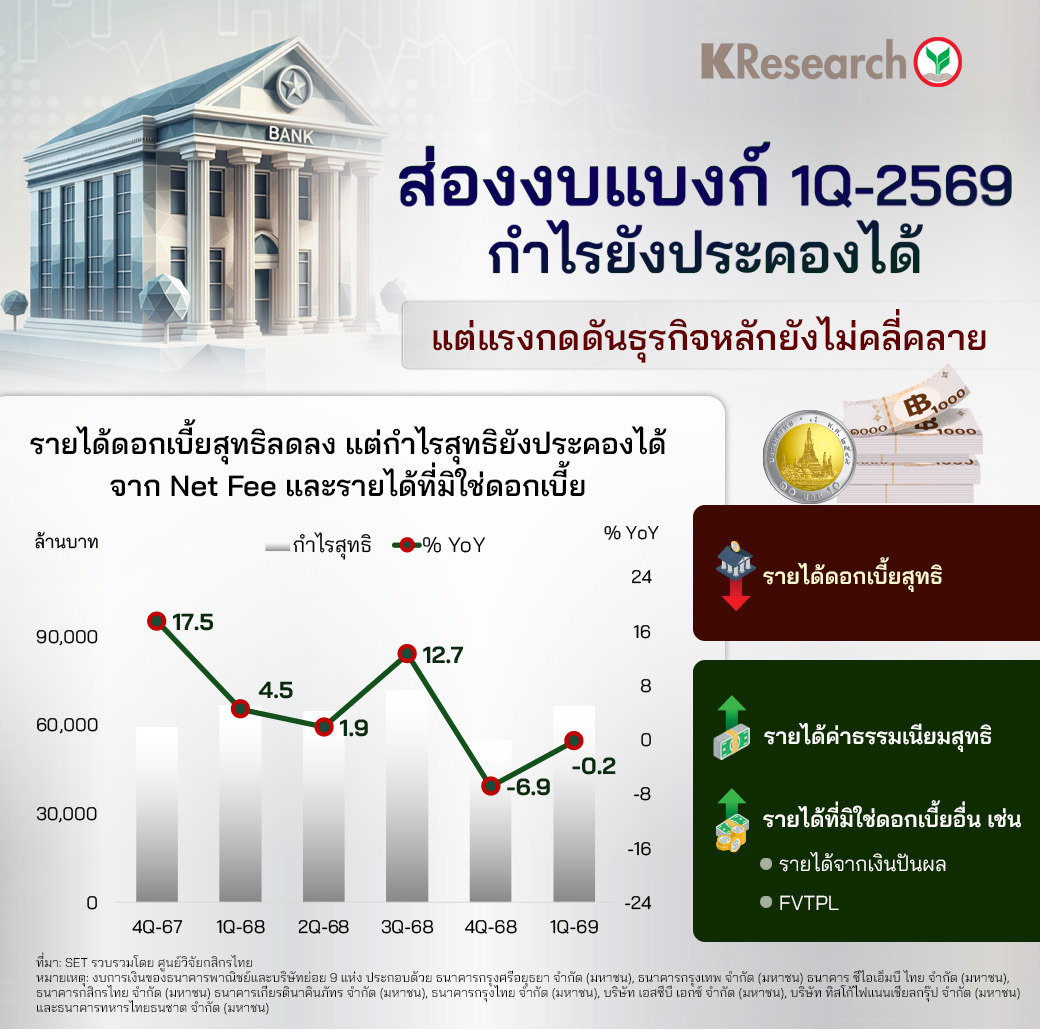
Thai banks are navigating a complex landscape in the first quarter of 2026, with core business pressures persisting despite resilient profit figures, according to recent financial analyses. While headline earnings have shown stability, underlying challenges in traditional banking operations continue to mount, prompting institutions to explore new revenue streams beyond interest income.
The situation reflects broader trends in Thailand’s financial sector, where slowing loan growth and narrowing interest margins are testing the resilience of established business models. Major lenders including Kasikornbank (KBANK), Krung Thai Bank (KTB), and Siam Commercial Bank (SCB) are among those adapting to this evolving environment, as indicated by verified financial disclosures and market analyses.
Recent data confirms that Kasikornbank reported stable first-quarter performance, with its core profitability supported by diversified income sources and careful cost management. The bank’s SWIFT code, KASITHBK, remains active for international transactions, confirming its continued operational integrity within the global banking network.
Krung Thai Bank demonstrated measurable growth in the same period, with first-quarter 2026 net profit increasing by 6.2% year-on-year to reach 12.437 billion baht. This figure represents a verified improvement in earnings, driven in part by effective expense control and steady performance across key business segments.
Meanwhile, Siam Commercial Bank continues to be a focus of analyst attention, with investment firms noting its potential for valuation upside amid ongoing sectoral headwinds. Market observers have highlighted SCB’s efforts to strengthen non-interest income streams as a critical factor in its medium-term outlook.
Profit Resilience Amid Core Business Pressures
Despite maintaining overall profitability, Thai banks are confronting persistent challenges in their primary lending activities. Loan demand has softened in certain segments, particularly among minor and medium-sized enterprises, while credit quality metrics require ongoing monitoring amid economic uncertainties.
Net interest margins—the key measure of profitability from core lending—have faced compression due to the prevailing low-interest-rate environment and intense competition for quality borrowers. This dynamic has compelled banks to place greater emphasis on fee-based income, digital banking services, and wealth management offerings to offset pressures on traditional interest revenue.
Operating efficiency has become a central focus, with institutions investing in automation and process optimization to manage costs without compromising service quality. These efforts are part of broader strategies to enhance resilience in an era of fluctuating interest rates and evolving customer preferences.
Strategic Shifts Toward Diversified Revenue
In response to weakening interest income trends, major Thai banks are actively pursuing diversification strategies. Kasikornbank has expanded its digital lending platforms and investment in fintech partnerships to reach underserved customer segments while maintaining risk discipline.

Krung Thai Bank continues to leverage its extensive branch network and government-linked initiatives to support financial inclusion programs, which contribute to both social impact and long-term customer base growth. Its mobile banking penetration remains among the highest in the country, supporting transaction-based revenue streams.
Siam Commercial Bank has emphasized wealth management and corporate advisory services as growth pillars, targeting high-net-worth individuals and multinational corporations operating in Thailand. These higher-margin businesses are seen as vital complements to its retail and commercial banking operations.
The shift toward non-interest income is not unique to Thailand but reflects a global banking trend where institutions seek to reduce dependence on interest rate cycles. However, the pace and success of this transition vary significantly based on each bank’s digital capabilities, brand strength, and customer relationships.
Market Outlook and Analyst Perspectives
Investment analysts remain cautiously optimistic about the Thai banking sector’s ability to navigate current challenges, citing strong capital positions and prudent risk management practices across major institutions. Regulatory oversight from the Bank of Thailand continues to emphasize financial stability while encouraging innovation in responsible banking practices.
Valuation metrics for Thai bank stocks show variation, with some institutions trading at discounts to historical averages due to sector-wide concerns, while others receive premium ratings based on perceived execution advantages in digital transformation and income diversification.
Looking ahead, the ability of banks to grow loan books without compromising credit standards will be closely watched. Equally essential will be the success of fee income initiatives in areas such as securities brokerage, bancassurance, and electronic payment processing—segments that have shown promise in offsetting interest income volatility.

The Bank of Thailand’s monetary policy decisions will remain a key external factor influencing banking performance, particularly as institutions balance support for economic recovery with vigilance against inflationary risks.
For stakeholders seeking official updates, the Bank of Thailand publishes monthly monetary policy reports and banking supervision updates on its website. Individual banks release quarterly financial statements and investor presentations through their investor relations channels, typically within 45 days of quarter-end.
As the Thai banking sector continues to adapt to a changing economic landscape, the focus remains on sustainable profitability through balanced growth, disciplined risk management, and innovation in customer-centric services.
Share your thoughts on how Thai banks are responding to evolving market conditions in the comments below, and sense free to share this article with others interested in financial sector developments in Southeast Asia.