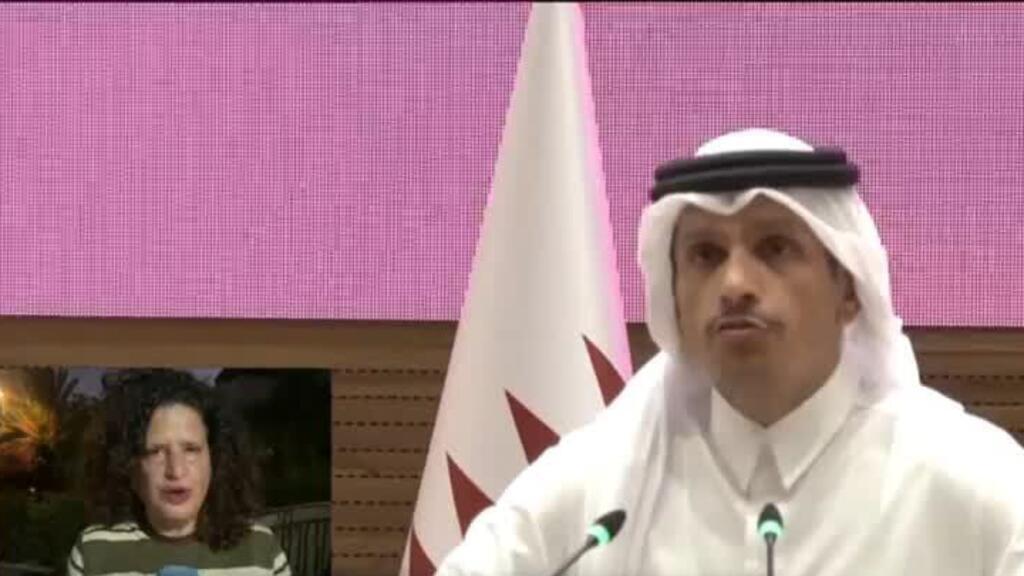
Qatar to Host Emergency Summit Following israeli Strike, Balancing Condemnation with Mediation Efforts
Qatar has declared its intention to convene an urgent summit involving arab and Muslim heads of state, responding to the recent Israeli strike that targeted Hamas officials within Doha.The gathering, announced on Saturday, September 14th, 2025, aims to both vehemently denounce the action and demonstrate unified support for Qatar’s sovereignty. This progress occurs amidst a complex geopolitical landscape, where Qatar maintains a delicate position as a key mediator in the ongoing Gaza conflict.
The Israeli action, which occurred on September 13th, 2025, has prompted widespread condemnation across the Arab world. However, Qatar’s response, as observed by FRANCE 24’s Noga Tarnopolsky reporting from Jerusalem, has been characterized by a unexpected nuance
, indicating a commitment to preserving its crucial role in facilitating negotiations between Israel and Hamas. This strategic approach highlights the intricate balancing act Qatar undertakes in navigating regional tensions.
The Significance of Doha as a Mediation Hub
Doha has long served as a discreet but vital location for discussions between Israeli and Hamas representatives, facilitated by Qatari mediators. The recent strike directly impacts this established channel, raising concerns about the future of negotiations. The decision to host the summit underscores Qatar’s determination to reaffirm its commitment to the peace process, despite the perceived violation of its territorial integrity.
According to a recent report by the International Crisis Group (August 2025), Qatar’s mediation efforts have been instrumental in preventing escalations in the Gaza Strip, particularly in managing the flow of humanitarian aid and addressing the underlying causes of conflict. The report emphasizes that disrupting this mediation channel could have severe consequences for regional stability.
Balancing Condemnation and Continued Engagement
Qatar’s measured response – concurrently condemning the strike and reaffirming its mediation role – reflects a calculated strategy. A complete severance of ties with Hamas, or a cessation of mediation efforts, could be interpreted as a victory for hardliners on both sides, potentially escalating the conflict.
The Qatari government has emphasized its commitment to de-escalation and a two-state solution.This position aligns with the broader international consensus, although achieving a lasting peace remains a important challenge. Recent polling data from the Arab Center for research and Policy Studies (September 2025) indicates that a majority of Arab citizens support Qatar’s continued engagement in the peace process, even in the face of provocative actions.
| Key Actors | Position | Primary Interest |
|---|---|---|
| Qatar | Mediator, Condemns Strike | Regional Stability, Maintaining Mediation Role |
| israel | Targeted Hamas Officials | Security Concerns, counter-Terrorism |
| Hamas | Target of Strike | Resistance, Political Objectives |
| Arab League | Condemns Strike, Supports Qatar | Arab Solidarity, Regional Security |
Implications for the Gaza Conflict and regional Stability
The Israeli strike and Qatar’s subsequent response occur at a particularly sensitive juncture in the Gaza conflict. The humanitarian situation in Gaza remains dire, with limited access to essential resources and ongoing restrictions on movement. The United Nations Relief and Works Agency for Palestine Refugees in the Near East (UNRWA) reported in September 2025 that over 80% of Gaza’s population relies on humanitarian assistance.
The summit hosted by Qatar is expected to address these pressing issues, and also explore potential avenues for a renewed ceasefire agreement. The participation of key Arab and Muslim leaders will lend significant weight to any resolutions adopted, potentially influencing the trajectory of the conflict.
- Medical Partner – Oncology Job at Roche in Sydney, Australia
- US Imposes New 301 Tariffs on China: Impact, Reactions, and Global Economic Fallout
- Incident Response Analyst Job at Cisco in Austin, Texas (news-usa.today)
- Rectal Cancer Surgery: Good Radiation Therapy Response May Allow Omission of Lateral Lymph Node Dissection (world-today-news.com)