
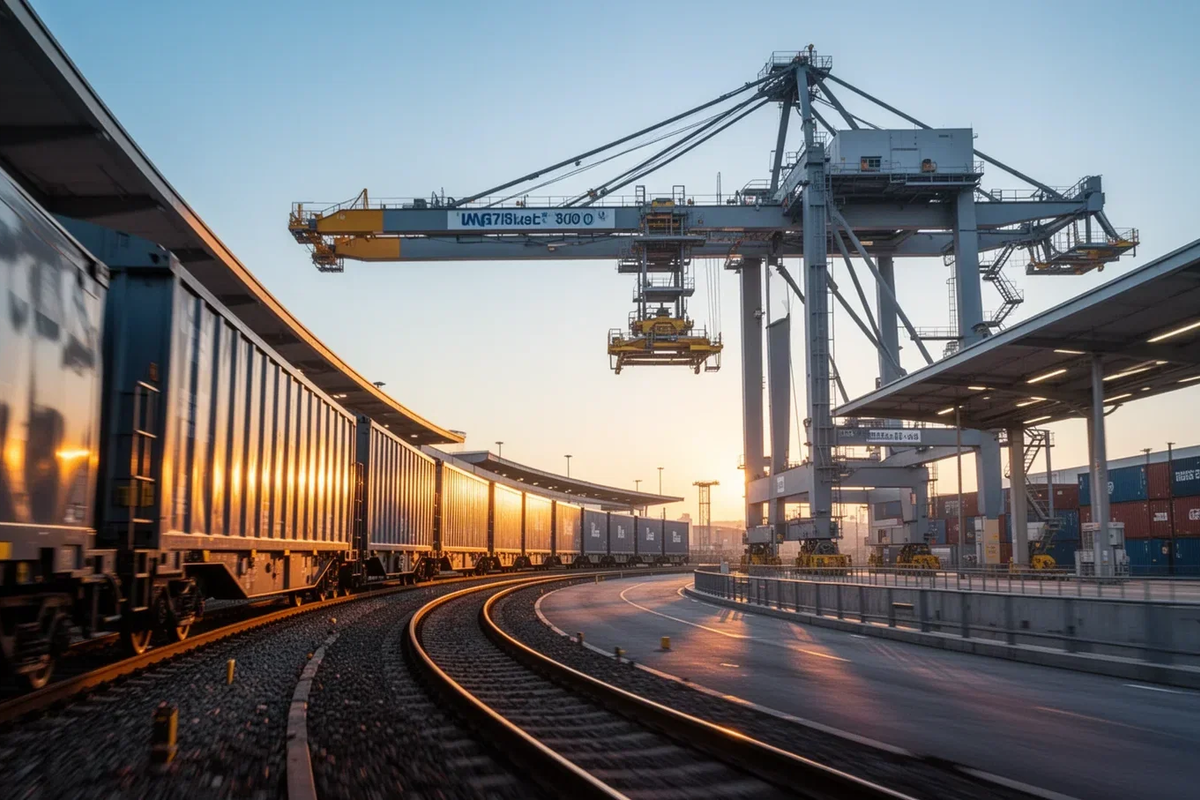
CargoBeamer Expands European Rail Freight Capacity with Kaldenkirchen Terminal Acquisition
The European rail freight sector is undergoing a period of modernization, driven by increasing demand for sustainable logistics solutions and a push to alleviate congestion on roadways. A key development in this transformation is CargoBeamer’s recent acquisition of the Kaldenkirchen terminal in Germany, a move poised to significantly enhance the capacity for combined road-rail transport. This acquisition, finalized in April 2026, underscores a broader trend of investment in automated terminals and digital technologies aimed at streamlining rail freight operations across the continent. Simultaneously, Spain is accelerating its integration into the European rail network, signaling a continent-wide effort to bolster rail infrastructure and efficiency.
The Kaldenkirchen terminal, strategically located for connections between Germany and Italy, is set to become a central hub in CargoBeamer’s network. The company’s approach centers on a horizontal transshipment technology, eliminating the need for cranes to transfer semi-trailers onto railcars, a process that traditionally slows down operations. CEO Nicolas Albrecht stated that this system “reduces transshipment times considerably.” According to a report by AD-hoc-news, CargoBeamer plans to increase the terminal’s capacity to 140,000 transport units annually by early 2027, with a further expansion planned to exceed 200,000 units per year. Currently, approximately 20 weekly round trips operate between Kaldenkirchen and Domodossola, Italy.
Automation and Digitalization as Key Drivers
The modernization of rail freight isn’t solely about physical infrastructure; digital technologies are playing an increasingly vital role. CargoBeamer’s investment in the Kaldenkirchen terminal is coupled with the implementation of digital platforms designed to optimize logistics processes. Transporeon, for example, has introduced an AI-powered voice search function for freight, aiming to simplify the search for available transport capacity and reduce the workload on dispatchers. This reflects a broader industry trend towards leveraging artificial intelligence and machine learning to improve efficiency and responsiveness in rail freight operations.
However, the full potential of these advancements is currently constrained by existing infrastructure limitations and funding gaps. Whereas automated terminals and digital tools offer significant improvements, the overall rail network requires substantial investment to support increased freight volumes. The need for modernization extends beyond terminals to include track upgrades, signaling systems, and interoperability between different national rail networks.
Spain’s Push for European Rail Integration
Alongside developments in Germany, Spain is actively working to strengthen its connection to the broader European rail network. On April 30, 2026, it was reported that Spain is prioritizing both the technical and regulatory aspects of its integration. As noted in AD-hoc-news, this effort aims to facilitate smoother cross-border freight transport and capitalize on the growing demand for rail-based logistics solutions.
Spain has allocated a substantial €24.2 billion for rail network expansion and infrastructure renovation between 2022 and 2026, with 50% of the funding dedicated to high-speed rail and the remaining 50% to the conventional network, including suburban rail systems. The state-owned rail infrastructure manager, ADIF (Administrador de Infraestructuras Ferroviarias), is the primary entity responsible for implementing these projects. A significant focus is on upgrading the Atlantic and Mediterranean corridors, which are part of the Trans-European Transport Network (TEN-V) prioritized and financially supported by the European Union.
Challenges and Opportunities in European Rail Freight
The European rail network, while extensive, faces inherent challenges stemming from a diversity of technical standards, operational concepts, and infrastructure configurations. The widespread use of standard gauge railways is a common feature, but variations in electrification systems and signaling technologies across different countries complicate cross-border operations. According to Wikipedia, the EU is actively working to harmonize regulations and promote interoperability to address these issues and foster a more integrated rail market.
The EU’s Single European Railway Directive of 2012 provided member states with the legal framework to separate infrastructure management from service provision, leading to the division of national railway companies into independent entities responsible for infrastructure, passenger transport, and freight transport. This separation is intended to promote competition and efficiency within the rail sector. Spain’s investment in rail infrastructure, coupled with CargoBeamer’s expansion in Germany, exemplifies the ongoing efforts to modernize and integrate the European rail network, positioning it as a viable and sustainable alternative to road transport.
The Future of Rail Freight in Europe
The future of rail freight in Europe hinges on continued investment in infrastructure, the adoption of innovative technologies, and a commitment to interoperability. The increasing focus on sustainability and the need to reduce carbon emissions are driving demand for rail-based logistics solutions. The development of automated terminals, like the one in Kaldenkirchen, and the integration of digital platforms are crucial steps towards unlocking the full potential of rail freight.

However, addressing existing infrastructure bottlenecks and securing adequate funding remain critical challenges. The EU’s TEN-V initiative and national investment plans, such as Spain’s €24.2 billion program, are essential for overcoming these obstacles and creating a truly integrated and efficient European rail network. The ongoing efforts to harmonize regulations and promote competition will further contribute to the growth and modernization of the rail freight sector.
The next key development to watch will be the progress of the Atlantic Corridor projects, with tenders worth €2.5 billion expected to be launched in 2025, representing a 1.2 billion Euro increase compared to the average between 2019 and 2024. This investment will be crucial for enhancing rail freight capacity and connectivity across Europe.
What are your thoughts on the future of rail freight? Share your comments below and let us know how you reckon these developments will impact the logistics industry.