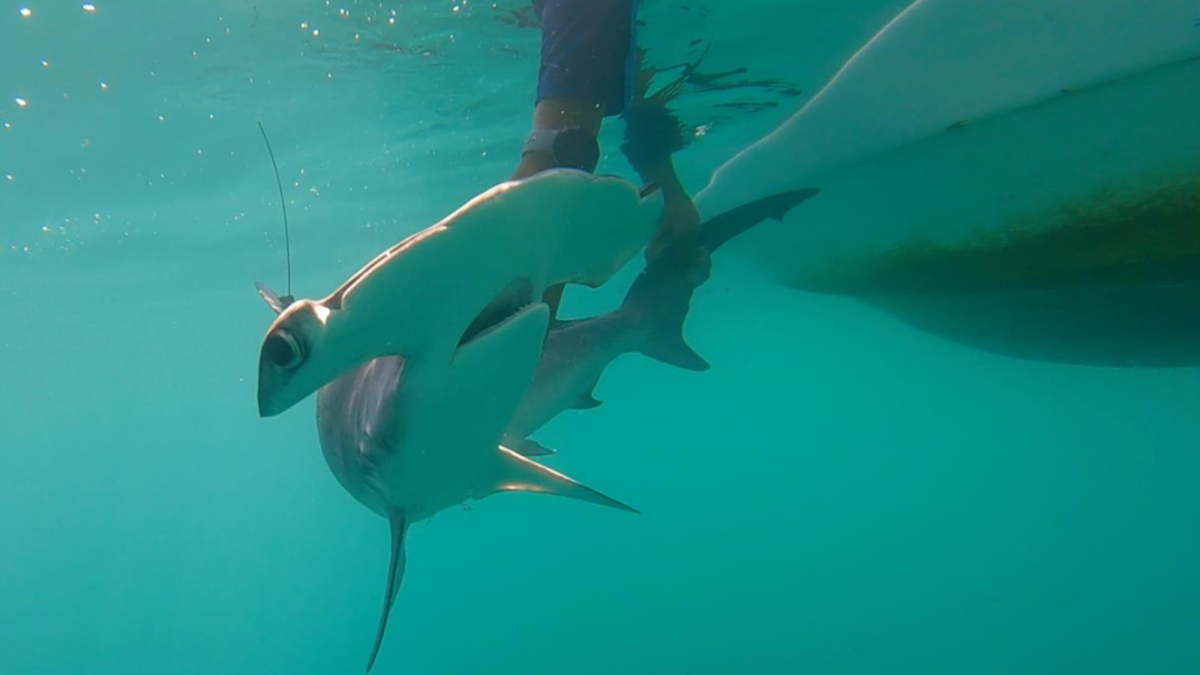
Scientists working in the Galápagos archipelago have officially recorded the presence of the smooth hammerhead shark (Sphyrna zygaena) in the region for the first time in more than 20 years. Marine researchers verified the sighting of juvenile sharks in 2024 through a combination of morphology and genetic DNA analysis, marking a significant milestone in understanding the elusive Eastern Tropical Pacific predators.
While the Galápagos Islands are globally renowned for large schools of scalloped hammerhead sharks (Sphyrna lewini), smooth hammerheads had not been documented in the official records of the archipelago for over two decades. María Antonia Izurieta Burbano De Lara, a marine biologist at Texas A&M University at Galveston originally from Ecuador, noted in a statement that researchers previously knew very little about where these roughly 12-foot-long sharks feed, travel, or how their populations fare.
The discovery stems from fieldwork conducted alongside collaborators from Universidad San. During their surveys, the research team identified what they believe to be the first documented group of juvenile smooth hammerhead sharks within the Galápagos Marine Reserve. This finding strongly suggests the presence of a critical nursery area, where young sharks spend the earliest stages of their lives before migrating out into the open ocean.
Distinguishing Species and Identifying Nurseries
Telling smooth hammerhead sharks apart from their scalloped relatives has historically presented a challenge for researchers operating from the water’s surface. Unlike scalloped hammerheads, smooth hammerheads lack the distinctive central indentation on the front of their heads. Because of this subtle physical difference, scientists believe the species may have been repeatedly overlooked or misidentified during previous marine surveys in the archipelago.
Discovering a potential nursery habitat offers researchers a rare window into the early life history of the species. Similar critical nurseries exist for other large shark species globally, such as great white sharks (Carcharodon carcharias) off the coast of New York and sand tiger sharks (Carcharias taurus) in Delaware Bay. Pinpointing these sheltered bays gives marine biologists a dependable baseline to study juvenile behavior, residency times, and habitat use.
“Once we confirmed they were smooth hammerheads through morphology and genetic analysis, we realized we had an incredible opportunity,” María Antonia said in a research statement. “Now we’re trying to understand why they use this area, how long are they staying in the bay, where else in the island can they be found and if they are connected with other populations across the Eastern Tropical Pacific.”
Advanced Tracking and Conservation Strategies
To unravel the migratory mysteries of the smooth hammerhead, the research team is deploying a suite of modern scientific tools. Scientists are actively outfitting juvenile sharks with acoustic transmitters to monitor their precise movements within the protected waters of the Galápagos Marine Reserve. Alongside acoustic telemetry, the project incorporates underwater video systems, detailed dietary studies, and ongoing genetic analyses.
The genetic work extends far beyond the local bays. Researchers are comparing DNA samples gathered from the Galápagos juveniles with shark populations spanning the wider Eastern Tropical Pacific. This regional comparison aims to determine whether the Galápagos archipelago functions as an ecological bridge connecting northern and southern populations. Additionally, the team is analyzing fecal samples to map the exact diet of juvenile smooth hammerheads while continuing efforts to study elusive subadult and adult specimens.
Despite inhabiting protected marine reserves, smooth hammerheads remain vulnerable to overfishing. Like many large pelagic species, individuals frequently travel beyond protected boundaries into international commercial fishing waters, where oversight is limited and fishing fleets pose a persistent threat. Mapping precise migratory corridors and critical habitats remains essential for shaping international conservation policies and protecting the species across its range.
For researchers intimately familiar with the region, the work bridges professional dedication with personal history. “Growing up in Ecuador inspired me to become a biologist,” María Antonia said. “Being able to contribute to the conservation of one of the least-understood shark species is incredibly rewarding. Every new discovery brings us one step closer to ensuring these animals remain part of the Galápagos ecosystem for generations to come.”
The research team plans to release further findings as acoustic tracking data and regional genetic comparisons are finalized. Readers interested in ongoing marine conservation efforts and official updates from the archipelago can monitor announcements via academic institutions such as Texas A&M University at Galveston and regional park authorities. We invite you to share your thoughts on this discovery in the comments below.