
Pittsburgh Steelers’ 2026 NFL Draft Strategy: A Bold Gamble on Drew Allar Amid Quarterback Uncertainty
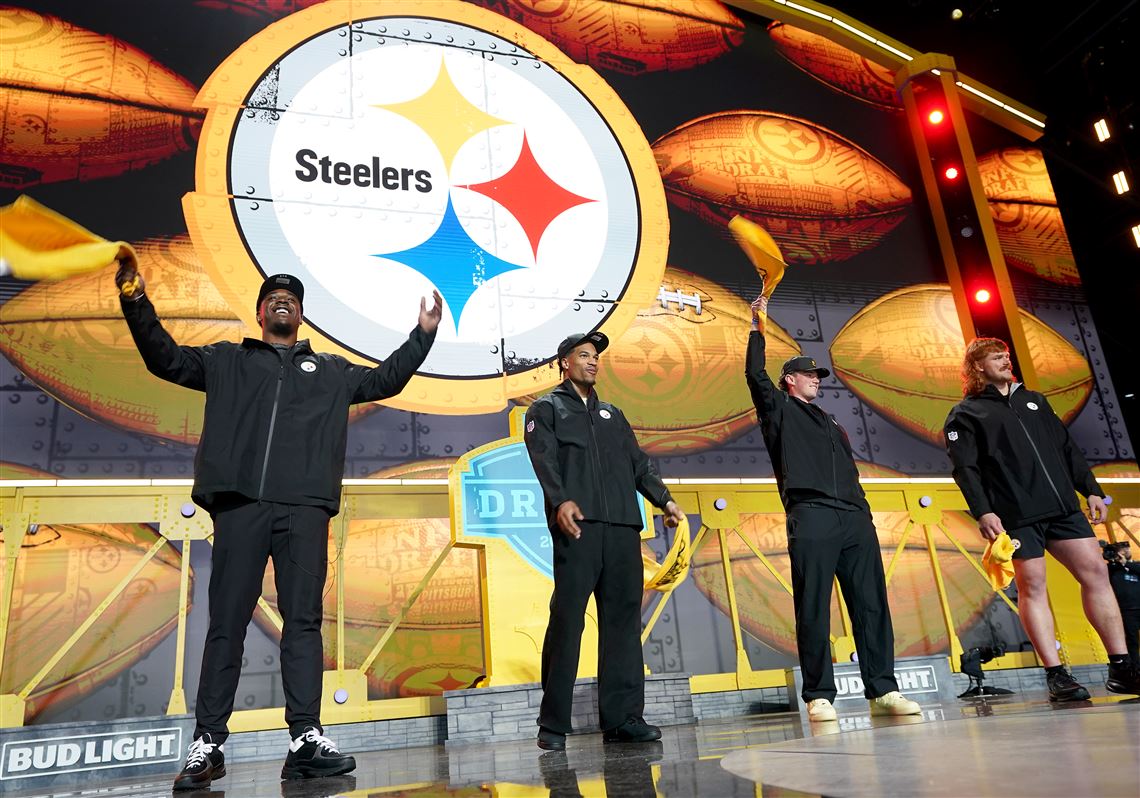
PITTSBURGH — The Pittsburgh Steelers made headlines on the second day of the 2026 NFL Draft by selecting Penn State quarterback Drew Allar with the 46th overall pick, a move that has sparked intense debate among analysts, fans, and league insiders. The decision comes at a pivotal moment for the franchise, which faces an uncertain future at the quarterback position following the potential retirement of veteran Aaron Rodgers, whose status remains unresolved as the 2026 season approaches. In his latest Steelers chat on April 28, 2026, longtime Steelers beat reporter Ray Fittipaldo dissected the team’s draft strategy, offering insights into the rationale behind selecting Allar and the broader implications for Pittsburgh’s roster.
The Steelers’ draft haul has drawn mixed reactions, with some praising the team’s willingness to invest in a high-upside quarterback prospect, while others question whether Allar was the best available option at that stage of the draft. The selection has also reignited discussions about the Steelers’ long-term plans under head coach Mike Tomlin and general manager Omar Khan, particularly as the team navigates a transitional period at the sport’s most critical position.
Why Drew Allar? The Steelers’ Calculated Risk
Drew Allar, a 6-foot-5, 233-pound quarterback from Penn State, entered the 2026 NFL Draft with a reputation as a physically gifted but inconsistent prospect. His college career was marked by flashes of brilliance—particularly in his junior and senior seasons—where he demonstrated strong arm talent, mobility, and the ability to craft high-level throws under pressure. However, concerns about his decision-making, accuracy in tight windows, and occasional lapses in pocket presence led to a wide range of projections among draft analysts. Some viewed him as a potential first-round talent, while others saw him as a mid-round project with developmental upside.

The Steelers’ decision to draft Allar at No. 46 suggests they see him as a high-ceiling prospect who could either compete for the starting job in 2026 or develop behind a veteran bridge quarterback. According to official Steelers draft analysis, the team prioritized Allar’s physical tools and leadership qualities, noting his ability to command an offense and his experience in a pro-style system at Penn State. “Allar has the arm strength to make every throw, and his size allows him to see over the offensive line,” the analysis stated. “He’s a competitor who thrives in big moments, and we believe he has the intangibles to succeed at the next level.”
However, the selection has not been without criticism. Some analysts, including those at USA Today, argued that the Steelers “whiffed” on Allar, suggesting that other quarterbacks with more refined skills—such as Washington’s Michael Penix Jr. Or Oregon’s Dillon Gabriel—were available and better fits for Pittsburgh’s immediate needs. Others pointed out that the Steelers passed on elite talent at other positions, such as offensive tackle or wide receiver, to secure Allar, raising questions about whether the team overvalued the quarterback position given its current roster construction.
Aaron Rodgers’ Uncertain Future Looms Large
The backdrop to the Steelers’ draft decision is the unresolved status of Aaron Rodgers, the future Hall of Fame quarterback who joined Pittsburgh in 2025 after a blockbuster trade with the Modern York Jets. Rodgers, who turned 42 in December 2025, has not publicly committed to playing in 2026, leaving the Steelers in a precarious position. While he has hinted at a potential return, his contract includes an opt-out clause that could allow him to retire without financial penalty, and his relationship with the team has been strained by reports of locker room tension and disagreements over offensive philosophy.

In his chat, Fittipaldo emphasized that the Steelers’ draft strategy cannot be fully understood without considering Rodgers’ uncertain future. “The Steelers are preparing for life after Aaron, whether that comes in 2026 or 2027,” Fittipaldo wrote. “Drafting Allar is a clear signal that they’re not counting on Rodgers to be the long-term answer. They’re hedging their bets.”
The Steelers’ current quarterback room includes Rodgers, backup Kenny Pickett (who has struggled to secure the starting job in his first three seasons), and now Allar. The addition of Allar suggests the team is preparing for a scenario in which Rodgers does not return, while also acknowledging that Pickett may not be the franchise quarterback they hoped he would turn into. This leaves Allar as a potential wildcard—either a developmental project or a surprise starter if the team decides to move on from both Rodgers and Pickett sooner rather than later.
The Bigger Picture: Steelers’ Draft Class and Long-Term Vision
While Allar dominated the headlines, the Steelers’ 2026 draft class also included several other notable selections that reflect the team’s broader priorities. On Day 2 of the draft, Pittsburgh added:
- Jordan Travis, WR, Florida State (Pick 78): A dynamic playmaker with elite speed and route-running ability, Travis is expected to compete for a starting role immediately, particularly if the Steelers move on from veteran wideout Diontae Johnson, whose future with the team is uncertain.
- Javon Foster, OT, Missouri (Pick 112): A versatile offensive lineman who can play both tackle and guard, Foster was selected to address the Steelers’ ongoing struggles in pass protection, which ranked among the league’s worst in 2025.
- James Pearce Jr., EDGE, Tennessee (Pick 145): A high-upside pass rusher with a relentless motor, Pearce was added to bolster a defensive line that has lacked consistent pressure in recent seasons.
According to grades and analysis from the Pittsburgh Post-Gazette, the Steelers’ draft class received a “B” with praise for addressing immediate needs at wide receiver and offensive line but questions about the long-term value of selecting Allar over other available talent. “The Steelers took swings on high-ceiling players, but it’s unclear if any of them will become foundational pieces,” the analysis noted. “The success of this class will hinge on Allar’s development and whether the team can maximize the potential of its Day 2 and Day 3 picks.”
What’s Next for the Steelers?
With the draft now complete, the Steelers’ focus shifts to training camp and the preseason, where the quarterback competition will take center stage. If Rodgers returns, he is expected to be the starter, with Allar and Pickett competing for the backup role. However, if Rodgers retires or is released, the door opens for either Pickett or Allar to earn the starting job. The team’s offseason moves—including potential trades or free-agent signings—will provide further clarity on their plans.
For now, the Steelers’ 2026 draft class represents a bold but risky bet on the future. Whether Drew Allar can develop into the franchise quarterback Pittsburgh needs remains to be seen, but one thing is clear: the team is no longer content to wait and see. In a league where quarterback play is everything, the Steelers have made their move. Now, they must hope it pays off.
Key Takeaways from the Steelers’ 2026 NFL Draft
- Drew Allar as a High-Risk, High-Reward Pick: The Steelers selected Allar at No. 46, prioritizing his physical tools and leadership over more polished quarterbacks. His success will depend on his ability to refine his decision-making and accuracy.
- Aaron Rodgers’ Uncertain Future: The team’s draft strategy suggests they are preparing for life after Rodgers, whether that comes in 2026 or 2027. Allar’s selection indicates the Steelers are not counting on Rodgers as a long-term solution.
- Addressing Immediate Needs: The Steelers added playmakers at wide receiver (Jordan Travis) and offensive line (Javon Foster), as well as a pass-rushing prospect (James Pearce Jr.), to address key weaknesses from the 2025 season.
- Mixed Reactions from Analysts: While some praised the Steelers’ willingness to take a chance on Allar, others questioned whether the team overvalued the quarterback position and missed opportunities to add elite talent at other spots.
- Training Camp as the Next Battleground: The quarterback competition between Rodgers (if he returns), Kenny Pickett, and Allar will be the story to watch as the Steelers prepare for the 2026 season.
Frequently Asked Questions
1. Why did the Steelers draft Drew Allar over other quarterbacks?
The Steelers prioritized Allar’s physical tools, leadership, and experience in a pro-style offense at Penn State. While other quarterbacks may have been more polished, the team believes Allar’s upside and intangibles make him a worthwhile investment, particularly given the uncertainty surrounding Aaron Rodgers’ future.
2. What does Aaron Rodgers’ status mean for the Steelers’ quarterback room?
Rodgers’ future is the biggest question mark heading into the 2026 season. If he returns, he is expected to start, with Allar and Kenny Pickett competing for the backup role. If Rodgers retires or is released, the team will likely turn to either Pickett or Allar as the starter, making the preseason competition critical.
3. How does Jordan Travis fit into the Steelers’ offense?
Travis, a dynamic wide receiver from Florida State, was selected to add speed and playmaking ability to Pittsburgh’s passing game. He is expected to compete for a starting role immediately, particularly if the team moves on from veteran Diontae Johnson, whose future with the Steelers is uncertain.
4. What are the biggest concerns about the Steelers’ 2026 draft class?
Critics have questioned whether the Steelers overvalued the quarterback position by selecting Allar over more refined prospects or elite talent at other positions. The success of the class will depend on the development of its high-upside players, particularly Allar and Travis.
5. What’s next for the Steelers after the draft?
The team will shift its focus to training camp and the preseason, where the quarterback competition will take center stage. Potential trades or free-agent signings could also provide further clarity on the Steelers’ plans for the 2026 season.
What Happens Next?
The Steelers’ next major checkpoint will be the start of training camp in late July, where the quarterback competition will begin in earnest. Fans and analysts will be watching closely to see how Drew Allar adapts to the NFL, whether Aaron Rodgers returns, and how the team’s new draft picks integrate into the roster. For now, the 2026 season remains a story of potential and uncertainty—one that could define the Steelers’ trajectory for years to come.
What are your thoughts on the Steelers’ draft strategy? Do you think Drew Allar can develop into a franchise quarterback, or was this a risky gamble? Share your opinions in the comments below and join the conversation on social media.