Real Madrid Condemns Fan’s Alleged Nazi Salute During Champions League Match
Madrid – Real Madrid has launched an investigation following reports that a supporter performed a Nazi salute before their Champions League match against Benfica on Wednesday, February 25, 2026. The incident, captured on camera as television crews scanned the crowd at the Santiago Bernabéu Stadium, prompted swift action from club security, who identified and ejected the individual. This incident occurs amidst heightened scrutiny regarding racism and discrimination within European football, following recent allegations of racial abuse directed at Real Madrid forward Vinicius Júnior.
The alleged gesture took place prior to kickoff of the second leg of the Champions League play-off tie, which Real Madrid won 2-1, securing their place in the last 16 with an aggregate score of 3-1. The club has initiated disciplinary proceedings, requesting its disciplinary committee to begin an “immediate expulsion procedure” against the member in question. This decisive response underscores Real Madrid’s commitment to combating hate speech and extremist ideologies within its fanbase and the wider sporting community. The club’s statement, released shortly after the incident, unequivocally condemned the gesture as inciting “violence and hatred in sports and in society.”
Incident Details and Club Response
Security staff at the 83,000-seater Bernabéu Stadium reportedly identified the fan making the alleged salute and removed them from the ground almost immediately. Footage of the incident quickly circulated online, drawing widespread condemnation. Real Madrid’s swift response reflects a growing intolerance for such displays of extremism at football matches. While a Nazi salute is not currently a criminal offense in Spain, as it is in countries like Germany and Italy, it can be prosecuted as a hate crime if accompanied by other inciting acts, according to reports. The New York Times details that the fan was located in the Grada Fans section of the stadium.
The club’s disciplinary committee will now review the evidence and determine the appropriate course of action, which could include a lifetime ban from attending Real Madrid matches. This incident highlights the challenges faced by football clubs in policing the behavior of their supporters and preventing the infiltration of extremist elements. The club’s statement emphasized its zero-tolerance policy towards any form of hate speech or violence, reinforcing its commitment to creating a safe and inclusive environment for all fans.
Context: Recent Incidents of Racism and Discrimination
This incident comes on the heels of serious allegations of racial abuse leveled against Real Madrid’s Vinicius Júnior during the first leg of the Champions League tie against Benfica in Lisbon. Vinicius Júnior reported being racially abused by Benfica’s Gianluca Prestianni, leading to a 10-minute stoppage of play as the Brazilian player and his teammates left the pitch in protest. The BBC reports that Prestianni was subsequently handed a provisional one-match ban, pending a full investigation by UEFA.
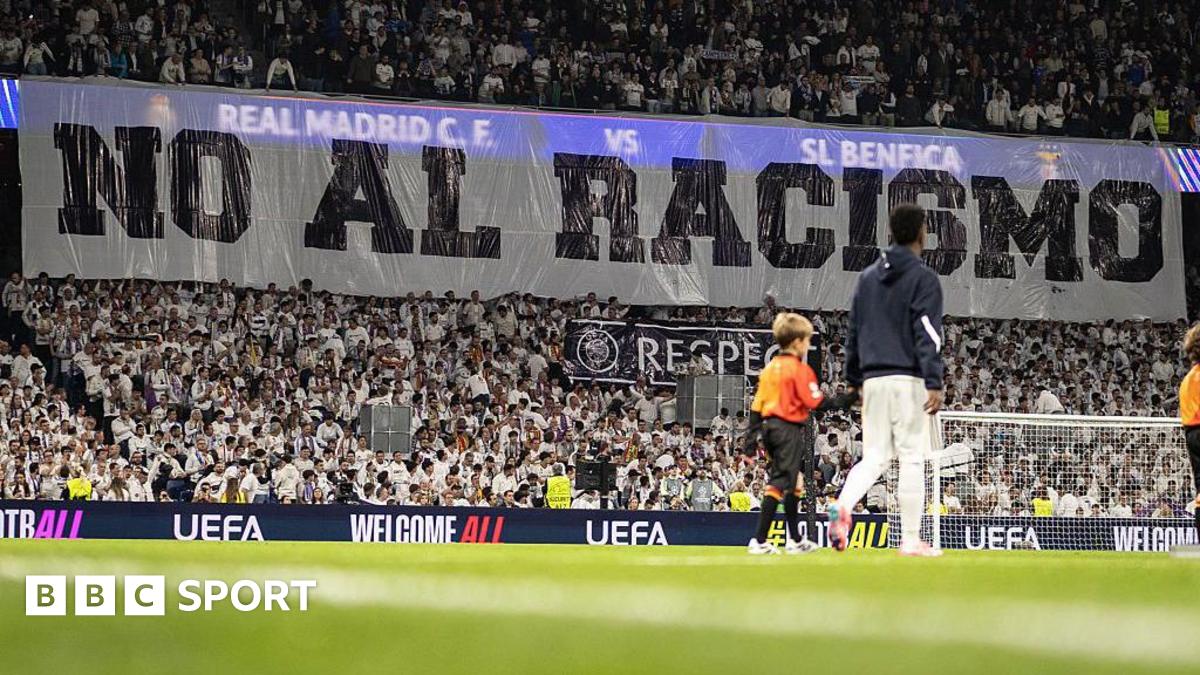
The UEFA investigation into the alleged racial abuse of Vinicius Júnior is ongoing, and Prestianni could face further punishment. This latest incident involving the alleged Nazi salute adds another layer of complexity to the issue of racism and discrimination in football, prompting calls for stronger sanctions and more effective preventative measures. The display of a “no to racism” banner by Real Madrid fans before Wednesday’s match demonstrates the widespread support for combating racism within the club’s fanbase, but the alleged salute underscores the persistent challenges that remain.
Legal Framework and International Responses
The legal implications of performing a Nazi salute vary significantly across Europe. In Germany, for example, the display of Nazi symbols and gestures is a criminal offense, punishable by imprisonment. Italy also has strict laws prohibiting the promotion of fascism and racial hatred. However, in Spain, while the gesture itself is not explicitly illegal, it can be considered a crime if accompanied by other actions that constitute a hate crime.
The incident at the Bernabéu Stadium is likely to fuel further debate about the need for greater legal harmonization across Europe to address hate speech and extremist ideologies. Organizations like FIFA and UEFA have implemented strict regulations to combat racism and discrimination in football, including stadium bans and financial penalties for clubs and national associations. However, critics argue that these measures are often insufficient and that more robust enforcement mechanisms are needed. In February 2024, a Chelsea supporter received a three-year football banning order for performing a Nazi salute towards Tottenham Hotspur fans, demonstrating a growing willingness by authorities to take action against such behavior. As reported by The New York Times, this case set a precedent for similar incidents.
Looking Ahead: Continued Vigilance and Prevention
Real Madrid’s swift condemnation of the alleged Nazi salute and its commitment to expelling the supporter involved sends a clear message that such behavior will not be tolerated. However, the incident serves as a stark reminder of the ongoing need for vigilance and preventative measures to combat extremism and discrimination in football. Clubs, governing bodies, and law enforcement agencies must function together to identify and address the root causes of these issues and create a more inclusive and welcoming environment for all fans.
The ongoing investigation into the alleged racial abuse of Vinicius Júnior and the incident involving the Nazi salute highlight the urgent need for stronger sanctions and more effective preventative measures. This includes increased security at stadiums, improved education programs for fans, and a zero-tolerance policy towards any form of hate speech or violence. The future of football depends on creating a safe and inclusive environment where all players and fans can enjoy the game without fear of discrimination or harassment.
The disciplinary committee’s decision regarding the fan’s expulsion is expected within the coming days. UEFA’s investigation into the alleged racial abuse of Vinicius Júnior is also ongoing, with a final ruling anticipated before the start of the Champions League quarter-finals. The football world will be watching closely to see how these cases are resolved and what steps are taken to address the underlying issues of racism and extremism.
What are your thoughts on Real Madrid’s response? Share your comments below and let us know what further steps you believe should be taken to combat discrimination in football.
Keep reading