
The global automotive industry is currently navigating one of its most volatile transformations in a century. For Renault Group, the transition to electric vehicles (EVs) is not merely a technological shift but a complex geopolitical and industrial puzzle. As the French manufacturer accelerates its “FutuREady” strategic plan to achieve carbon neutrality and operational efficiency, a stark contrast is emerging between its traditional European manufacturing hubs and its expanding footprint in North Africa.
Current industrial tensions in Spain have brought this friction into sharp focus. Reports of stalled negotiations and a lack of consensus between Renault leadership and Spanish labor unions have created an atmosphere of uncertainty surrounding the future of production in the region. This impasse is occurring at a critical juncture, as the company decides where to allocate the production of its next generation of electric models—decisions that will determine the economic health of thousands of workers and the strategic trajectory of the brand.
While Spain struggles to secure these future investments, Morocco is positioning itself as the primary beneficiary. With a combination of aggressive government incentives, a burgeoning automotive ecosystem, and a stable labor environment, the Kingdom is no longer just a low-cost assembly point; it is evolving into a strategic cornerstone of Renault’s global EV strategy. This shift highlights a broader trend in the automotive sector: the migration of industrial capacity toward “nearshoring” hubs that offer a balance of proximity to European markets and competitive operational costs.
For investors and industry analysts, the situation is a case study in the risks of industrial rigidity. As Dr. Olivia Bennett, Chief Editor of Business at World Today Journal, I have observed that the ability to pivot production rapidly is now as important as the technology inside the battery. The unfolding drama between Renault’s Spanish operations and its Moroccan ambitions reflects a wider struggle to reconcile legacy labor agreements with the lean requirements of the electric era.
The Spanish Impasse: Labor Disputes and Industrial Uncertainty
At the heart of the tension is the struggle to modernize production facilities in Spain, particularly the Valladolid plant. The transition to electric vehicle production requires not only new machinery but a fundamental restructuring of the workforce, including new skill sets and, often, revised labor contracts. In Spain, the path to these agreements has been fraught with difficulty.
Labor unions in Spain have expressed significant concerns over job security and the potential for “industrial desertification” if new models are diverted elsewhere. The deadlock typically centers on the guarantees Renault provides regarding long-term employment and the specific volume of vehicles to be produced locally. When negotiations stall, the risk is not just a temporary pause in production, but a strategic redirection of capital. In the automotive world, once a production line is designated for a specific plant, the sunk costs make it nearly impossible to move; conversely, if a project is “suspended” during the planning phase, it becomes a prime candidate for relocation.
This uncertainty is exacerbated by the high cost of energy and labor in the Eurozone compared to emerging hubs. For a company like Renault, which is operating under tight margins to fund a multi-billion euro transition to electrification, the financial incentive to move production to more flexible environments is immense. The Spanish situation serves as a warning to other European manufacturing hubs: the prestige of being a legacy producer is no longer a guarantee of future investment.
Morocco’s Strategic Ascent as an EV Hub
While Spain faces internal friction, Morocco has meticulously built an environment designed to attract automotive giants. The Moroccan government has implemented a comprehensive industrial strategy that integrates infrastructure development with targeted tax incentives and vocational training. This has transformed the country into a regional powerhouse for automotive exports.
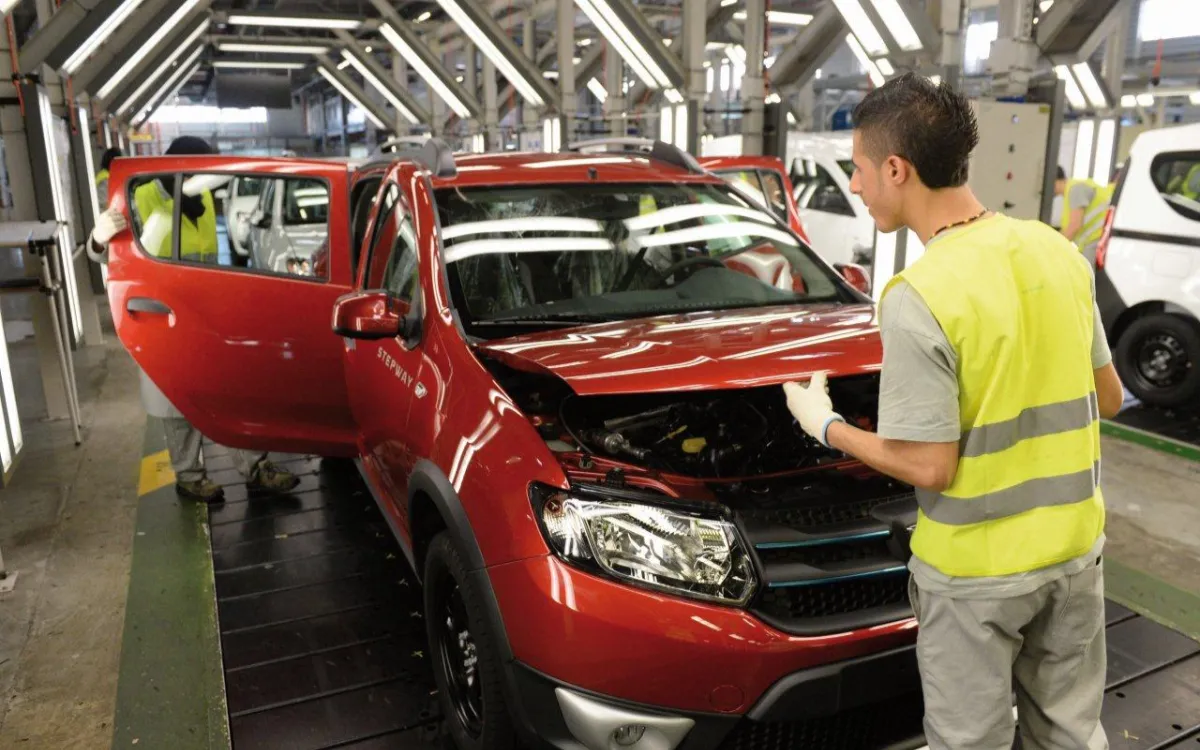
Renault’s presence in Morocco, centered around its massive plants in Tangier and Casablanca, has already proven the viability of the region. The Tangier plant, in particular, has become one of the most efficient in the group’s global network. Morocco’s advantage lies not only in lower labor costs but in its “ecosystem approach.” The government has encouraged a cluster of Tier 1 and Tier 2 suppliers to settle near the assembly plants, drastically reducing logistics costs and lead times.
The strategic shift toward EV production in Morocco is a logical extension of this success. By leveraging Morocco’s access to critical minerals and its growing capacity for battery component manufacturing, Renault can create a more resilient and cost-effective supply chain. The Moroccan government’s commitment to green energy—specifically wind and solar—also allows Renault to lower the carbon footprint of the manufacturing process itself, aligning with the goals outlined in the Renault Group official sustainable development strategy.
Industry observers note that Morocco is not merely acting as a fallback option but is actively competing for the “crown jewels” of Renault’s portfolio: the high-volume, entry-level electric models that are essential for capturing the mass market in both Africa and Europe.
Analyzing the ‘Nearshoring’ Logic: Why Morocco Wins
The potential shift of production from Spain to Morocco is a textbook example of “nearshoring”—the practice of moving business operations to a nearby country to reduce costs while maintaining proximity to the end market. For Renault, Morocco offers several decisive advantages over its European counterparts:
- Operational Agility: Lower regulatory hurdles and more flexible labor agreements allow for faster scaling of production lines.
- Cost Structure: Significant reductions in overhead and labor costs allow Renault to price its EVs more competitively in a market where affordability is the primary barrier to adoption.
- Trade Advantages: Morocco’s strategic trade agreements allow for the seamless export of vehicles into the European Union and across the African continent.
- Governmental Alignment: Unlike the adversarial relationship often seen between corporations and unions in Europe, the Moroccan state acts as a strategic partner, providing direct support for industrial expansion.
From an economic perspective, Here’s a redistribution of value. While Spain loses potential industrial growth, Morocco gains high-tech employment and a strengthened position in the global value chain. This trend is not unique to Renault; other manufacturers are similarly eyeing North Africa as a way to decouple their supply chains from the volatility of East Asia while avoiding the high costs of Central Europe.
The Human and Economic Cost of Industrial Migration
The narrative of “winning” and “losing” in industrial strategy has real-world consequences for the workforce. In Spain, the threat of production diversion creates a climate of anxiety for thousands of factory workers. The loss of a single model’s production can lead to a ripple effect, impacting local suppliers and the broader regional economy.
Conversely, in Morocco, the expansion of Renault’s operations is a catalyst for social mobility. The demand for skilled technicians and engineers is driving an overhaul of the Moroccan education system, creating a new generation of industrial professionals. However, this growth also brings challenges, including the need to ensure that the benefits of these investments reach the broader population and are not confined to the industrial zones.
The tension between Renault and Spanish unions highlights a fundamental conflict in the modern economy: the struggle between the “social contract” of the 20th century (stable, lifelong employment in a single location) and the “market agility” of the 21st century (fluid production based on cost and efficiency). As companies prioritize survival in the EV race, the social contract is being rewritten in real-time.
What This Means for the Future of Renault Group
For Renault Group, the ability to diversify its production base is a hedge against risk. By spreading its manufacturing capabilities across different geographies, the company reduces its vulnerability to localized strikes, energy crises, or political instability in any single nation.

However, this strategy also carries risks. Over-reliance on a single emerging hub could create new dependencies. The company must balance its pursuit of efficiency with the need to maintain a strong industrial presence in its home markets to satisfy political stakeholders and ensure a level of quality control that is closely monitored.
The outcome of the current disputes in Spain will serve as a bellwether for the rest of the company’s European operations. If Renault successfully navigates the transition in Spain, it provides a blueprint for modernization. If it fails and shifts the bulk of its production to Morocco, it signals a definitive end to the era of the European-centric automotive factory.
Key Takeaways for Stakeholders
- For Investors: The shift toward Moroccan production is a positive indicator of cost-reduction and operational efficiency, though it may introduce short-term volatility due to labor unrest in Europe.
- For Labor Unions: The “Morocco alternative” provides Renault with significant leverage in negotiations, making traditional strike actions less effective than they were in the internal combustion engine era.
- For Governments: The Moroccan model demonstrates that proactive industrial policy and infrastructure investment are the most effective tools for attracting high-value automotive investment.
- For Consumers: Increased efficiency in production hubs like Morocco is likely to lead to more affordable electric vehicle options in the mid-to-long term.
As the automotive landscape continues to shift, the focus will remain on how Renault balances its legacy obligations with its future ambitions. The “battle” for production between Spain and Morocco is not just about cars; it is about where the economic center of gravity for the next generation of mobility will reside.
The next critical checkpoint for this story will be the upcoming quarterly industrial update from Renault Group, where the company is expected to provide further clarity on its production allocations for the 2026-2030 cycle. We will continue to monitor the negotiations in Spain and the expansion milestones in Morocco to provide the most accurate analysis of this industrial migration.
Do you believe the shift toward nearshoring hubs like Morocco is inevitable for European automakers, or can legacy plants in Spain and France adapt in time? Share your thoughts in the comments below or join the conversation on our professional networks.