
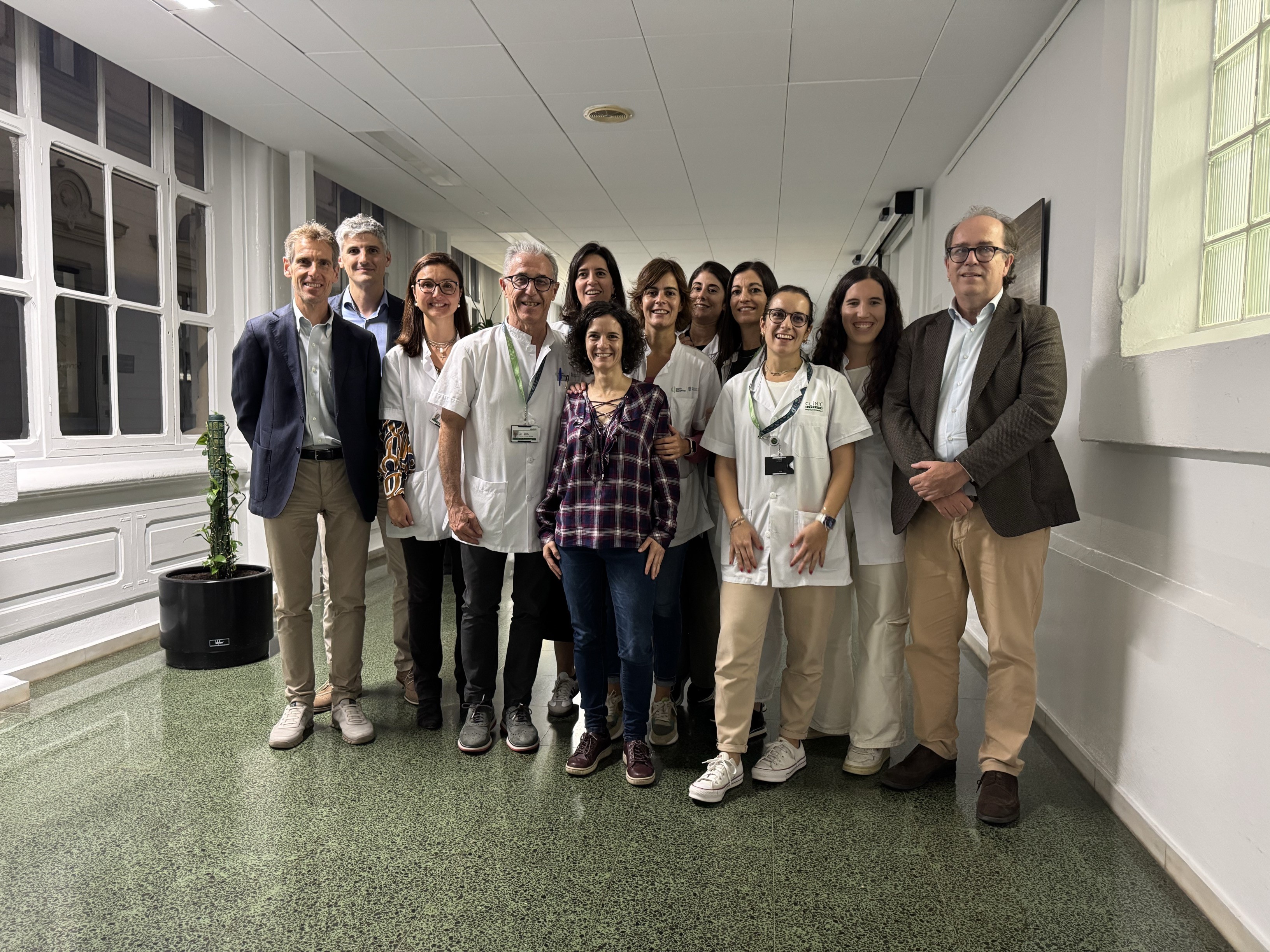
Inside the CAR-T Factory: How Personalized Therapies Are Revolutionizing Cancer Treatment
Barcelona, Spain — In a quiet corner of the Hospital Clínic de Barcelona, a revolution is unfolding. Behind unassuming laboratory doors, scientists and clinicians are manufacturing a treatment so precise It’s often called a “living drug.” This is CAR-T cell therapy, a form of immunotherapy that is transforming the prognosis for patients with certain aggressive cancers. Unlike traditional chemotherapy, which floods the body with toxic chemicals, CAR-T is a bespoke treatment, engineered from a patient’s own immune cells to hunt down and destroy cancer with unprecedented accuracy.
For patients like 25-year-old Marc, who was diagnosed with acute lymphoblastic leukemia (ALL) after years of failed treatments, CAR-T has been nothing short of a miracle. “I was told I had months to live,” Marc said in a recent interview with the hospital. “Now, I’m back at university, planning my future. It’s like a second chance.” His story is not unique. At Hospital Clínic, one of Europe’s leading centers for advanced therapies, CAR-T is offering hope where there was once only despair.
But how does this groundbreaking therapy work? And why is Barcelona emerging as a global hub for its development and delivery? The answers lie in a combination of cutting-edge science, rigorous clinical protocols, and a healthcare system willing to invest in the future of medicine.
What Is CAR-T Cell Therapy?
CAR-T, or chimeric antigen receptor T-cell therapy, is a form of immunotherapy that reprograms a patient’s own immune cells to recognize and attack cancer. The process begins with the extraction of T-cells—white blood cells that play a central role in the immune system—from the patient’s blood. These cells are then sent to a specialized laboratory, where they are genetically modified to express a chimeric antigen receptor (CAR) on their surface. This receptor acts like a GPS, guiding the T-cells to a specific protein found on cancer cells.

Once the CAR-T cells are engineered, they are multiplied in the lab until there are millions of them. These supercharged cells are then infused back into the patient’s bloodstream, where they seek out and destroy cancer cells. Unlike chemotherapy, which can damage healthy tissue, CAR-T is designed to be highly targeted, minimizing side effects while maximizing efficacy.
The therapy has shown remarkable success in treating certain blood cancers, including ALL, diffuse large B-cell lymphoma (DLBCL), and multiple myeloma. In clinical trials, CAR-T has achieved remission rates of up to 80% in patients who had exhausted all other treatment options. For many, it is the last line of defense against a disease that was once considered a death sentence.
Barcelona’s Role in the CAR-T Revolution
Hospital Clínic de Barcelona is at the forefront of CAR-T therapy in Europe. The hospital’s Advanced Therapies Unit, in collaboration with the August Pi i Sunyer Biomedical Research Institute (IDIBAPS), has been instrumental in both the development and administration of CAR-T treatments. The unit is one of the few in Europe authorized to manufacture CAR-T cells on-site, a capability that significantly reduces the time between diagnosis and treatment.
Dr. Manel Juan, head of the hospital’s Immunology Service, has been a driving force behind Barcelona’s CAR-T program. In a 2023 interview with Nature Medicine, he described the therapy as “a paradigm shift in how we approach cancer treatment.” Under his leadership, Hospital Clínic has become a reference center for CAR-T in Spain, treating patients from across the country and beyond. The hospital’s expertise has also attracted international attention, with clinicians and researchers from around the world visiting to learn from its protocols and outcomes.
One of the key advantages of Hospital Clínic’s approach is its integration of research and clinical care. The hospital’s CAR-T program is not just about administering treatment; it is also about advancing the science behind it. Researchers at IDIBAPS are actively working to improve CAR-T’s efficacy, reduce its side effects, and expand its use to other types of cancer, including solid tumors, which have so far proven more resistant to the therapy.
How CAR-T Is Made: A Step-by-Step Process
The creation of CAR-T therapy is a complex, multi-step process that requires precision, expertise, and state-of-the-art facilities. Here’s how it works at Hospital Clínic de Barcelona:
- Patient Selection and Evaluation:
Not all patients are candidates for CAR-T. The therapy is currently approved for specific types of blood cancers, including ALL in patients up to 25 years traditional, and certain forms of lymphoma and myeloma. At Hospital Clínic, a multidisciplinary team of oncologists, hematologists, and immunologists evaluates each patient to determine whether CAR-T is the best option. This assessment includes a thorough review of the patient’s medical history, current health status, and previous treatments.
- Apheresis: Collecting the T-Cells:
If the patient is deemed eligible, the next step is apheresis, a process in which blood is drawn from the patient and passed through a machine that separates out the T-cells. The remaining blood components are returned to the patient’s body. This procedure typically takes 3–4 hours and is performed in an outpatient setting. The collected T-cells are then frozen and sent to the hospital’s manufacturing facility.
- Genetic Engineering: Creating the CAR:
In the lab, the T-cells undergo genetic modification to express the chimeric antigen receptor. This is done using a viral vector—a harmless virus that has been engineered to deliver the CAR gene into the T-cells. The modified cells are then cultured in a controlled environment, where they multiply rapidly. This step can take 2–3 weeks, during which the patient may receive bridging therapy (such as chemotherapy) to keep the cancer under control.
- Quality Control: Ensuring Safety and Efficacy:
Before the CAR-T cells can be infused back into the patient, they undergo rigorous testing to ensure they meet strict safety and efficacy standards. This includes checks for sterility, potency, and the absence of contaminants. The hospital’s manufacturing facility operates under Fine Manufacturing Practice (GMP) guidelines, which are designed to ensure the highest quality and consistency.
- Infusion: Delivering the Therapy:
Once the CAR-T cells have passed all quality controls, they are transported back to the hospital and infused into the patient. The infusion itself is a relatively simple procedure, similar to a blood transfusion. However, the days and weeks following the infusion are critical, as the patient’s immune system adjusts to the presence of the engineered cells. Side effects can include cytokine release syndrome (CRS), a potentially life-threatening condition caused by the rapid activation of the immune system, and neurotoxicity, which can cause confusion, seizures, or other neurological symptoms. At Hospital Clínic, patients are closely monitored in the intensive care unit (ICU) for at least a week to manage these risks.
- Follow-Up: Monitoring Long-Term Outcomes:
CAR-T therapy does not complete with the infusion. Patients require long-term follow-up to assess the therapy’s effectiveness and monitor for potential late-onset side effects. At Hospital Clínic, patients are seen regularly for blood tests, imaging studies, and clinical evaluations. The hospital also participates in national and international registries to track long-term outcomes and contribute to the growing body of knowledge about CAR-T.
The Challenges and Future of CAR-T
Despite its promise, CAR-T therapy is not without challenges. One of the biggest hurdles is cost. The therapy is expensive, with prices ranging from €300,000 to €500,000 per patient in Europe. This has led to debates about access and affordability, particularly in countries with public healthcare systems. In Spain, the government has negotiated with pharmaceutical companies to reduce the cost of CAR-T, making it more accessible to patients who need it. However, the high price tag remains a barrier for many.
Another challenge is the therapy’s limited scope. CAR-T is currently approved for only a handful of blood cancers, and its effectiveness in solid tumors—such as breast, lung, or brain cancer—has been limited. Researchers at Hospital Clínic and other institutions are working to overcome this obstacle by developing new CAR designs and combination therapies that could expand CAR-T’s reach.
Side effects also remain a concern. While CRS and neurotoxicity are manageable in most cases, they can be severe and even fatal in rare instances. Hospitals like Clínic have developed protocols to mitigate these risks, including the use of tocilizumab, a drug that can reduce inflammation, and close monitoring in the ICU. However, as the therapy becomes more widely used, ensuring patient safety will remain a top priority.
Looking ahead, the future of CAR-T is bright. Clinical trials are underway to test the therapy in new indications, including autoimmune diseases and HIV. Researchers are also exploring ways to create CAR-T more accessible, such as developing “off-the-shelf” versions that use donor T-cells instead of the patient’s own. This could significantly reduce the time and cost of treatment, making it available to more patients.
Why This Matters: The Human Impact of CAR-T
For patients like Marc, CAR-T is more than just a treatment—it is a lifeline. Before CAR-T, many of these patients had exhausted all other options and were facing a grim prognosis. Today, they are living longer, healthier lives, and in some cases, achieving complete remission. The stories of these patients are a testament to the power of medical innovation and the dedication of the clinicians and researchers who make it possible.

But CAR-T is also a reminder of the challenges that lie ahead. As the therapy becomes more widely available, healthcare systems will need to adapt to meet the demand. This includes investing in manufacturing capacity, training healthcare professionals, and ensuring that patients have access to the care they need. It also means continuing to push the boundaries of science to expand CAR-T’s reach and improve its safety and efficacy.
At Hospital Clínic de Barcelona, the work continues. The hospital’s CAR-T program is a beacon of hope for patients and a model for other institutions around the world. As Dr. Juan put it, “We are only at the beginning of what CAR-T can achieve. The potential is enormous, and we are committed to unlocking it.”
Key Takeaways
- CAR-T is a personalized immunotherapy: It uses a patient’s own genetically modified T-cells to target and destroy cancer cells.
- Hospital Clínic de Barcelona is a leader in CAR-T: The hospital’s Advanced Therapies Unit is one of the few in Europe authorized to manufacture CAR-T cells on-site.
- High success rates: CAR-T has achieved remission rates of up to 80% in patients with certain blood cancers who had exhausted all other treatment options.
- Complex process: The creation of CAR-T involves apheresis, genetic engineering, quality control, and careful monitoring for side effects.
- Challenges remain: High costs, limited scope, and side effects are among the hurdles that researchers are working to overcome.
- Future potential: Clinical trials are exploring CAR-T’s use in new indications, including solid tumors and autoimmune diseases.
What’s Next?
The next phase of CAR-T development will focus on expanding its use to new types of cancer and improving its safety and accessibility. Hospital Clínic de Barcelona and other leading institutions are expected to play a key role in these efforts, with new clinical trials and research initiatives already underway. For patients and families affected by cancer, the progress in CAR-T therapy offers a glimmer of hope—and a reason to believe that the future of cancer treatment is brighter than ever.
Have you or a loved one been affected by cancer? Share your thoughts and experiences in the comments below, and assist us spread the word about the life-changing potential of CAR-T therapy.