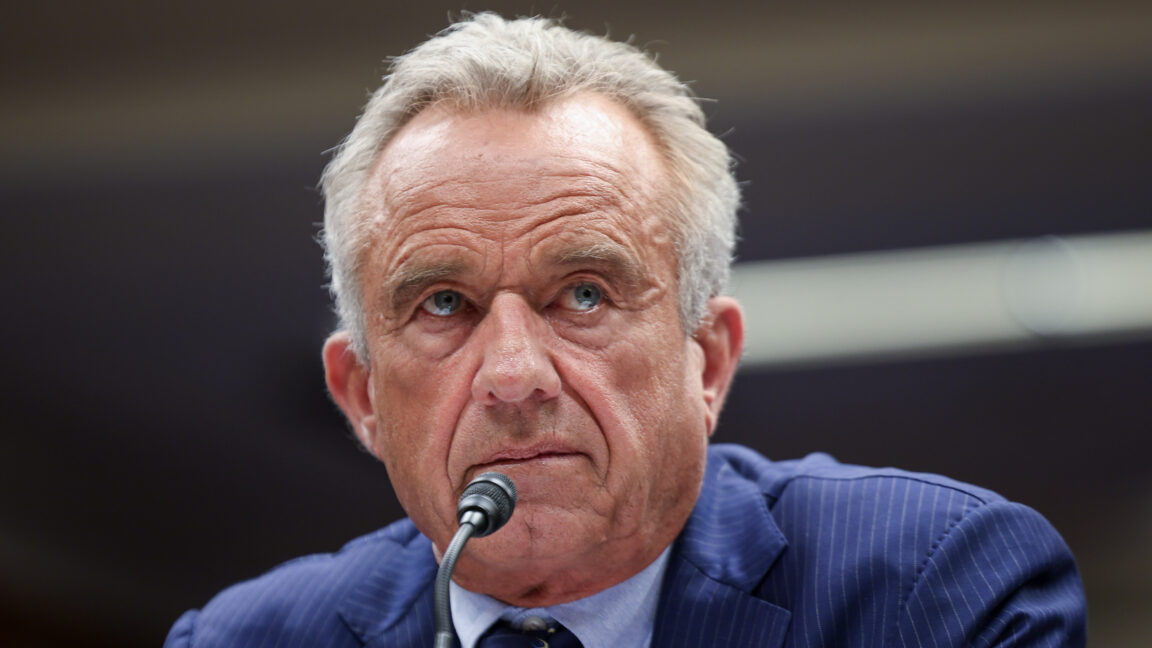
Washington D.C. – A recent shift within the Trump administration suggests a growing awareness of the political risks associated with embracing anti-vaccine rhetoric, particularly as championed by Health and Human Services Secretary Robert F. Kennedy Jr. While Kennedy has aggressively pursued policies aligning the United States with the more limited childhood vaccination schedules of countries like Denmark, internal polling data indicates widespread public support for existing vaccine recommendations. This has prompted a reassessment of the administration’s approach, signaling a potential pullback from some of Kennedy’s most controversial initiatives.
The initial push to overhaul the U.S. Vaccine schedule stemmed from Kennedy’s long-held skepticism towards vaccines. In January, the Centers for Disease Control and Prevention (CDC) announced a revised schedule recommending vaccines for 11 diseases, a reduction from the previous 18. This change was explicitly framed as an alignment with Denmark’s approach, a nation Kennedy frequently cites as a model for public health policy. However, experts have cautioned against directly comparing the two countries, citing significant differences in population demographics, healthcare systems and disease prevalence. The United States now recommends fewer childhood vaccines than many of its peer nations, a shift that has drawn criticism from medical professionals and public health advocates.
The Danish Model and U.S. Public Health
The appeal of the Danish vaccine schedule, as presented by Kennedy, lies in its perceived simplicity and reduced number of immunizations. Denmark routinely vaccinates children against 10 diseases, while the U.S. Previously recommended vaccination against 17, now reduced to 11 following the recent CDC changes. However, this comparison overlooks crucial contextual factors. Denmark has a smaller, more homogenous population with universal healthcare access, allowing for different strategies in disease prevention. As noted by experts at NPR, simply adopting another country’s vaccine schedule in the U.S., with its diverse population and varying health risks, is akin to “fitting a square peg in a round hole.”
The shift towards fewer recommended vaccines was not without internal dissent. Dr. Yvonne Maldonado, a professor of global health and infectious diseases at Stanford University, expressed concerns about the lack of transparency surrounding the new schedule. She noted the absence of supporting data or published research justifying the changes, stating, “There are no data, no papers, no discussions at all that are cited in this quote-unquote exhaustive search. So we have no idea who made these decisions and why they were made now.” Dr. Jake Scott, an infectious diseases specialist at Stanford Medicine, warned that the change could have a “dramatic effect on vaccine uptake,” describing it as “the most significant weakening of childhood vaccine recommendations, I would say, in modern American history.”
Political Headwinds and Shifting Priorities
Despite Kennedy’s efforts to reshape U.S. Vaccine policy, the Trump administration appears to be recognizing the political liabilities of embracing anti-vaccine sentiment. According to a report in The Post, Trump’s top pollster, Tony Fabrizio, has advised that vaccine skepticism is “rejected by most voters” and that opposing vaccine requirements is “politically risky.” Fabrizio’s polling data, consistent with findings from Reuters/Ipsos and the Pew Research Center, demonstrates broad public support for vaccines and vaccine mandates. Fabrizio reportedly warned in a December memo that politicians supporting the elimination of vaccine recommendations “will pay a price in the election.”
This shift in political calculation comes as Kennedy’s allies continue to push for even more radical changes. On Monday, the MAHA Institute, a think tank associated with Kennedy’s “Make America Health Again” movement, hosted an event featuring prominent anti-vaccine activists, including Del Bigtree, leader of the Informed Consent Action Network, and Mary Holland, CEO of Children’s Health Defense, an organization founded by Kennedy. The event centered around the unsubstantiated claim of a “Massive Epidemic of Vaccine Injury,” dubbed “Mevi” by the institute. Speakers at the event promoted false and misleading information about vaccines, including claims that they cause autism and autoimmune diseases, and that COVID-19 vaccines are deadly.
MAHA Institute President Mark Gordon articulated a belief that the medical community has engaged in a decades-long conspiracy to conceal the alleged dangers of vaccines, labeling them “the greatest scam in medical history.” He advocated for the complete elimination of the childhood vaccination schedule and the removal of all vaccines from the market. While these views resonate with a dedicated base of anti-vaccine activists, they are increasingly at odds with the broader political landscape and public opinion.
The CDC’s Revised Schedule: A Closer Look
The CDC’s revised childhood immunization schedule, implemented in January 2026, represents a significant departure from previous recommendations. The new schedule recommends vaccines for 11 diseases, compared to the previous 18. This change was justified by senior Health and Human Services Department officials as an effort to restore public trust in public health, which they acknowledged had been eroded during the COVID-19 pandemic. According to the agency’s scientific assessment, the pandemic contributed to decreased adherence to the full CDC immunization schedule, with lower rates of vaccination for diseases such as measles, rubella, pertussis, and polio.
However, the assessment also acknowledged “there is a need for more and better science” on vaccines, a statement that has fueled criticism from those who argue that the changes were made without sufficient evidence. The decision to align the U.S. Schedule more closely with Denmark’s has also raised concerns, given the significant differences between the two countries’ healthcare systems and population characteristics. The long-term consequences of this shift in policy remain to be seen, but public health officials are closely monitoring vaccination rates and disease outbreaks.
RFK Jr.’s initial plans to fully embrace the Danish model appear to be facing increasing resistance, not only from the medical community but also from within the Trump administration itself. The administration’s growing awareness of the political risks associated with anti-vaccine policies suggests a potential course correction, prioritizing public health concerns and broader political considerations over the ideological preferences of a key appointee.
The next key development to watch will be the CDC’s report on vaccination rates following the implementation of the revised schedule, expected to be released in late spring 2026. This report will provide crucial data on the impact of the changes and inform future policy decisions. The administration’s response to these findings will be a key indicator of its commitment to evidence-based public health policy.
What are your thoughts on the revised vaccine schedule? Share your comments below, and let us grasp how this impacts your family. Don’t forget to share this article with your network to maintain the conversation going.
Worth a look