
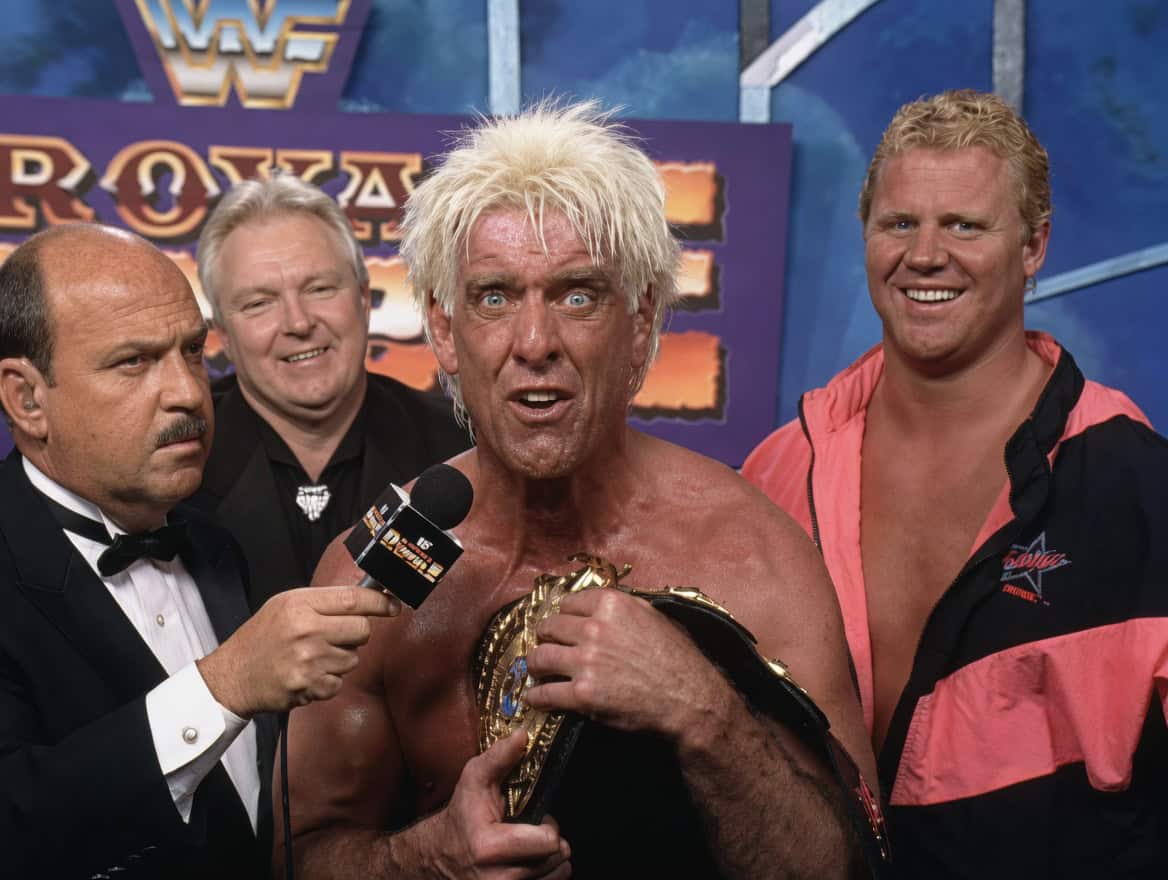
Ric Flair, the legendary WWE Hall of Famer, made startling claims during his April 2026 appearance on The Ariel Helwani Show, alleging that his longtime friend and fellow wrestling icon Curt Hennig, better known as “Mr. Perfect,” drugged him during a wild night out in the 1990s. Flair stated that he woke up in Baltimore with no memory of the events, missing three Rolex watches and personal belongings, which he believes were stolen by Hennig after being roofied. These allegations have reignited discussions about the excesses of wrestling’s road culture during its peak era.
The controversy stems from Flair’s appearance on The Ariel Helwani Show, where he recounted multiple stories from his decades-long career, emphasizing the chaotic lifestyle that defined professional wrestling in the 1980s and 1990s. During the interview, Flair described how the fame and constant travel led to frequent nights of heavy drinking and partying, often resulting in lost valuables and blurred memories. He specifically pointed to Hennig as responsible for one particularly troubling incident where he claims to have been drugged without his knowledge.
Flair’s allegations against Hennig are not isolated; he has previously spoken about losing multiple luxury watches during nights out with other wrestling legends, including The Undertaker. In the same interview, Flair revealed that he has lost a total of four Rolex watches throughout his career due to similar incidents involving theft or misplacement during periods of intoxication. This pattern of behavior highlights the broader culture of indulgence that existed within the wrestling business during its most profitable years.
The nature of Flair’s claims has drawn mixed reactions from those who knew Hennig personally. Friends and associates of the late wrestler have expressed disbelief at the allegations, describing Hennig as a man of integrity who valued his word and loyalty above all else. One anonymous friend of Hennig’s told sources that while Hennig struggled with personal demons, they could not imagine him engaging in such deceptive behavior toward a close friend like Flair.
These resurfaced allegations come at a time when the wrestling community continues to grapple with its complex legacy, particularly regarding the treatment of performers and the realities of life on the road during the industry’s boom periods. While Flair’s status as a 16-time world champion and cultural icon lends weight to his testimony, the inability to independently verify events from over two decades ago leaves the claims in the realm of contested memory rather than established fact.
The Plane Ride From Hell, which Flair referenced during his interview, remains one of the most infamous incidents in WWE history. Occurring in 2002 during a return flight from England to the United States, the event involved multiple wrestlers engaging in disruptive and inappropriate behavior that nearly jeopardized flight safety. Although Flair’s recent allegations about Hennig predate this specific incident, they contribute to the ongoing narrative about the lack of accountability and oversight that characterized certain eras of professional wrestling.
As of now, there has been no official response from Curt Hennig’s estate or surviving family members regarding Flair’s allegations. Hennig passed away in 2003 at the age of 44 due to acute cocaine intoxication, with heart disease listed as a contributing factor. His death marked the end of a career that saw him achieve tremendous success as both a singles competitor and tag team specialist, earning him induction into the WWE Hall of Fame in 2007.
Flair himself remains an active figure in the wrestling world, continuing to make public appearances and share stories from his storied career despite facing numerous health challenges in recent years. His willingness to speak candidly about both the triumphs and tribulations of his life has made him a polarizing yet undeniably influential voice in discussions about the sport’s evolution.
The allegations against Hennig serve as a reminder of the importance of verifying historical claims, especially those involving serious misconduct accusations made years after the fact. While Flair’s emotional testimony carries significant weight due to his stature in the industry, the absence of corroborating evidence or contemporary documentation means these claims must be viewed through the lens of personal recollection rather than verified historical record.
For fans and historians alike, this episode underscores the require for critical examination of wrestling’s past, balancing respect for its legends with honesty about its shortcomings. As the industry continues to mature and implement better wellness and safety protocols, revisiting these difficult conversations helps ensure that future generations learn from both the glory and the mistakes of those who came before.
To stay updated on developments in wrestling history and related news, follow World Today Journal’s sports section for verified reporting and thoughtful analysis.