
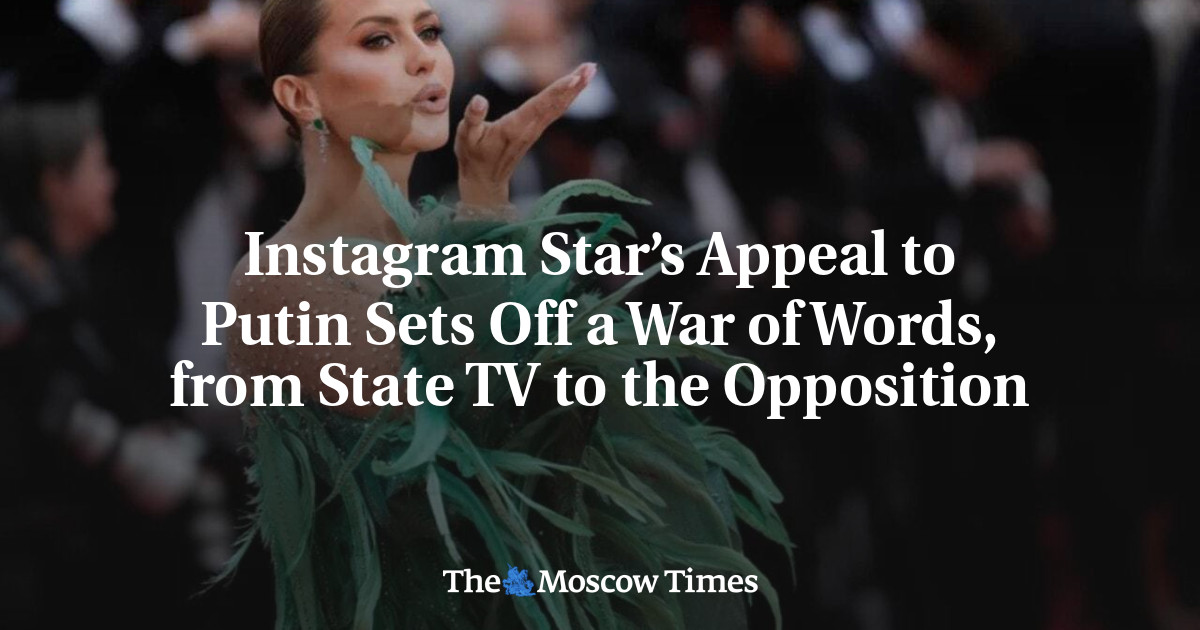
Viktoria Bonya, a Monaco-based Russian social media influencer, has become the center of a rare public political debate in Russia after her emotional video appeal to President Vladimir Putin went viral on Instagram. The 18-minute video, posted in April 2026, highlighted domestic issues including flooding in Dagestan, oil pollution along the Black Sea coast, livestock culling in Siberia, and internet outages in several regions. Bonya stated she supported Putin but warned that he was being shielded from the true state of affairs by his officials.
The video quickly gained traction, amassing over 30.2 million views, more than 84,100 comments, and over 117,000 reshares on Instagram. In it, Bonya said, “The people are afraid of you, artists are afraid, governors are afraid,” and added that regional officials fail to inform the president about the problems faced by ordinary Russians. She warned that public frustration was building like “a coiled spring” that could one day “shoot out.”
The Kremlin’s response was unusual. On Thursday, April 17, 2026, it publicly acknowledged Bonya’s critique, stating that work was underway to address the grievances she raised. Kremlin spokesman Dmitry Peskov confirmed that officials were reviewing her points but denied that Putin was insulated from bad news, saying, “No. This proves not so. Putin is the head of state, and his powers mean he deals with the widest range of issues on the agenda.”
This acknowledgment sparked a backlash from pro-Kremlin media. A Russian state television presenter and vocal supporter of the war in Ukraine accused Bonya of working for the West, intensifying the online clash between state-aligned figures and independent voices. Bonya responded with a follow-up video in which she burst into tears of joy, thanking the Kremlin for its attention and declaring she was “of and with the Russian people.”
The incident underscores a rare moment of visible tension within Russia’s pro-war consensus, where even loyal figures are now publicly questioning the flow of information to the leadership. While Bonya avoided direct criticism of Putin or acknowledgment of Russia’s role in the war in Ukraine, her focus on domestic hardships resonated widely, reflecting growing concerns among ordinary citizens about economic strain, environmental damage, and declining public services.
As of April 23, 2026, no official policy changes or investigations have been announced in response to Bonya’s video. The Kremlin has not released further details on which specific issues are being addressed or timelines for action. Independent analysts note that while the episode shows limited space for dissent, it likewise reveals sensitivity within the leadership to visible signs of public discontent, particularly when framed as loyalty-tinged appeals rather than outright opposition.
For ongoing updates on developments related to public discourse and government responsiveness in Russia, readers are encouraged to follow official Kremlin statements and verified international reporting.
Share your thoughts on this story in the comments below, and help spread awareness by sharing this article with your network.