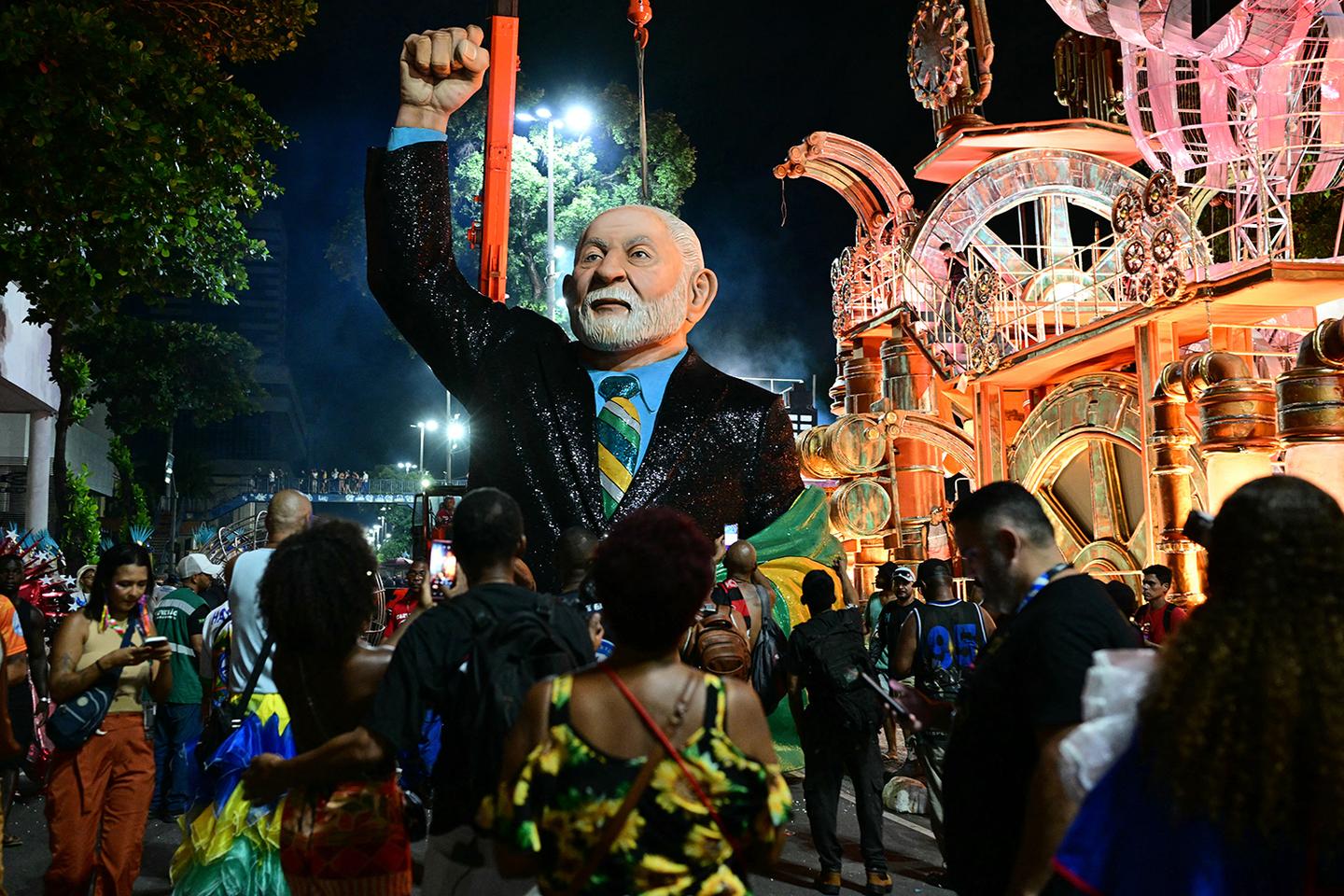
Rio de Janeiro’s Carnival, a globally renowned spectacle of music, dance, and elaborate costumes, recently became the backdrop for a political flashpoint. The Acadêmicos de Niterói samba school’s parade on February 15th, 2026, dedicated to the life and career of Brazilian President Luiz Inácio Lula da Silva, sparked both enthusiastic celebration and fierce criticism, highlighting the deep political divisions within the country as it approaches presidential elections. The school’s performance, a vibrant and often pointed portrayal of Lula’s journey from humble beginnings to the presidency, has ignited debate over the appropriate boundaries between artistic expression and political campaigning.
The Acadêmicos de Niterói’s samba narrative traced Lula’s life story, beginning with his childhood in the impoverished northeast of Brazil, his migration with his family to São Paulo, his work as a metalworker, and his rise as a labor leader. The parade featured elaborate floats and costumes depicting key moments in Lula’s life, including his union activism and his three terms as president. The spectacle culminated in a representation of his recent inauguration, complete with imagery referencing the diverse segments of Brazilian society that supported his return to power. However, the parade wasn’t solely celebratory; it similarly included pointed critiques of previous administrations, particularly that of former President Jair Bolsonaro.
A Parade Steeped in Political Symbolism
The Acadêmicos de Niterói’s parade was rich in symbolism, often directly addressing contemporary political issues. According to reports, the school’s commission of front presented a recreation of the ramp at the Palácio do Planalto, the presidential office, during Lula’s recent inauguration, alongside figures representing civil society. The parade also featured representations of prominent political figures, including Minister Alexandre de Moraes of the Supreme Federal Court, and former presidents Dilma Rousseff, Michel Temer, and Jair Bolsonaro. The inclusion of these figures, particularly Bolsonaro, was not without controversy.
One float depicted Bolsonaro as a clown wearing a damaged electronic ankle monitor, a clear reference to investigations and legal challenges he has faced. Another float criticized Bolsonaro’s handling of the COVID-19 pandemic, displaying crosses representing the over 700,000 lives lost in Brazil during his presidency. These pointed criticisms drew immediate condemnation from Bolsonaro supporters and raised questions about the appropriateness of using Carnival, a traditionally apolitical celebration, as a platform for political messaging. Michelle Bolsonaro, the former first lady, publicly criticized the parade’s portrayal of her husband, according to Brazilian media outlets.
Relegation and Accusations of Political Motivation
Despite the spectacle and the clear political message, the Acadêmicos de Niterói ultimately failed to impress the Carnival judges. On February 18th, 2026, the school was announced as the last-place finisher in the Grupo Especial, the top tier of Rio’s Carnival parades, resulting in their relegation to the Série Ouro for 2027. The decision sparked immediate accusations of political bias, with supporters of Lula alleging that the judges were unfairly influenced by their political leanings. However, Carnival officials have maintained that the judging was based solely on artistic and technical merit.
The school reportedly faced logistical challenges during its performance, with some floats becoming stuck as they exited the Sambadrome, potentially impacting their score. The Imperatriz Leopoldinense school, which performed immediately after Acadêmicos de Niterói, claimed that the delays caused by the stuck floats negatively affected their own performance. While these logistical issues undoubtedly contributed to the school’s low score, the controversy surrounding the parade’s political content continues to fuel debate about the fairness of the judging process. The relegation marks a disappointing end to Acadêmicos de Niterói’s debut in the Grupo Especial, a highly competitive and prestigious division.
The Broader Political Context
The controversy surrounding the Acadêmicos de Niterói parade unfolds against the backdrop of a highly polarized political climate in Brazil. Lula, who narrowly defeated Bolsonaro in the 2022 presidential election, is seeking re-election in October 2026. The Carnival parade has become a focal point in the ongoing political debate, with opponents accusing Lula of using the event to gain an unfair advantage in the upcoming election. The timing of the parade, just months before the official start of the campaign season on August 16th, has further fueled these accusations.
Lula himself responded to the controversy on social media platform X (formerly Twitter), expressing his appreciation for the creativity and talent displayed in the parade and calling it “a night I will never forget.” His supporters have defended the parade as a legitimate form of artistic expression and a celebration of his political achievements. However, critics argue that the parade crossed the line from artistic expression into blatant political campaigning, potentially violating election laws. The debate highlights the challenges of navigating the intersection of art, politics, and public opinion in a deeply divided society.
Carnival as a Political Arena
While Carnival is traditionally a celebration of Brazilian culture and creativity, it has often been used as a platform for social and political commentary. Samba schools frequently address social issues in their parades, using allegory and symbolism to convey their messages. However, the Acadêmicos de Niterói parade stands out for its direct and explicit focus on a current political figure and the controversies surrounding his presidency. This level of direct engagement with contemporary politics is relatively rare in Carnival parades, which typically focus on broader themes and historical narratives.
The incident raises questions about the role of Carnival in Brazilian society and the extent to which it should be considered a politically neutral space. Some argue that Carnival should remain a celebration of culture and tradition, free from overt political messaging. Others contend that Carnival is an important outlet for political expression and that samba schools have a right to address issues of public concern. The debate is likely to continue as Brazil prepares for its upcoming presidential election and as Carnival continues to evolve as a cultural and political phenomenon.
The Acadêmicos de Niterói’s relegation serves as a stark reminder of the high stakes involved in competing in the Grupo Especial and the intense scrutiny that samba schools face. The school will now have to rebuild and prepare for the Série Ouro competition in 2027, hoping to regain its place among the elite samba schools of Rio de Janeiro. The incident also underscores the increasing politicization of Brazilian society and the challenges of maintaining a space for artistic expression in a deeply divided political landscape.
As Brazil heads towards the October presidential elections, the debate surrounding the Acadêmicos de Niterói parade is likely to continue to resonate. The incident serves as a microcosm of the broader political tensions within the country and highlights the challenges of navigating the intersection of art, politics, and public opinion. The official launch of the election campaign on August 16th will undoubtedly bring renewed scrutiny to the role of political messaging in public celebrations like Carnival.
Key Takeaways:
- The Acadêmicos de Niterói samba school’s parade honoring President Lula sparked significant controversy due to its overt political messaging.
- The school was relegated to the Série Ouro after finishing last in the Grupo Especial, leading to accusations of political bias in the judging.
- The incident highlights the deep political divisions within Brazil as the country prepares for presidential elections in October 2026.
- The debate raises questions about the appropriate role of politics in Carnival, a traditionally apolitical celebration.
The next major event to watch will be the official launch of the Brazilian presidential election campaign on August 16th, 2026. We will continue to provide updates on the political landscape in Brazil and the impact of events like the Carnival parade on the upcoming election. Share your thoughts on this story in the comments below, and please consider sharing this article with your network.
Worth a look