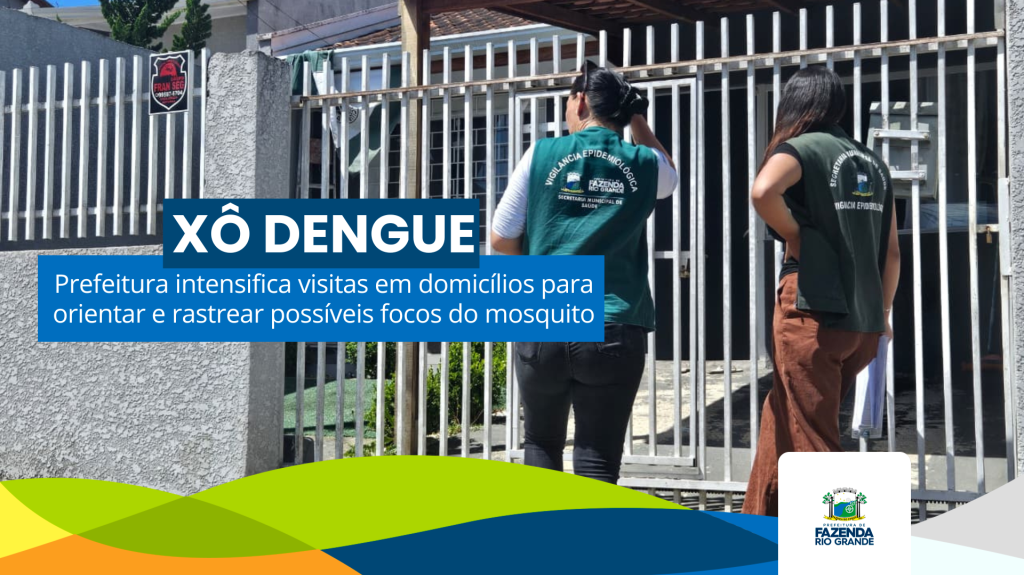
The public health landscape in Rio Grande, Rio Grande do Sul, has reached a critical turning point with the confirmation of the city’s first autochthonous case of dengue. This development, announced by the Municipal Government of Rio Grande, signals that the virus is now circulating locally, moving beyond imported cases to active transmission within the community.
As a physician and journalist, I find this transition particularly concerning given that it confirms that the environmental conditions in the city have become conducive not only to the presence of the Aedes aegypti mosquito but also to the sustained cycle of the virus. When we speak of an “autochthonous” case, we are describing an infection acquired within the local area, meaning a resident was bitten by a locally infected mosquito, rather than contracting the illness even as traveling elsewhere.
The timing of this confirmation coincides with a staggering increase in mosquito breeding sites across the municipality. Data indicates a sharp upward trajectory in the proliferation of the vector, with the number of recorded foci jumping from 70 in mid-February to 284 by early April according to the Municipal Government’s Epidemiological Bulletin.
The Escalation of Aedes aegypti Breeding Sites
The growth of mosquito populations in Rio Grande has been aggressive over the last two months. On February 18, 2026, the city’s Health Surveillance reported 70 foci of the Aedes aegypti mosquito via the sixth Epidemiological Bulletin of the year. At that time, authorities were already on high alert, noting 16 suspected cases of dengue—though 13 were subsequently discarded and three remained under analysis.
By April 6, 2026, that number had surged to 284 foci, representing a nearly four-fold increase in just a few weeks as reported by the city’s Health Surveillance. This rapid expansion indicates a high density of standing water and inadequate waste management in various urban pockets, providing the perfect nursery for the vector.
Geographic Hotspots of Infection Risk
The distribution of these breeding sites is not uniform, with certain industrial and residential areas showing much higher vulnerability. According to data from February, the Distrito Industrial was the most affected area with 21 registered foci, followed closely by the Central region with 17 according to the city’s health monitoring.
Other neighborhoods identified as high-risk zones include:
- Quinta: 8 recorded foci
- Cidade Nova: 5 recorded foci
- Bolaxa: 4 recorded foci
smaller clusters of two foci each were identified in Linha do Parque, Buchholz, São Miguel, and Prado. Single foci were recorded in several other locations, including the Aeroporto area, BGV, Mangueira, and the FURG Carreiros campus per the Health Surveillance report.
Why Autochthonous Transmission Changes the Strategy
From a clinical and public health perspective, the shift to autochthonous transmission of dengue in Rio Grande changes the urgency of the response. Until now, the city was in a “preventive alert” phase. Now, it has entered an “active transmission” phase. This means the virus is no longer just a threat from the outside; it is a resident of the city.
The danger is not limited to dengue alone. The Aedes aegypti mosquito is a versatile vector capable of transmitting a suite of arboviruses, including Zika, Chikungunya, and Yellow Fever as highlighted by local health authorities. When a city confirms it can support the transmission of one of these viruses, it is effectively confirming it can support any of them if the virus is introduced.
The rise in foci from 70 to 284 is a leading indicator. In epidemiology, the presence of the vector usually precedes the spike in human cases. The confirmation of the first local case is the “canary in the coal mine,” suggesting that without aggressive intervention, the city could spot a significant outbreak as the weather remains favorable for mosquito proliferation.
Key Epidemiological Data at a Glance
Public Health Response and Community Action
The Health Surveillance of Rio Grande has emphasized that monitoring is continuous. However, the responsibility for controlling dengue in Rio Grande now extends beyond government agents to every household. Because the Aedes aegypti mosquito predominantly breeds in clean, stagnant water within urban environments, the “foci” are often found in small, overlooked items: flowerpot saucers, discarded tires, clogged gutters, and uncovered water tanks.

Health authorities are urging residents to perform a “weekly check” of their properties to eliminate any potential breeding sites. The rapid increase in foci—adding 18 recent sites in a single reporting period in early April according to the Epidemiological Bulletin—demonstrates how quickly the situation can deteriorate if community vigilance slips.
For those living in the Distrito Industrial or the Central region, the risk is statistically higher. Residents in these areas should be particularly vigilant regarding symptoms such as high fever, severe headache, pain behind the eyes, joint and muscle pain, and rashes. Early detection is key to preventing severe complications, such as hemorrhagic dengue.
The Municipal Government continues to deploy endemic agents to inspect properties and provide guidance on prevention. The goal is to reverse the trend of increasing larval foci before the city enters the peak of the transmission season.
The next official epidemiological update from the Rio Grande Health Surveillance will provide the updated count of breeding sites and any further confirmed cases of arboviruses. Residents are encouraged to stay tuned to official municipal channels for the latest health advisories.
Do you live in Rio Grande or a neighboring city in Rio Grande do Sul? Have you noticed an increase in mosquito activity in your neighborhood? Share your experiences in the comments below and aid us spread awareness about local prevention.
Worth a look