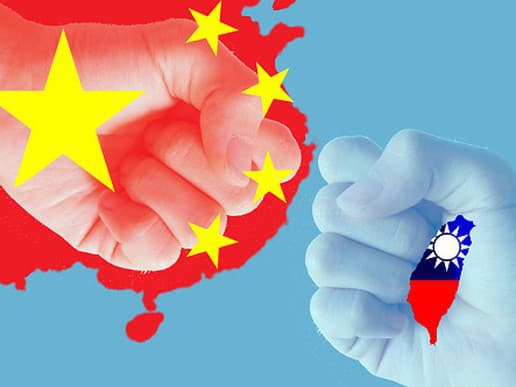
Taiwan is preparing for the largest military exercise in its history as the island moves to safeguard its survival against a potential naval blockade by China. The upcoming maneuvers are designed to test the island’s ability to maintain critical energy lifelines, specifically the transport of oil and liquefied natural gas, in the event that Beijing attempts to isolate the territory economically rather than launching a direct amphibious invasion.
This strategic shift comes at a time of heightened volatility in the region, following a series of massive Chinese military operations termed “Mission Justice 2025.” As the democratic island faces increasing pressure, the Taiwan military exercise represents a comprehensive effort to integrate all combat branches—including land, sea and interior ministry forces—to ensure that the island cannot be starved of the energy resources required to sustain its population and defense infrastructure.
The situation reflects a dangerous cycle of deterrence. While Taiwan views these preparations as a necessary shield for its sovereignty, Beijing continues to claim the territory based on historical ties, viewing any move toward independence or foreign military support as a provocation. The current tension is not merely a local dispute but a geopolitical flashpoint involving the world’s two largest economies and key regional players like Japan.
Countering the “Cuba-style” Blockade Strategy
The primary objective of Taiwan’s upcoming drills is to prepare for a scenario reminiscent of the U.S. Blockade of Cuba. Military analysts and government officials are concerned that China may seek to weaken Taiwan economically by cutting off all energy supplies, effectively forcing a surrender without the need for a high-risk land invasion. Because Taiwan is heavily dependent on imported oil and natural gas, a successful maritime blockade would create an immediate national emergency.
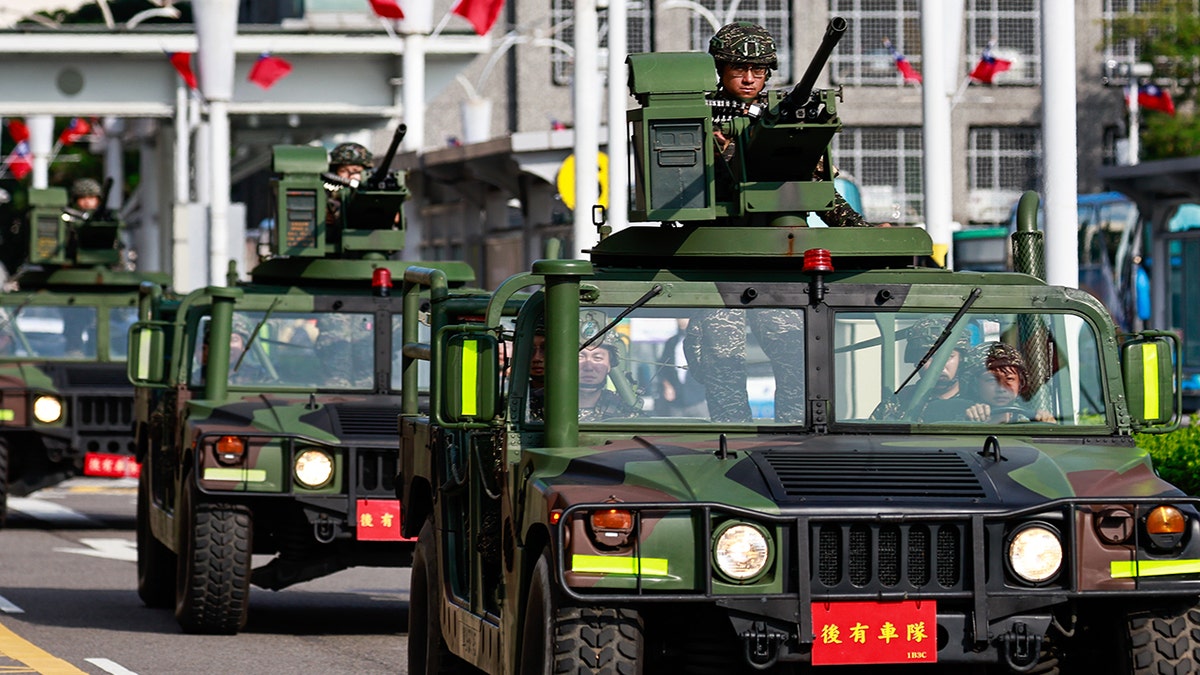
To counter this, the upcoming exercises will be the first of their kind to involve a joint operation between the Ministry of the Interior and the naval and land forces. The focus is explicitly on the protection of tankers and energy transport vessels, ensuring that supply lines remain open even under extreme military pressure. This integrated approach marks a significant evolution in Taiwan’s defensive doctrine, moving toward a “whole-of-government” response to maritime threats.
Central to this enhanced defense capability is the modernization of ground forces. The Taiwanese military has recently reached a milestone in its armored capabilities, integrating advanced American hardware to deter potential incursions.
🔴🇺🇸 DERNIÈRE MINUTE : L’armée taïwanaise annonce avoir achevé la formation du 1er bataillon combiné de la 584e brigade, principalement équipé de chars américains M1A2T Abrams. (E) pic.twitter….
The deployment of the M1A2T Abrams tanks within the 584th brigade provides a critical layer of heavy deterrence, ensuring that if a blockade were to transition into a landing operation, the island possesses the firepower to repel armored assaults via Topky.
China’s “Mission Justice 2025” and Regional Escalation
The urgency of Taiwan’s preparations is underscored by the aggressive posture of the People’s Liberation Army (PLA). On December 29, 2025, China launched a massive military operation titled “Mission Justice 2025,” which saw the deployment of torpedo boats, fighters, bombers, and unmanned aerial vehicles (UAVs) to encircle the island according to Aktuality.sk.
This operation was not merely a show of force but a simulated rehearsal for a full-scale blockade. The exercises included live-fire drills targeting naval assets to the north and southwest of Taiwan and the simulation of blockades at key strategic ports. On the Tuesday following the launch, China imposed strict ten-hour restrictions on maritime and air traffic across five specific zones surrounding the island, signaling its ability to sever transport links on short notice via Fontech.
Beijing has framed “Mission Justice 2025” as a “serious warning” to separatist forces in Taipei and a response to what it perceives as undue foreign interference. The PLA’s goals for the operation were explicit: to test rapid mobilization capabilities, achieve total air and sea superiority, and demonstrate the ability to isolate the island’s most critical ports.
The Role of Global Powers and the $11.1 Billion Arms Deal
The escalating tension is inextricably linked to the military support Taiwan receives from the United States. A major trigger for the recent Chinese maneuvers was a record-breaking arms contract, in which the U.S. Agreed to sell weapons worth $11.1 billion to Taiwan via Aktuality.sk. This influx of high-tech weaponry is intended to bolster Taiwan’s “asymmetric” defense strategy, making any potential invasion prohibitively costly for China.
Beyond the U.S., Japan has also develop into a central figure in the security architecture of the Taiwan Strait. In November, Japanese Prime Minister Sanae Takaichi stated that an attack on Taiwan could potentially trigger a military response from Tokyo via Fontech. This admission has further angered Beijing, which has issued stern warnings against the intervention of foreign forces in what it considers a domestic matter.
The interplay between these nations has created a volatile environment where every military exercise is interpreted as a precursor to conflict. While Taiwan maintains it is only acting in self-defense to protect its democratic independence, China views the combination of U.S. Arms sales and Japanese diplomatic support as an infringement on its sovereignty.
Key Strategic Stakes in the Taiwan Strait
| Stakeholder | Primary Objective | Key Tactics/Actions |
|---|---|---|
| Taiwan | Energy Security & Sovereignty | Largest-ever military exercise; protecting oil/gas tankers. |
| China | Reunification & Deterrence | “Mission Justice 2025”; port blockades; live-fire drills. |
| United States | Regional Stability & Defense | $11.1 billion weapons sale to bolster Taiwanese defense. |
| Japan | Regional Security | Warning of potential military response to a Taiwan attack. |
What Happens Next?
As Taiwan begins its historic joint-force exercises, the world will be watching the South China Sea for any signs of further escalation. The primary focus for the coming weeks will be the actual execution of the energy-protection drills and whether China responds with a novel series of “warning” maneuvers. The activation of Taiwan’s crisis center and the rapid readiness checks already underway suggest that the island is operating on a high state of alert.
The immediate next checkpoint for international observers will be the official results of Taiwan’s joint-branch exercises and any subsequent diplomatic or military response from Beijing regarding the continued deployment of U.S. Weaponry on the island.
Do you believe economic blockades are becoming the primary tool of modern geopolitical conflict? Share your thoughts in the comments below or share this report with your network.
Related reading