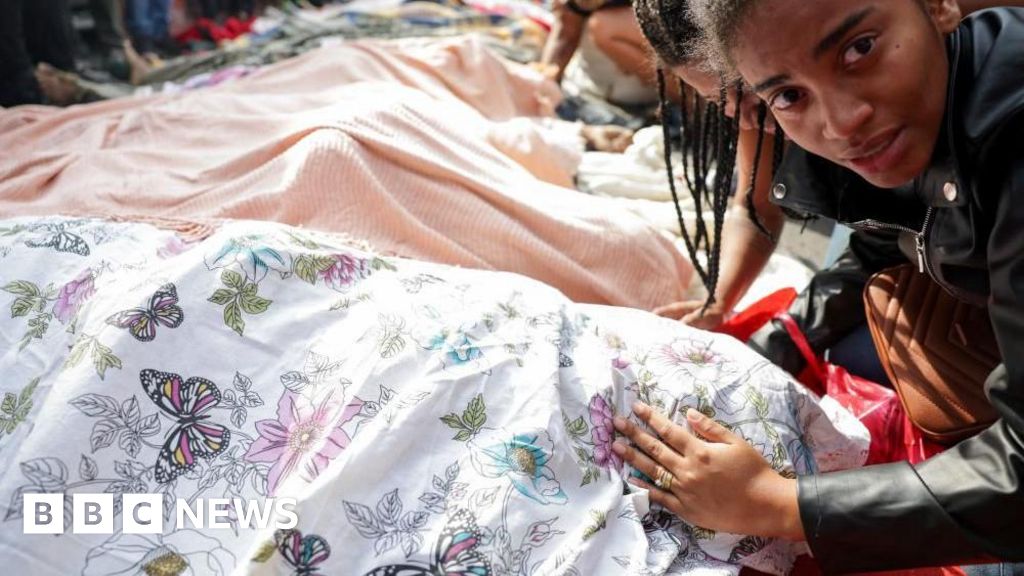
Rio de Janeiro Under Siege: Police Raid Targets Red Command,sparks ‘War-Like’ conditions
Rio de Janeiro recently experienced a dramatic escalation in violence as police launched a large-scale operation targeting the Red Command,one of Brazil’s most powerful criminal organizations. The raid, meticulously planned over two months, unfolded on Tuesday, transforming neighborhoods into what residents described as a “war-like” scene. This article delves into the details of the operation, its implications, and the broader context of escalating gang warfare in the city.
A Violent Confrontation
Residents reported intense shoot-outs between law enforcement and heavily armed gang members. To impede police progress, criminals reportedly set buses ablaze, creating barricades throughout the affected neighborhoods. Furthermore, authorities say the Red Command employed a disturbing new tactic: using drones to drop explosives on officers.
Governor Cláudio Castro condemned the actions, labeling them “narco-terrorism” and emphasizing the unprecedented challenge facing Rio’s police force. He stated this isn’t simply ordinary crime, but a calculated assault on the state’s authority. The operation resulted in the arrest of a key figure accused of being a leading drug dealer within the Red Command. Tragically, four police officers lost their lives during the operation, prompting Governor Castro to praise their bravery while acknowledging the historic nature of the confrontation.
Escalating Gang Warfare & Political Context
According to Brazilian journalist Rafael Soares, who covers crime in Rio, the Red Command has been aggressively attempting to reclaim lost territory from its rival, the First Capital Command (PCC). This operation represents a notable attempt to disrupt that momentum.
Beyond the immediate security concerns, the timing of the raid is noteworthy. Soares suggests Governor Castro is aiming to demonstrate a firm stance against crime ahead of next year’s elections. The operation also precedes two major international events: the C40 World Mayors Summit and the Earthshot Prize, hosted by Prince William on November 5th.
Unusual Scale of Violence
While large-scale police raids are common in Rio, the sheer number of fatalities in Tuesday’s operation is exceptionally high. Soares notes that operations resulting in over 20 deaths are “very rare” across Brazil,and predominantly occur in Rio de Janeiro.
The affected areas are densely populated, with approximately 280,000 residents. Police footage reveals the challenging terrain officers navigated – narrow, steep lanes within the hillside favelas. Rio de Janeiro’s Minister for Public Security, Victor Santos, underscored the depth of the problem, stating decades of inaction at all levels of government have allowed crime to flourish.
What You Need to Know:
* The Red Command: A powerful Brazilian criminal organization heavily involved in drug trafficking and other illicit activities.
* Narco-Terrorism: The use of violence and intimidation by drug cartels to achieve political or economic goals.
* Favelas: Informal settlements, often located on hillsides, characterized by dense populations and limited infrastructure.
* Political implications: The raid is viewed by some as a strategic move by Governor Castro ahead of upcoming elections.
* International Attention: The operation coincides with major international events, raising concerns about security and Rio’s image.
A Deep-Rooted Problem
This operation highlights the complex and deeply entrenched challenges Rio de Janeiro faces in combating organized crime. Santos emphasized that this is a “war” and a consequence of long-term systemic failures. Addressing this crisis will require sustained, comprehensive strategies that go beyond law enforcement, focusing on social and economic progress within vulnerable communities.
further Reporting:
this report incorporates additional insights from BBC News Brazil’s Marina Rossi and Mariana Alvim in São Paulo.
Disclaimer: This article provides details based on available reports as of November 2, 2023. The situation is dynamic and subject to change.