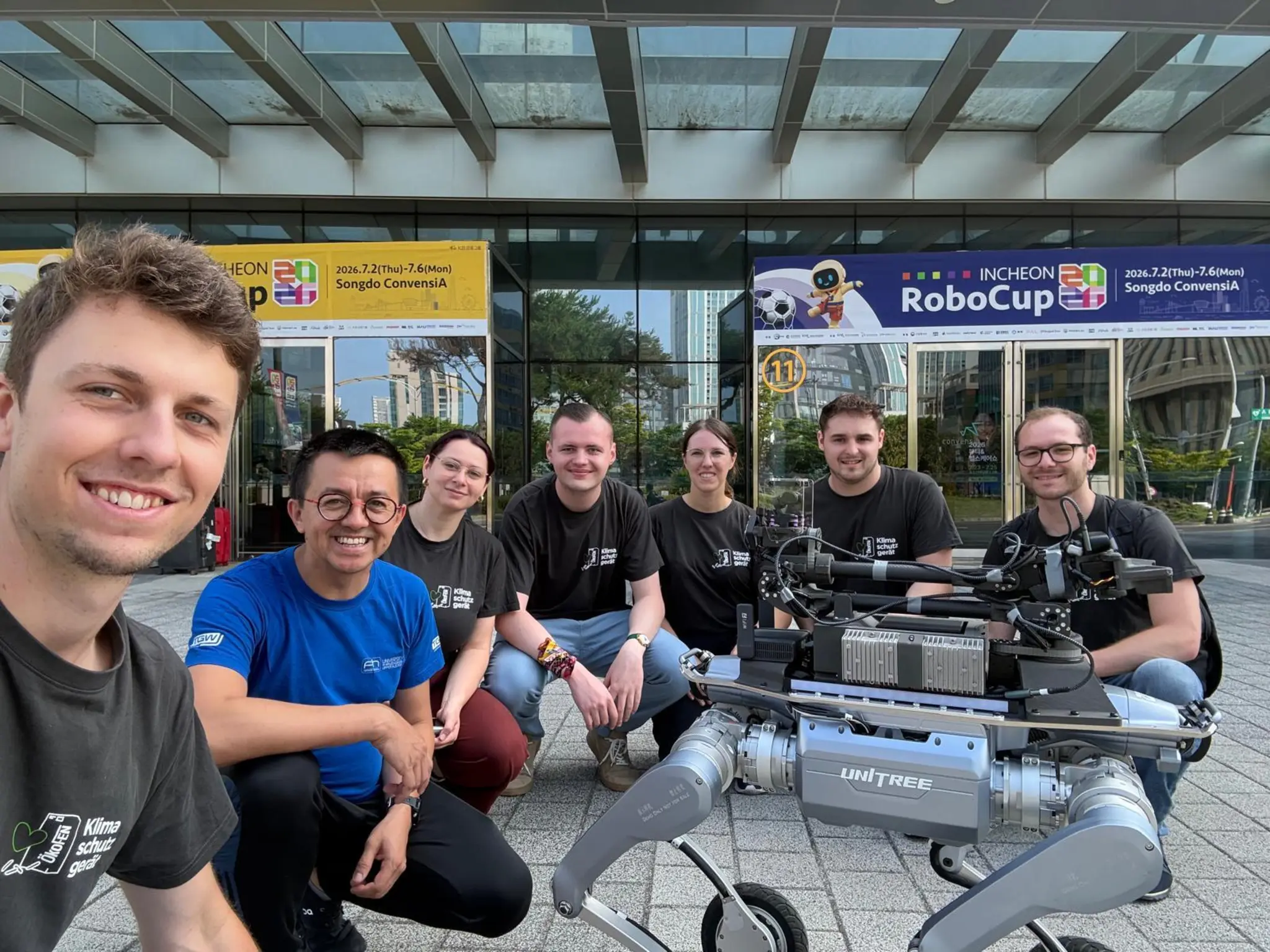
A student from Putzleinsdorf, Austria, has secured another world championship title in robotics as part of the Team Dynamics squad, marking a significant milestone in the field of autonomous systems. Competing at the international RoboCup, the team successfully defended their standing in a competition that brings together researchers and engineers to advance the development of intelligent robotics through soccer-based challenges.
The RoboCup Federation, which organizes these annual events, emphasizes the role of standardized testing in real-world scenarios. By using soccer as a benchmark, teams are forced to innovate in areas like real-time computer vision, obstacle avoidance, and collaborative decision-making. For the members of Team Dynamics, the win represents the culmination of months of rigorous programming and hardware refinement, according to reports from the event organizers.
Engineering Excellence and Academic Integration
The success of the Putzleinsdorf student is closely tied to his academic work at the University of Applied Sciences Upper Austria (FH Upper Austria) in Wels. Participation in the campus robotics club has served as a primary incubator for the technical skills required to compete at the world-class level. As noted in institutional records, the university has long supported extracurricular engagement in robotics, providing students with access to laboratory equipment and collaborative spaces necessary for developing autonomous agents.
Roboticists in this league work with both hardware and software stacks. The primary challenge involves creating robots that can perceive their environment, communicate with teammates, and execute strategic plays without human intervention. The victory at the global tournament confirms the effectiveness of the team’s current architecture, which balances computational efficiency with mechanical robustness. The RoboCup Federation provides the official rulebooks and technical requirements that all competing teams must follow to ensure fair play.
Why Competitive Robotics Matters
Beyond the trophy, the work performed by teams like Dynamics has practical implications for broader technology sectors. Autonomous soccer robots are essentially miniature versions of self-driving vehicle systems or automated warehouse logistics bots. The ability to process sensor data—such as lidar, ultrasonic, and optical camera feeds—in milliseconds is a core requirement for modern industrial automation, as outlined by the IEEE Robotics and Automation Society.
For students, the experience bridges the gap between theoretical computer science and physical systems engineering. The iterative process of testing, failing, and optimizing code in a high-pressure environment is widely considered by industry professionals to be a superior form of training for careers in artificial intelligence and machine learning. As the industry shifts toward more complex human-robot interaction, the lessons learned on the soccer field are increasingly applied to service robots and collaborative manufacturing tools.
Looking Toward Future Competitions
Following this year’s championship, the focus for the team shifts back to research and development. The RoboCup circuit is cyclical, with new rules often introduced each year to challenge the limits of existing technology. According to the official schedule of the RoboCup Federation, teams will soon begin preparations for the next regional qualifying rounds, which lead into the subsequent world championship event.
The academic community at FH Wels continues to monitor these developments, with faculty members often citing student success in international competitions as a key indicator of the effectiveness of their applied curriculum. As these students graduate and enter the workforce, they take with them the practical experience of managing complex, autonomous software environments. Readers interested in following the progress of these teams or learning about the technical specifications of the robots can find updates on the official RoboCup portal.
Have you been following the latest trends in autonomous robotics? Share your thoughts on the impact of these competitions on the future of AI in the comments below.
Worth a look