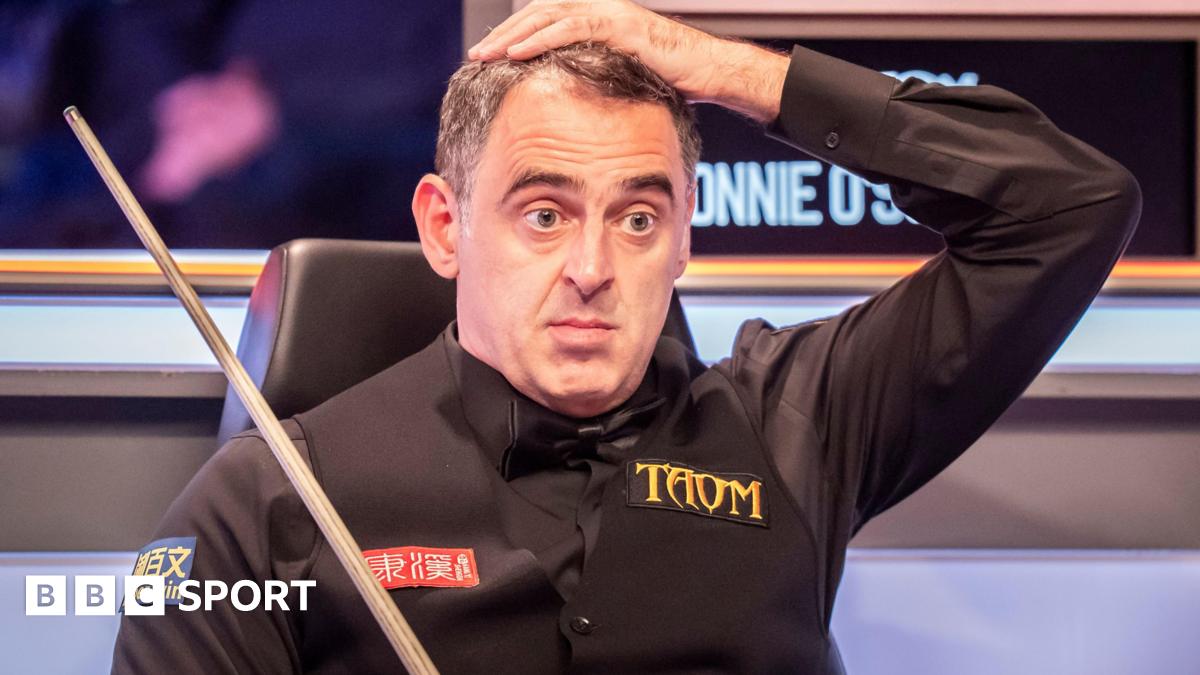
O’Sullivan Faces Questions About Future schedule After Loss in Shanghai
Ronnie O’Sullivan, the snooker icon, suffered a surprising defeat to Zhou Yuelong in the Shanghai Masters, ending a remarkable 27-match winning streak against the 27-year-old Chinese player. Despite this setback, the tournament showcased China’s growing strength in the sport, with an remarkable seven players reaching the last 16.
Immediately following the match, speculation arose regarding O’Sullivan’s participation in next month’s Masters in London, scheduled to begin January 11th with the draw taking place this Sunday. O’Sullivan himself admitted he hasn’t yet made a decision,stating he’ll assess his feelings after enjoying the Christmas period.
He acknowledged the disappointment of losing, notably when feeling he played well, but maintains a positive outlook. “Life is quite good, I’m just trying to enjoy working,” O’Sullivan shared, adding he’s been enjoying his game and feeling confident with his form as the start of the season.
Interestingly,O’Sullivan’s birthday falls during the tournament’s quarter-finals,and he plans to celebrate by watching snooker on television,alongside more personal pursuits like running and enjoying good food.
Though, the loss has sparked debate about O’Sullivan’s tournament schedule and its impact on his ability to consistently win. Fellow professionals beleive a more consistent presence on the circuit is crucial for regaining top form.
The Debate: Part-Time Schedule vs. Consistent Competition
Three-time world champion Mark Williams believes O’Sullivan’s reduced playing schedule is the primary reason for fewer tournament victories. He suggests that to return to consistent winning, O’Sullivan needs to play more often, acknowledging the challenges this presents at age 48.
Williams, a member of snooker’s celebrated “Class of 92” alongside O’Sullivan and John Higgins, believes O’Sullivan’s core motivation remains winning major championships. Despite publicly downplaying the desire to surpass Stephen Hendry’s record of seven World Championship titles, Williams suspects it remains a notable driving force.
Six-time UK and world champion Steve Davis echoes this sentiment, pointing to the increasing competitiveness of the modern snooker landscape. Davis, who himself reached the World Championship quarter-finals at age 52, emphasizes the difficulty of succeeding with a part-time tour schedule.
Here’s a breakdown of the key arguments:
* Increased Competition: The overall standard of play in snooker has risen significantly.
* Need for Match Practice: Consistent tournament play is vital for maintaining peak performance.
* Commitment level: A full commitment to the circuit is necessary to stay competitive.
* Motivation: O’Sullivan’s drive to win, particularly at the World Championship, remains strong.
Davis succinctly stated that O’Sullivan is at a “crossroads,” needing to fully commit to the circuit to overcome the challenges posed by a more competitive field. While he continues to deliver impressive performances, the depth of talent in the sport means that sporadic appearances may not be enough to secure consistent victories.
Ultimately, the decision rests with O’Sullivan, a player with a storied career and the freedom to choose his path. Though, the consensus among his peers is clear: sustained success requires a sustained commitment to the game.
Keep reading