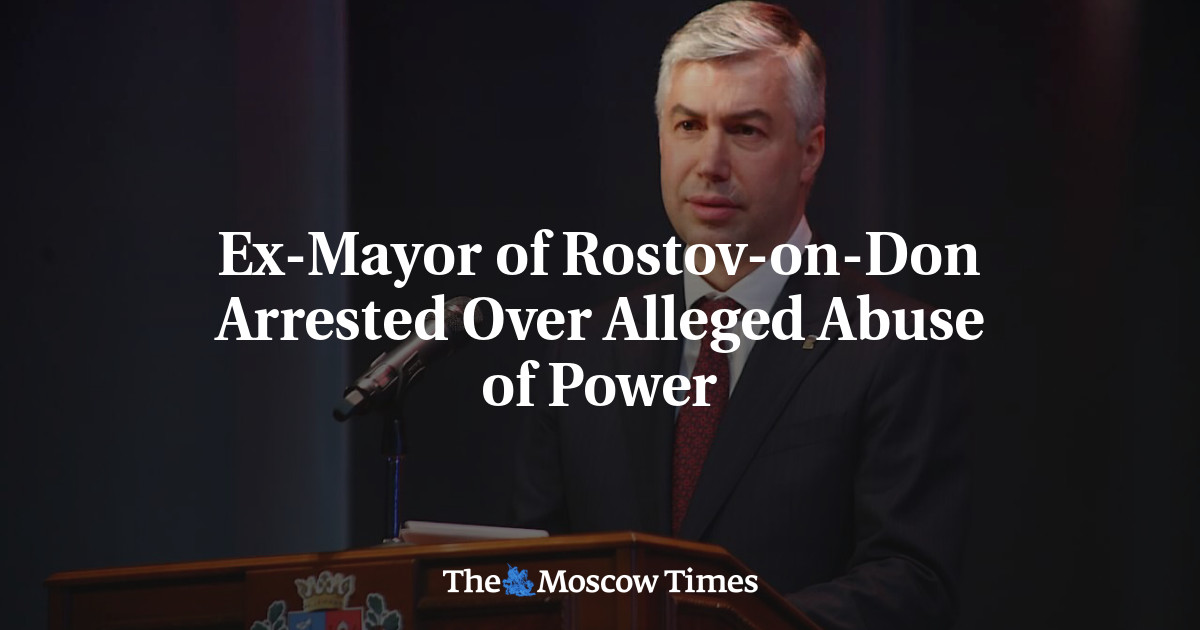
rostov-on-Don Former Mayor Alexei Logvinenko: A Deep Dive into the Abuse of Office Allegations
The recent arrest of Alexei Logvinenko, the former mayor of Rostov-on-Don, Russia, on charges of abuse of office has sent ripples through the region’s political landscape.The allegations center around a 47 million ruble ($583,300 USD as of November 2,2023) loss to the city budget,stemming from a possibly unlawful commercial loan taken out in 2020. This isn’t simply a case of alleged financial mismanagement; it’s a complex situation involving budgetary law, infrastructure progress, and a history of scrutiny surrounding Logvinenko’s administration. This article provides an in-depth analysis of the case, exploring the charges, the context of Logvinenko’s tenure, potential legal ramifications, and the broader implications for regional governance. We will also examine the concept of sluzhebnoye prestupleniye (official crime) within the Russian legal framework.
Understanding the Charges: Abuse of Office in Russia
The core accusation against Logvinenko is abuse of office – a broadly defined crime under Russian law (Article 285 of the Criminal Code).This encompasses a range of actions by public officials who, motivated by personal or improper interests, violate established laws and regulations, resulting in significant damage. Specifically, the Investigative Committee alleges Logvinenko authorized a commercial bank loan in 2020 that contravened budgetary legislation.
The key element the prosecution must prove is intent. Was the loan taken out with the purposeful intention of circumventing budgetary rules, or was it a genuine, albeit flawed, attempt to secure funding? The potential penalties are severe, with a maximum sentence of 15 years imprisonment. The request for pre-trial detention suggests investigators believe Logvinenko poses a flight risk or could potentially obstruct the investigation. This is standard procedure in cases involving significant financial crimes and high-profile individuals.
Logvinenko’s Tenure: Infrastructure, Controversy, and Resignation
Alexei Logvinenko served as the head of the Rostov-on-Don administration from 2019 untill his resignation in January 2025, citing “personal reasons.” While his tenure saw substantial investment in large-scale infrastructure projects designed to align with federal development programs, it wasn’t without its critics. Concerns were repeatedly raised regarding budget transparency and the handling of urban development initiatives.
These criticisms are important context. Large infrastructure projects, while beneficial, often create opportunities for corruption and mismanagement. The lack of transparency surrounding budgetary allocations can fuel suspicion and make it difficult to hold officials accountable. Reports from local media outlets during his time in office (though often lacking self-reliant verification) alluded to questionable land deals and inflated contract values.
| Aspect | Alexei Logvinenko’s Tenure | Potential Implications for Current Case |
|---|---|---|
| Infrastructure Projects | Oversaw large-scale upgrades. | May have created opportunities for financial irregularities. |
| Budget transparency | Criticized for lack of openness. | Hinders investigation and fuels public distrust. |
| urban Development | Controversial initiatives. | Potential for illicit gains through land deals. |
His prior experience – holding senior positions in regional economic security and anti-corruption bodies,as well as working for local utility companies – presents a complex picture. Did his background in anti-corruption equip him to resist temptation, or did his experience within the system provide him with the knowledge to exploit loopholes?
The Legal Process and Potential Outcomes
The investigation is currently in its early stages. Log
Keep reading