
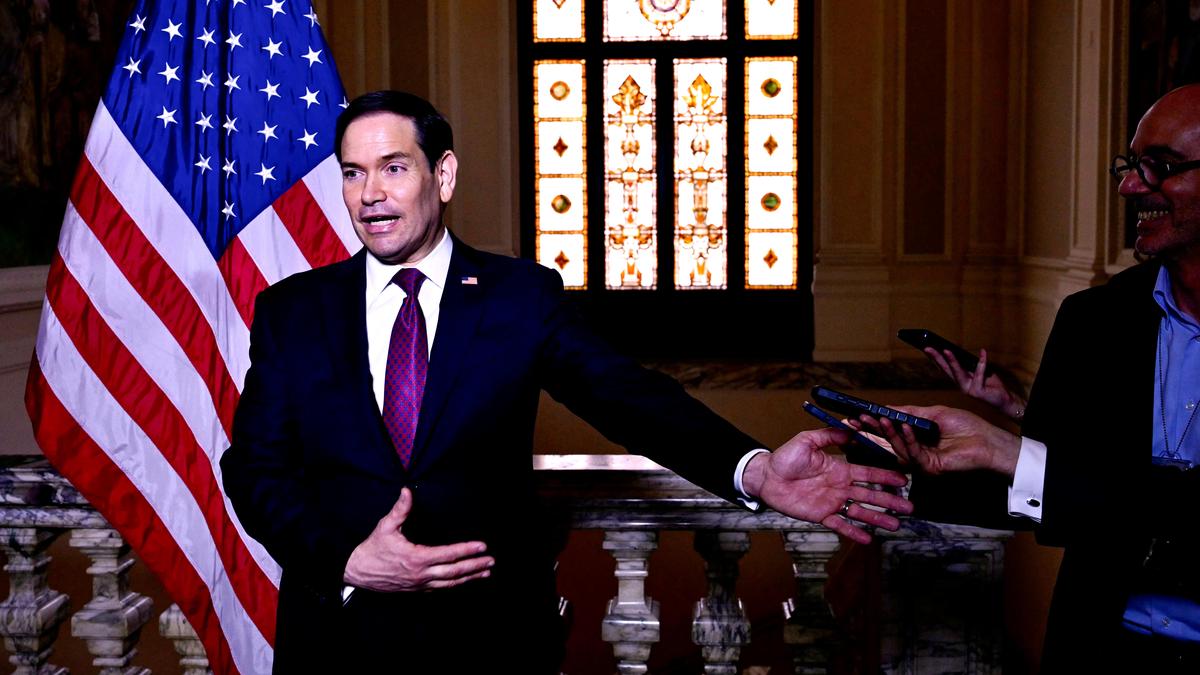
U.S. Secretary of State Marco Rubio defended the Trump administration’s imposition of new sanctions on Cuba on Friday, May 8, 2026, signaling a continued strategy of economic pressure against the island’s military-led economic structures.
Speaking during a press conference at the U.S. Embassy in Rome, Rubio focused on the targeting of Grupo de Administración Empresarial S.A., commonly known as GAESA. The conglomerate, which is run by the Cuban military, serves as a primary target in the administration’s effort to decouple the Cuban Armed Forces from the control of the nation’s most lucrative economic sectors.
The move comes at a time when Rubio holds a dual leadership role in U.S. Foreign policy, serving as the 72nd United States Secretary of State and as the Acting United States National Security Advisor, a position he assumed on May 1, 2025. This concentration of authority underscores the administration’s focus on a hardline approach toward Havana.
The Strategic Target: Grupo de Administración Empresarial S.A. (GAESA)
The focal point of the latest sanctions is GAESA, a military-run conglomerate that exerts significant control over the Cuban economy. By targeting this specific entity, the U.S. Government aims to disrupt the financial pipelines that sustain the Cuban military’s influence over civilian commerce and state resources.
GAESA operates as a strategic economic arm, managing a vast array of enterprises including tourism, retail, and foreign trade. The administration’s rationale for these sanctions is rooted in the belief that the military’s grip on the economy stifles private enterprise and sustains the current political status quo in Cuba. By imposing restrictions on GAESA, the U.S. Seeks to increase the cost of military control over the island’s economic life.
Diplomatic Signaling from Rome
The choice of venue for Secretary Rubio’s defense of the sanctions—a press conference at the U.S. Embassy in Rome—highlights the global nature of the administration’s strategy. By addressing the issue in Europe, Rubio is signaling to international partners the U.S. Position on Cuban governance and the necessity of restricting the financial capabilities of the Cuban military.

During the May 8 event, Rubio emphasized that the sanctions are a necessary tool to challenge the military’s role in the economy. The defense of these measures suggests that the Trump administration views economic leverage as the most effective means of pushing for systemic changes in how Cuba is governed and how its resources are managed.
Rubio’s Expanded Role in U.S. Foreign Policy
The implementation and defense of these sanctions occur under a unique administrative structure. Marco Rubio, who assumed office as Secretary of State on January 21, 2025, has since taken on the additional responsibility of Acting National Security Advisor. This dual capacity allows for a more direct alignment between the State Department’s diplomatic efforts and the National Security Council’s strategic planning.
Rubio’s history with Cuba policy is well-documented, having previously served as a U.S. Senator from Florida from 2011 until January 20, 2025. His long-standing advocacy for stricter measures against the Cuban government informs the current administration’s approach, which prioritizes the dismantling of military-run economic monopolies like GAESA.
Key Implications of the New Sanctions
- Financial Isolation: By targeting GAESA, the U.S. Aims to limit the conglomerate’s ability to engage in international financial transactions and access U.S. Dollar-denominated markets.
- Pressure on Military Leadership: The sanctions are designed to create internal friction within the Cuban government by targeting the specific revenue streams that benefit the military elite.
- Deterrence of Foreign Investment: U.S. Sanctions often serve as a warning to third-party investors and companies that engaging with sanctioned entities like GAESA could result in secondary penalties.
What This Means for U.S.-Cuba Relations
The decision to slap new sanctions on GAESA indicates that the U.S. Is moving away from engagement and toward a policy of maximum pressure. The focus on the military-run conglomerate suggests a strategic shift: rather than targeting the Cuban state as a whole, the administration is focusing on the specific institutions—namely the military—that it believes are the primary obstacles to democratic reform.

For the people of Cuba, the impact of such sanctions is often complex. While the administration argues that targeting the military benefits the general population by weakening the regime’s grip, critics of the policy often point to the potential for broader economic hardship. However, Rubio’s defense in Rome makes it clear that the U.S. Views the removal of military control over the economy as a prerequisite for any meaningful improvement in the island’s human rights and political landscape.
As the administration continues to refine its approach, the focus remains on the financial infrastructure of the Cuban Armed Forces. The targeting of GAESA is not an isolated event but part of a broader pattern of identifying and restricting the economic engines of the Cuban military.
The next confirmed checkpoint for this policy will be the upcoming quarterly review of the Treasury Department’s sanctions lists, where further entities associated with GAESA may be added or current restrictions adjusted based on the Cuban government’s response.
World Today Journal encourages readers to share this report and join the conversation in the comments section below regarding the impact of economic sanctions on global geopolitics.