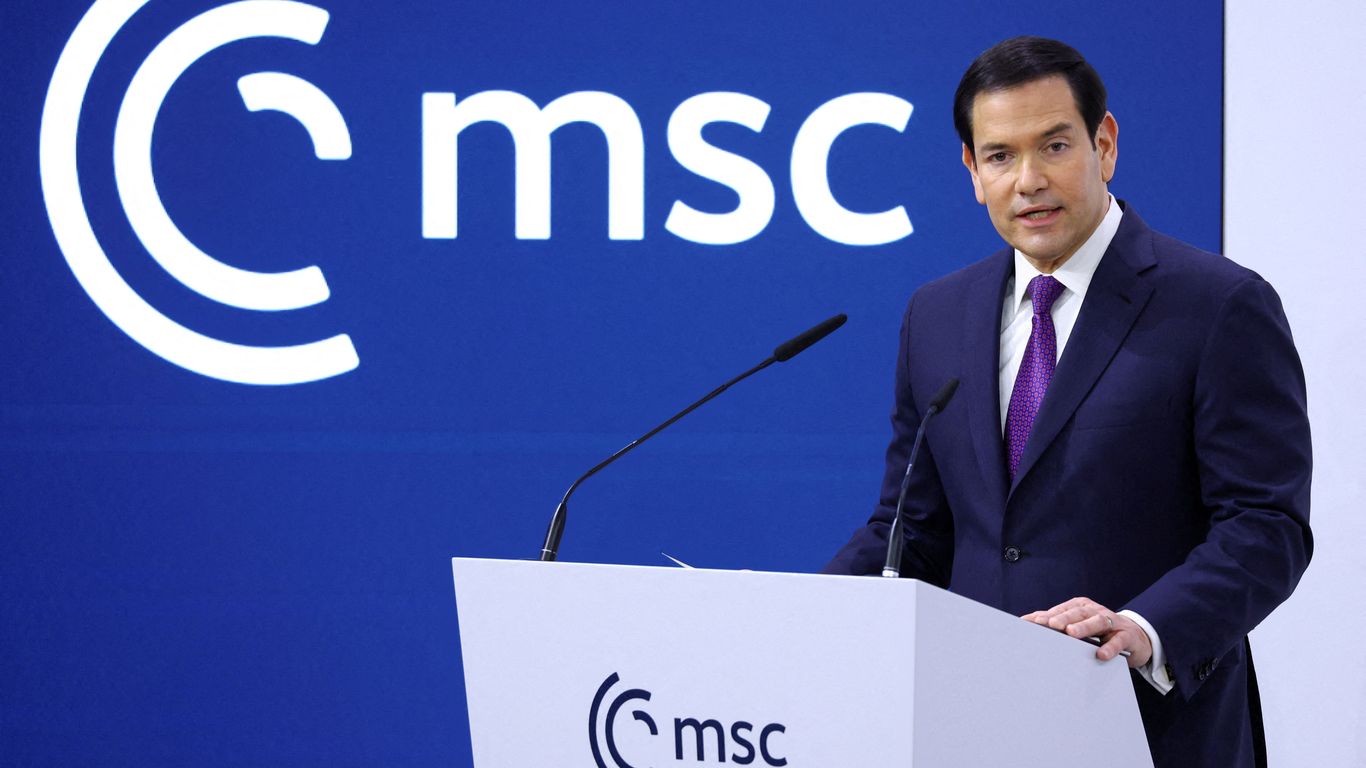
Analysis of Marco Rubio‘s Munich Security Conference Speech: Power, Values, and a Shifting World Order
This article details Marco Rubio’s speech at the Munich Security Conference, framing it as a key articulation of a burgeoning foreign policy perspective gaining traction among US conservatives. Here’s a breakdown of the key themes and implications:
1. Reassertion of “Western civilization” as a Core Identity & Justification for Action:
* Central Argument: Rubio explicitly frames the defense of “Western Civilization” as the primary purpose of US foreign policy. This isn’t just about abstract ideals,but about protecting a specific way of life rooted in shared history,Christian faith,culture,and heritage.
* Echoes of Trump & Vance: The speech deliberately builds on themes previously articulated by both Donald Trump and J.D. Vance, especially regarding opposition to mass migration. This suggests a growing consensus within the conservative movement.
* Sovereignty & Immigration: Rubio directly challenges progressive views on immigration, arguing that controlling borders isn’t xenophobia but a fundamental act of national sovereignty vital for societal survival. This is a key point of contention and a defining characteristic of this emerging worldview.
2. A critique of Globalization & a Call for Economic Nationalism:
* Deindustrialization & Trade: rubio criticizes past ”dogmatic” free trade policies, arguing they led to the hollowing out of American manufacturing and the transfer of economic power to rivals (implicitly, China).
* Uneven Playing Field: He highlights the hypocrisy of climate change restrictions, arguing that competitors are not adhering to the same standards and are using energy resources strategically against the West.
* Strategic Competition: While not naming China, the speech clearly points to it as the primary strategic competitor benefiting from these policies. The focus is on regaining economic control and securing critical supply chains.
3. A More Assertive,Possibly Unilateralist,foreign Policy:
* Questioning Abstractions: Rubio emphasizes that armies fight for concrete things – people,nations,and ways of life – not abstract ideals. This suggests a move away from values-based foreign policy towards a more pragmatic, national-interest driven approach.
* UN Skepticism: The speech subtly suggests a diminished role for the United nations, highlighting Trump’s successes in brokering deals outside the UN framework. This implies a willingness to act unilaterally if necessary.
* Military Power as a Tool: The examples cited (Gaza, Ukraine/Russia, Venezuela, Iran) demonstrate a preference for using military power, or the threat of it, to achieve US objectives.
4. A multipolar World & the Need for Revitalized Alliances (on US Terms):
* Acknowledging Shifting Dynamics: Rubio recognizes that European leaders are unsettled by Trump’s policies and the changing global landscape.
* Call for Unity: He appeals for a renewed partnership with Europe, but on the basis of defending shared Western values and interests.The phrasing (“While we are prepared, if necessary, to do this alone…”) suggests the US is willing to act without europe if necessary.
* Reaganism & Trumpism Blend: The speech attempts to synthesize customary Reaganite ideals of strength and freedom with Trump’s populist and nationalist rhetoric.
Overall Implications:
Rubio’s speech represents a meaningful articulation of a new conservative foreign policy vision. It’s a vision that:
* Prioritizes national interests and sovereignty.
* Is skeptical of global institutions and multilateralism.
* Embraces a more assertive and potentially unilateralist approach to foreign policy.
* Defines the world as a competition between civilizations, with ”Western Civilization” needing active defense.
* Sees economic strength as crucial to national security.
This perspective is likely to shape the debate over US foreign policy in the coming years, particularly as the world becomes increasingly multipolar and the US grapples with the rise of China and other global challenges. The speech signals a potential shift away from the post-cold War consensus and towards a more transactional and nationalistic approach to international relations.
Keep reading