
The entry-level graphics card market is bracing for a potential shake-up as new leaks suggest AMD is preparing a surprising strategy for its next-generation hardware. Reports indicate that the AMD Radeon RX 9050, positioned as a budget-friendly entry point for the RDNA 4 architecture, may feature a hardware configuration that defies traditional product stacking.
In a move that has caught the attention of hardware enthusiasts, the rumored RX 9050 is allegedly sporting a core count that exceeds that of its sibling, the vanilla RX 9060. While This proves common for manufacturers to scale down core counts for lower-tier models, these reports suggest AMD is prioritizing a specific performance baseline to remain competitive in the highly contested budget gaming segment.
As a former software engineer and current editor, I have seen many “paper launches” and spec shifts, but the reported configuration of the RX 9050 suggests a targeted strike at NVIDIA’s upcoming entry-level offerings. If these leaks hold true, AMD is not just filling a gap in its portfolio; it is attempting to redefine what “entry-level” means for the RDNA 4 era.
Breaking Down the RX 9050 Leaked Specifications
According to reports from Videocardz, the RX 9050 is expected to be based on the Navi 44 die. The most striking detail is the inclusion of 2,048 cores, a figure that puts it on par with the more expensive RX 9060 XT 8GB. This suggests that AMD is leveraging a more aggressive hardware allocation for its lowest-tier card to ensure it can handle modern gaming workloads without falling behind.
The leaked technical specifications for the RX 9050 include:
- Core Count: 2,048 cores
- Clock Speeds: A game clock of up to 1,920 MHz and a boost clock reaching 2,600 MHz
- Memory: 8GB of GDDR6 VRAM operating at 18Gbps across a 128-bit memory bus
- Interface: PCIe 5.0 x16
- Connectivity: Two DisplayPort 2.1a ports and one HDMI 2.1b port
The inclusion of PCIe 5.0 is a significant detail for a budget card. While many entry-level users may still be on older motherboards, providing a PCIe 5.0 interface ensures the card is future-proof and can maximize bandwidth on newer systems, reducing potential bottlenecks that often plague low-end GPUs with limited bus widths.
The Core Count Paradox: RX 9050 vs. RX 9060
The most puzzling aspect of these reports is the relationship between the RX 9050 and the RX 9060. Typically, a “60-series” card would outperform a “50-series” card in every metric, including raw core count. However, the leaks suggest the RX 9050 may actually possess more cores than the standard RX 9060.

To understand why this doesn’t necessarily make the RX 9050 the superior card, we have to look at clock speeds and memory bandwidth. In the world of GPU architecture, raw core count is only one part of the performance equation. The RX 9060 XT, for instance, also features 2,048 cores but maintains a substantial performance lead over the rumored RX 9050 due to a 24% advantage in clock speed, with a boost frequency of up to 3.1 GHz.
the XT variant utilizes faster 20 Gbps GDDR6 modules, providing higher memory bandwidth. In other words that while the RX 9050 might have the “muscle” (the cores), the higher-tier cards have the “speed” (the clocks and bandwidth) to process that data more efficiently. AMD appears to be using the RX 9050 to provide a high floor for performance, while using clock binning to differentiate the higher-priced models.
Strategic Positioning Against the RTX 5050
AMD’s reported strategy with the RX 9050 is likely a direct response to NVIDIA’s upcoming Blackwell-based entry-level cards, specifically the RTX 5050. For years, the budget segment has been a battle of “solid enough” performance, but as game engines move toward more complex lighting and higher asset densities, 8GB of VRAM has become the absolute minimum for a viable gaming experience.
By equipping the RX 9050 with 8GB of GDDR6 and a robust core count, AMD is positioning the card as a highly capable 1080p machine. The goal is likely to capture the massive market of “upgraders”—gamers moving from ancient GTX 10-series or RX 500-series cards who want a modern, power-efficient GPU without spending several hundred dollars.
The focus on the Navi 44 die suggests that AMD is prioritizing power efficiency and cost-effectiveness. By optimizing a smaller die to punch above its weight class, AMD can keep the retail price low while offering a product that doesn’t feel compromised, which is essential for winning over the budget-conscious demographic.
What RDNA 4 Means for Budget Gaming
The transition to RDNA 4 represents more than just a spec bump; it is a shift in how AMD approaches the GPU hierarchy. For a long time, the gap between entry-level and mid-range cards was cavernous. If the RX 9050 delivers on these leaked specs, that gap begins to close.
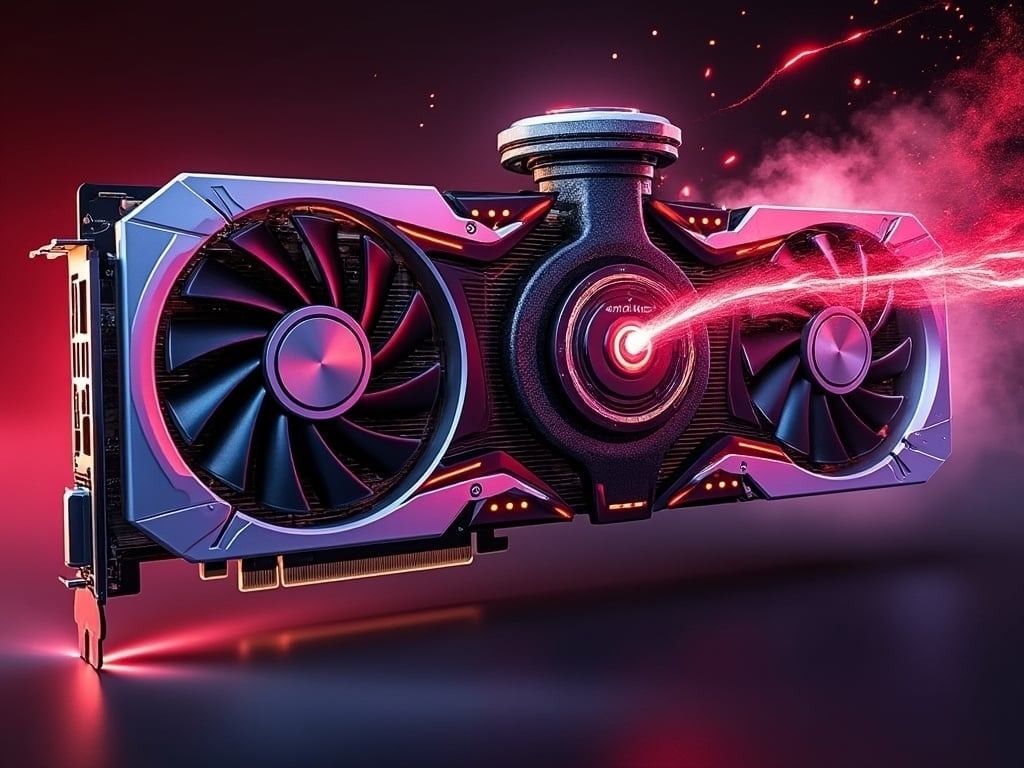
For the average user, this means several practical benefits:
- Better Value: More cores in a budget card generally translate to better stability in frame rates, reducing the “stutter” often seen in low-end hardware.
- Modern Standards: DisplayPort 2.1a support allows budget users to utilize higher-refresh-rate monitors that were previously reserved for high-end enthusiasts.
- Energy Efficiency: While official power targets are not yet confirmed, the use of the Navi 44 die typically points toward a lower TDP (Thermal Design Power), making these cards ideal for small-form-factor (SFF) builds.
However, it is important to remember that these details remain unconfirmed. AMD has not officially released the specifications for the RX 9000 series and leaks in the GPU space are often subject to change as companies tweak their product bins based on final silicon yields.
The next major checkpoint for the industry will be the official RDNA 4 announcement, where AMD is expected to unveil the full roadmap and pricing for the RX 9000 family. Until then, the RX 9050 stands as a fascinating example of how the “entry-level” category is evolving into a high-performance battleground.
What do you think about AMD’s rumored strategy? Would you prioritize more cores or higher clock speeds for a budget build? Let us know in the comments below.
Related reading