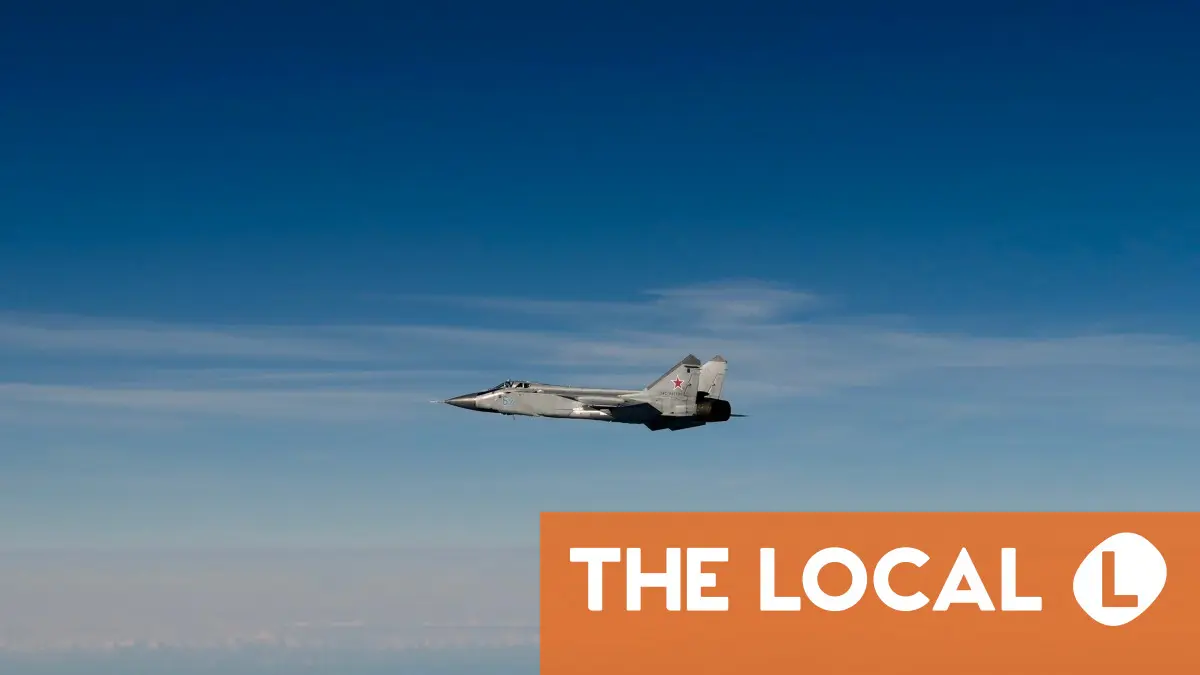
Navigating a New Era of Airspace concerns: Recent Russian Violations and Drone Activity in Northern Europe
Are you concerned about escalating tensions in Northern Europe? Recent events involving Russian military aircraft and unidentified drones are raising serious questions about airspace security and regional stability. This article delves into the details of these incidents – specifically, Russia’s airspace violations near Norway, alongside the concerning drone activity impacting Denmark and Sweden – providing context, analysis, and what these events mean for the future of European security.
Recent Russian Airspace Violations: A Pattern of Concern
Norway’s government recently confirmed three instances of Russian aircraft violating its airspace in 2023. Prime Minister Jonas Gahr Store labeled these incursions “not acceptable,” though he noted they were less extensive than similar violations reported by Estonia, Poland, and Romania.
Here’s a breakdown of the confirmed incidents:
* April 25th: A Russian SU-24 fighter jet entered Norwegian airspace for four minutes.
* July 24th: A L410 Turbolet transport aircraft remained in Norwegian airspace for three minutes.
* August 18th: An SU-33 fighter jet was detected within Norwegian airspace for one minute.
While the cause remains undetermined – intentional provocation versus navigational error – the Norwegian government is treating these violations with utmost seriousness. It’s crucial to remember Norway’s strategic importance as NATO’s “eyes and ears” in the far north, sharing both a maritime and 198-kilometer land border with Russia. This proximity inherently elevates the sensitivity surrounding such incidents.
The Drone Disruptions: A New Dimension of threat
The airspace concerns extend beyond traditional military aircraft. On Tuesday, August 29th, both Oslo and Copenhagen airports experienced shutdowns due to the presence of unidentified large drones.This disruption represents the “most serious attack on Danish critical infrastructure” to date, according to Danish Prime Minister mette Frederiksen, impacting thousands of passengers and raising meaningful security alarms.
While investigations are ongoing, speculation points towards potential Russian involvement. Frederiksen acknowledged the possibility, though Moscow vehemently denies any responsibility, dismissing the accusations as “unfounded.” This denial comes amidst a broader context of heightened geopolitical tensions and ongoing conflict in Ukraine.
Why Are These Incidents Happening Now?
Several factors likely contribute to this increased activity.
* Ukraine Conflict: The ongoing war in Ukraine has dramatically altered the security landscape in Europe, leading to increased military posturing and heightened vigilance.
* NATO Expansion: Finland’s recent accession to NATO and Sweden’s pending application are perceived by Russia as a direct challenge to its sphere of influence.
* Testing Boundaries: these incidents could be interpreted as deliberate attempts by russia to test NATO’s response capabilities and probe vulnerabilities in european air defence systems.
* Hybrid Warfare Tactics: The use of drones, especially for disruptive purposes, aligns with the broader trend of hybrid warfare – employing tactics short of direct military conflict to achieve strategic objectives.
Recent data from the European Union Agency for Cybersecurity (ENISA) highlights a 65% increase in cyberattacks targeting critical infrastructure in EU member states during the first half of 2023, suggesting a broader pattern of escalating hybrid threats.https://www.enisa.europa.eu/publications/threat-landscape-report-for-the-eu
What Does This Mean for European Security?
These events signal a worrying trend: a heightened level of risk and uncertainty in Northern Europe. The combination of airspace violations and drone disruptions necessitates a multi-faceted response:
* Strengthened Air Defenses: Investing in advanced air defense systems and improving radar capabilities are crucial for detecting and responding to potential threats.
* Enhanced Intelligence Gathering: Increased intelligence sharing and collaboration between NATO member states are essential for understanding the motivations and capabilities of potential adversaries.
* Clear Communication & Deterrence: Maintaining a clear and consistent message of deterrence, coupled with a demonstrable willingness to defend its airspace, is vital for discouraging further provocations.
* Critical Infrastructure Protection: Bolstering the security of critical infrastructure – including airports, energy grids, and communication networks – is paramount.
Looking Ahead: A New Normal?
It’s unlikely these incidents represent isolated occurrences. Experts predict a continued increase in both traditional and hybrid threats to European security. The need for vigilance, preparedness, and international cooperation has never
Worth a look