
MOSCOW/MINSK — In a move that has significantly heightened the specter of nuclear escalation in Eastern Europe, Russia and Belarus have commenced joint military exercises involving the handling and readiness of tactical nuclear weapons. The drills, conducted amidst the ongoing conflict in Ukraine, represent one of the most provocative displays of nuclear signaling by the Kremlin since the inception of the full-scale invasion.
The maneuvers, which involve coordinated movements between Russian and Belarusian military units, focus on the deployment and operational readiness of tactical nuclear warheads. Military analysts suggest that this development is not merely a routine training exercise but a calculated effort by Moscow to deter further Western military support for Kyiv and to reinforce the strategic depth of the Russia-Belarus alliance.
The announcement of these exercises follows months of increasing tension and has drawn immediate, sharp condemnation from Western capitals. As the war in Ukraine enters a critical phase, the integration of nuclear-capable assets into joint bilateral drills underscores a fundamental shift in the security architecture of the European continent.
Escalating Nuclear Signaling in Eastern Europe
The core of these exercises revolves around the operational procedures for tactical nuclear weapons—smaller-scale nuclear devices designed for use on a battlefield, rather than the massive, city-destroying strategic warheads used for intercontinental strikes. By practicing the handling and deployment of these assets, Moscow and Minsk are demonstrating a capacity for rapid nuclear escalation that has caught international observers on high alert.
This maneuver is a direct extension of the Kremlin’s broader strategy of “nuclear saber-rattling.” By conducting these drills in close proximity to the Ukrainian border, Russia is utilizing its nuclear arsenal as a psychological tool to influence the decision-making processes in Washington, Brussels, and Berlin. The objective is to create a “perceived cost” for any significant escalation in Western aid to Ukraine, including the provision of long-range missile systems or advanced aerial capabilities.
The presence of Russian nuclear warheads on Belarusian soil has been a growing concern for years. Following the decision by President Vladimir Putin to authorize the deployment of tactical nuclear weapons to Belarus, the distinction between Russian and Belarusian strategic defense has become increasingly blurred. These latest exercises serve to solidify that integration, showcasing a unified command structure capable of managing high-consequence weaponry.
For the international community, the drills signal a breakdown in the norms of nuclear restraint. The move challenges the existing framework of arms control and increases the risk of miscalculation, where a conventional military movement could be misinterpreted as the precursor to a nuclear strike.
The Geopolitical Context: Ukraine and the Belarusian Front
The timing of these exercises is inextricably linked to the shifting dynamics on the Ukrainian battlefield. As Russian forces continue their operations in eastern Ukraine, the role of Belarus as a “strategic rear” for Moscow has become more pronounced. While Belarusian territory has not been used for large-scale ground offensives in the same manner as in early 2022, its role in logistics, electronic warfare, and now nuclear readiness provides Russia with a critical second front of pressure.
The exercises also serve to bolster the domestic legitimacy of President Alexander Lukashenko. By positioning Belarus as a central player in a nuclear-capable alliance, Lukashenko reinforces his dependency on Moscow while simultaneously projecting an image of heightened national sovereignty and regional strength. This “fortress Belarus” approach is designed to deter any potential Western-backed efforts to destabilize his administration.

the drills occur against a backdrop of intense military activity throughout the region. The coordination between the Russian Ministry of Defense and the Belarusian Armed Forces suggests a level of interoperability that extends beyond conventional infantry and armor, reaching into the most sensitive tiers of strategic military doctrine.
Experts note that the “dual-threat” posed by Russia and Belarus—conventional pressure in Ukraine coupled with nuclear signaling from the north—forces NATO to spread its defensive resources across a wider geographic area, potentially thinning the support available for Ukraine.
NATO and International Responses
The reaction from the North Atlantic Treaty Organization (NATO) has been one of “grave concern.” Alliance officials have emphasized that such exercises are a direct threat to European stability and a violation of the spirit of international security agreements. NATO leadership has responded by increasing the readiness of its eastern flank, particularly in Poland and the Baltic states, to ensure a credible deterrent against any potential spillover from the conflict.
The United States and several European allies have characterized the drills as a “provocative escalation.” Diplomatic channels have been used to warn the Kremlin that such maneuvers do not change the strategic calculus of the West, but rather reinforce the necessity of continued and enhanced military assistance to Ukraine. There is a growing consensus among Western policymakers that the era of predictable nuclear restraint in Europe has effectively ended.
The implications for global non-proliferation are equally severe. The normalization of nuclear-capable drills in a conventional conflict undermines the Treaty on the Non-Proliferation of Nuclear Weapons (NPT) and sets a dangerous precedent for other regional powers. If nuclear signaling becomes a standard tool of conventional warfare, the threshold for nuclear use may be lowered globally.
Human rights organizations and international monitors have also raised alarms, noting that the increased militarization of the Belarus-Ukraine border increases the risk of civilian casualties and environmental catastrophes in the event of a misstep or an actual strike.
Key Takeaways: The Nuclear Drill Escalation
- Tactical Focus: The drills specifically target the readiness and handling of tactical nuclear weapons, rather than strategic intercontinental missiles.
- Strategic Signaling: The primary goal appears to be psychological deterrence aimed at Western allies of Ukraine.
- Integrated Command: The exercises demonstrate a deepening military integration between the Russian and Belarusian armed forces.
- NATO Response: The alliance has responded by reinforcing its eastern flank and increasing high-readiness postures.
- Global Risk: The maneuvers represent a significant challenge to international nuclear non-proliferation norms and increase the risk of miscalculation.
The Strategic Logic of the Russia-Belarus Alliance
To understand the gravity of these exercises, one must look at the evolving relationship between Moscow and Minsk. Once a relationship defined by varying degrees of autonomy, the bond has transitioned into a near-total military and political integration. This “Union State” framework provides the legal and structural basis for the joint operations currently being witnessed.
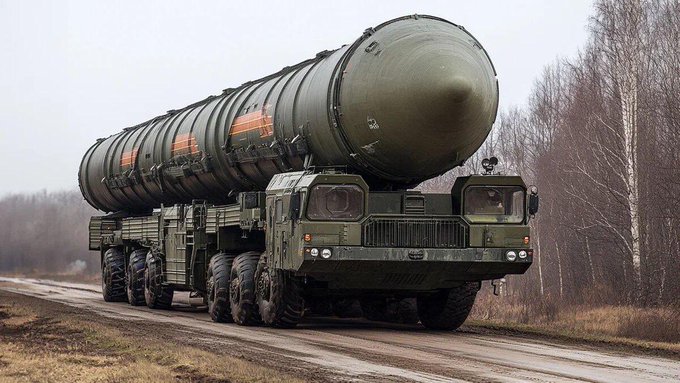
For Russia, Belarus serves as a vital buffer zone and a launchpad for operations that can pressure NATO’s eastern flank. For Belarus, alignment with Russia’s nuclear doctrine is a survival mechanism, ensuring that any direct threat to the Lukashenko administration is met with the full weight of the Russian security umbrella.
This alliance creates a complex security dilemma. As Russia moves more of its high-end military capabilities into Belarus, NATO’s defensive posture must evolve from a “tripwire” model—where small forces trigger a larger response—to a more robust, permanent presence. This shift is costly, politically sensitive, and fundamentally alters the way peace is maintained in Europe.
The integration of nuclear assets is the ultimate expression of this alliance. It transforms Belarus from a conventional transit corridor into a strategic nuclear outpost, fundamentally changing the math for any potential military engagement in Eastern Europe.
Next Checkpoint: International observers are awaiting the next scheduled phase of the joint exercises, which is expected to involve large-scale conventional troop movements. Official statements from the NATO North Atlantic Council are anticipated following the conclusion of the initial nuclear-readiness phase.
What are your thoughts on the implications of these nuclear drills for European security? Should NATO increase its permanent presence in the region, or would that further escalate tensions? Join the conversation in the comments below and share this report with your network.
Related reading