
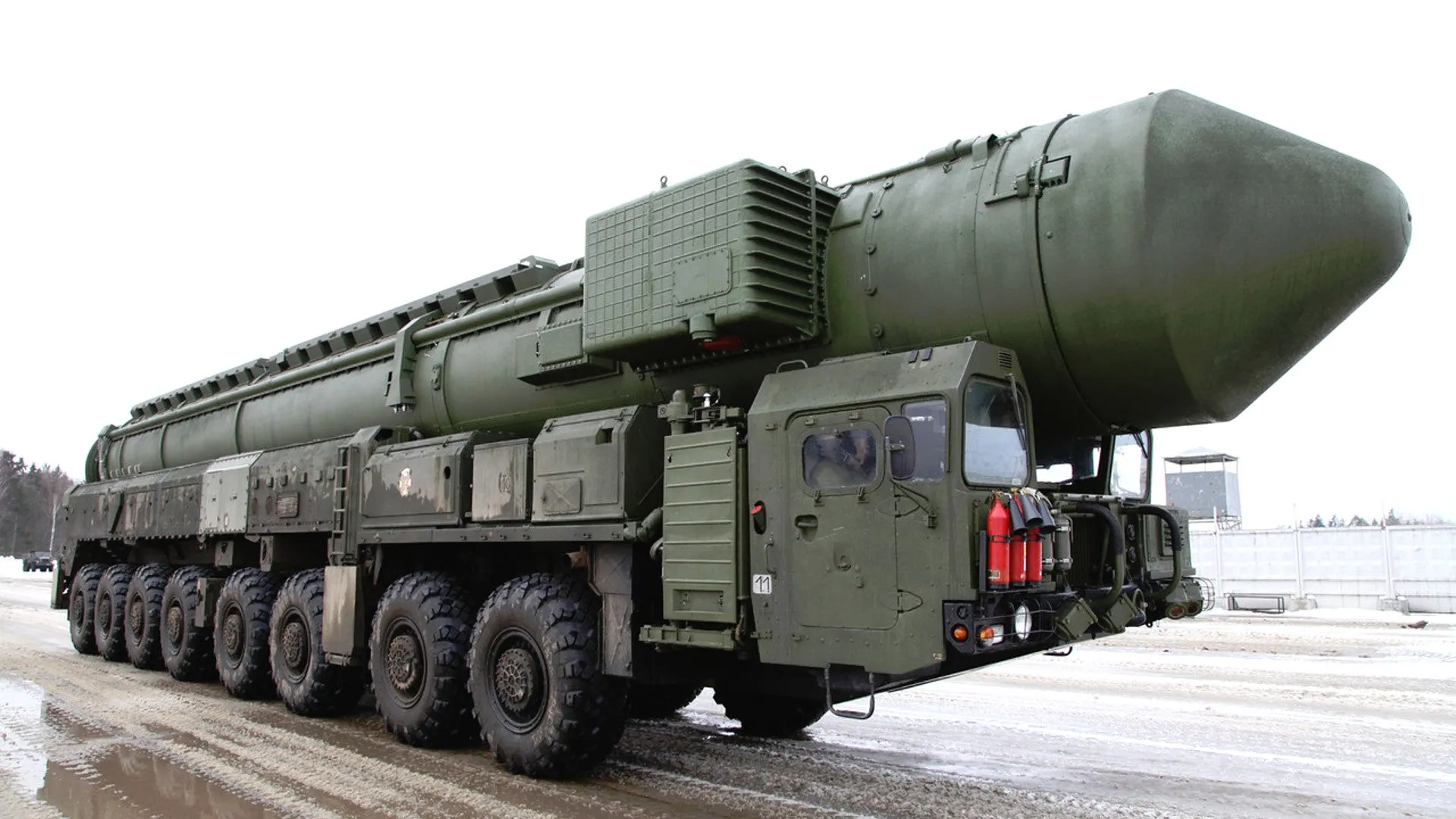
Russia Revives Cold War Nuclear Threat: Lifting Moratorium on Intermediate-Range Missiles
Moscow – In a dramatic escalation of geopolitical tensions,Russia has formally ended its self-imposed moratorium on teh deployment of ground-based intermediate- and shorter-range nuclear missiles,effectively resurrecting a Cold War-era threat and signaling a notable shift towards heightened strategic confrontation with the West. The decision, announced on August 4th, permits the stationing of Intermediate-Range Nuclear Forces (INF)-class missiles – with ranges of 500 to 5,500 kilometers – along Russia’s western and southern borders.
This move dismantles a key pillar of post-Cold War security architecture and raises serious concerns about regional and global stability. It follows the United States’ withdrawal from the INF Treaty in 2019 under the Trump administration, a treaty originally signed in 1987 between the Soviet Union and the United States that eliminated an entire class of nuclear weapons.
Justification and strategic Context
Russian officials assert the evolving security landscape necessitates this response. Foreign Ministry spokesperson Maria Zakharova stated that the deployment of US and NATO intermediate-range missile systems in Europe and the Asia-Pacific region has removed any justification for Russia’s previous restraint. This justification centers on a perceived imbalance of power and a response to what Russia views as escalating encirclement by NATO.
The Kremlin’s decision is inextricably linked to NATO’s eastward expansion and increased US military presence in Eastern Europe and the Indo-Pacific, including joint military exercises. Russia views these actions as provocative and destabilizing, demanding a symmetrical response to restore what it considers a necessary strategic balance.
Dmitry Medvedev, Deputy Chairman of Russia’s Security Council and former President, characterized the end of the moratorium as a “new reality” for the West. He warned on X (formerly Twitter) that further retaliatory measures could follow should the US continue deploying systems like the Typhon and Dark Eagle within NATO territories.
Potential Deployments and Weapon Systems
Experts anticipate that Russia will prioritize deployments near its western border, possibly including Belarus and the Kaliningrad enclave - both strategically positioned within striking distance of major NATO capitals.This proximity dramatically reduces warning times and complicates defensive responses.
The reintroduction of INF-class missiles raises the specter of hypersonic weapons entering the European theater. Russia’s newly developed “Oreshnik” missile,capable of carrying both conventional and nuclear warheads,is a prime candidate for forward deployment across the Eurasian landmass. The speed and maneuverability of hypersonic weapons present significant challenges for existing missile defense systems, increasing the risk of miscalculation and escalation.
The Collapse of Arms control and Remaining Treaties
The demise of the INF Treaty represents a critical failure of arms control.Once a cornerstone of Cold War stability, the treaty’s collapse - initially triggered by US withdrawal and now compounded by Russia’s abandonment of restraint – leaves Europe vulnerable to the very weapons it was designed to eliminate.
Currently, the New START treaty, scheduled to expire in February 2026, remains the only remaining bilateral nuclear accord between Moscow and Washington. Its future is increasingly uncertain, raising the prospect of a complete breakdown in arms control mechanisms. Negotiations for its extension have stalled amid broader geopolitical tensions.
Western Response and Military Posturing
While US officials have yet to issue a direct response to Russia’s announcement, observable military movements suggest growing concern within Washington. Reports indicate the repositioning of nuclear-capable submarines in the Atlantic Ocean and the reinforcement of NATO’s eastern flank with additional missile defense systems in Poland, Romania, and the Baltic states. These actions demonstrate a clear intent to bolster deterrence and reassure allies.
Ukraine Conflict and Geopolitical Implications
Russia’s decision also unfolds against the backdrop of the ongoing conflict in Ukraine. Some analysts suggest the deployment of INF-class missiles could be a coercive tactic aimed at pressuring NATO to reduce its support for Kyiv. This represents a high-stakes geopolitical gamble with potentially far-reaching consequences.
Russian authorities have consistently justified the moratorium’s termination by citing Western violations of previous agreements and perceived threats to Russia’s territorial integrity, as reported by news agencies like Mehr News Agency.Looking Ahead: Increased Risk and the Need for Dialog
The lifting of the moratorium on INF-class missiles marks a dangerous turning point in international security. The reintroduction of these weapons significantly increases the risk of miscalculation,accidental escalation,and a renewed arms race.
Restoring stability requires urgent diplomatic engagement and a renewed commitment to arms control. However, the current geopolitical climate and deep-seated mistrust between russia and the West present formidable obstacles to meaningful dialogue. The coming months will be critical in determining whether a path towards de-escalation can be found, or whether the world is destined to enter a new era


