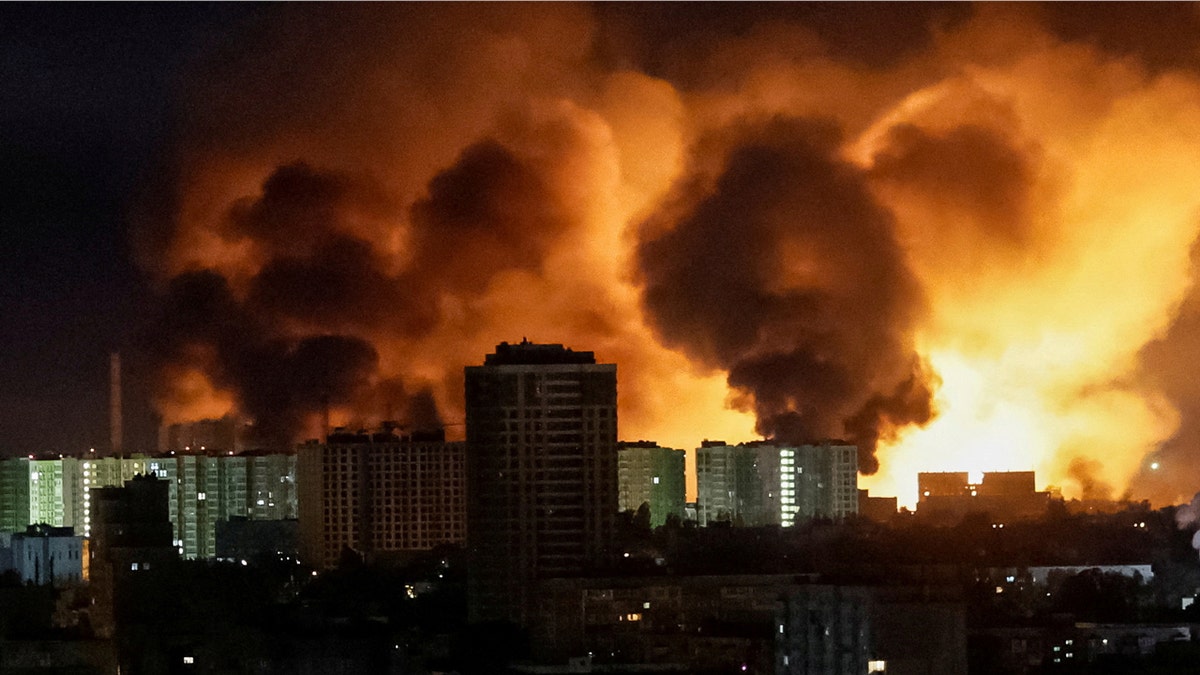
Russia launched one of its largest aerial attacks on Ukraine this year, deploying hundreds of drones and missiles in a coordinated strike that targeted critical infrastructure and residential areas across multiple regions. The assault, which unfolded overnight, marked a significant escalation in the ongoing conflict and came shortly after a brief Easter ceasefire that had been observed by both sides. Ukrainian officials reported widespread damage to energy facilities, transportation networks, and civilian properties, prompting emergency responses from local authorities and international partners.
The attack underscored the persistent volatility of the war, despite periodic diplomatic efforts to reduce hostilities. Analysts noted the timing and scale of the strike suggested a strategic effort by Russian forces to exploit perceived vulnerabilities in Ukraine’s air defenses during periods of reduced international attention. The assault also reignited concerns about the humanitarian toll on civilians, particularly in densely populated areas near frontline zones where infrastructure is already strained from months of prior bombardment.
Ukrainian air defense units reported intercepting a significant portion of the incoming threats, though several drones and missiles reached their targets, resulting in explosions and fires in cities including Kyiv, Kharkiv, and Odesa. Emergency services worked through the night to extinguish blazes, restore power, and assist displaced residents. The Ukrainian government reiterated its call for increased international support, particularly in the form of advanced air defense systems, to counter the growing frequency and intensity of such attacks.
According to verified reports from international news agencies, the assault included over 500 drones and dozens of missiles, marking one of the most concentrated aerial offensives by Russian forces since the beginning of the full-scale invasion in 2022. The scale of the operation drew comparisons to previous winter campaigns aimed at degrading Ukraine’s energy grid during peak demand periods, though officials noted this strike occurred outside traditional heating seasons, suggesting broader strategic objectives beyond infrastructure disruption.
The attack prompted immediate condemnation from Western governments and international organizations, with officials describing it as a violation of humanitarian principles and a threat to regional stability. The United Nations and the International Committee of the Red Cross renewed appeals for unimpeded access to affected areas to assess damage and deliver aid. Diplomatic channels remained active, though prospects for a durable ceasefire appeared dim amid continued military activity on both sides.
Scale and Composition of the Russian Aerial Assault
Military analysts confirmed that the Russian offensive involved a mix of kamikaze drones, including Iranian-made Shahed variants, and various missile types launched from air, land, and sea platforms. The employ of swarm tactics — deploying large numbers of low-cost drones to overwhelm air defense systems — has become a hallmark of Russian strategy in recent months, particularly when targeting dispersed or mobile objectives. This approach allows Moscow to impose sustained pressure while minimizing the risk to piloted aircraft.

Ukrainian forces, supported by Western-supplied systems such as NASAMS and IRIS-T, reported successful interceptions of numerous threats, though the sheer volume strained available resources. Officials acknowledged gaps in coverage, particularly in southern and eastern regions where radar and interceptor density remains lower due to frontline constraints. The need for additional launchers, radar units, and interception missiles has become a recurring theme in Kyiv’s appeals to NATO and partner nations.

Independent verification from open-source intelligence platforms corroborated the scale of the launch, showing clusters of drone trajectories originating from Russian-held territories in Crimea, Belgorod, and Kursk regions. Satellite imagery and flight tracking data indicated coordinated departure times, suggesting centralized command and control. These observations were consistent with patterns observed in prior large-scale strikes, reinforcing assessments of Russian operational planning and logistics capabilities.
The timing of the attack — occurring just after the Easter period — drew particular attention from observers who had hoped the temporary ceasefire might serve as a foundation for broader negotiations. Instead, the rapid resumption of hostilities signaled limited trust between the parties and underscored the challenges of maintaining even short-term pauses in fighting. Diplomatic envoys noted that while humanitarian pauses can facilitate civilian evacuations and aid delivery, they rarely alter the fundamental dynamics of the conflict without accompanying political commitments.
Impact on Civilian Infrastructure and Humanitarian Conditions
The strikes caused measurable disruption to essential services, with power outages reported in several oblasts following damage to substations and transmission lines. In Odesa, a major port city, attacks on storage facilities raised concerns about the safety of grain export operations, which have been vital to global food security and a key component of Ukraine’s wartime economy. Authorities worked to reroute supplies and assess structural integrity, though delays and increased costs were anticipated.
In Kharkiv, residential neighborhoods suffered damage from drone impacts, leading to temporary evacuations and shelter activations. Local officials emphasized that while casualty numbers remained relatively low due to effective early warning systems and public preparedness, the psychological toll on residents — particularly children and the elderly — was significant. Mental health professionals reported increased anxiety and sleep disturbances in communities repeatedly exposed to nocturnal attacks.
The assault also affected critical transportation corridors, including rail lines used for both civilian travel and military logistics. Delays in freight movement complicated efforts to supply frontline units and humanitarian convoys, prompting calls for reinforced protection of dual-use infrastructure. Engineers noted that repeated strikes on the same locations necessitate increasingly complex and costly repairs, straining already limited reconstruction budgets.
Humanitarian organizations operating in Ukraine reported increased demand for emergency shelter, clean water, and psychological support in the aftermath of the strikes. The International Organization for Migration and UNHCR coordinated with local authorities to establish temporary reception centers and distribute essential kits. Access to some areas remained challenging due to ongoing security risks, requiring negotiated pauses or escort mechanisms for aid convoys.
International Response and Implications for Ongoing Negotiations
The attack elicited swift reactions from Western capitals, with the United States, European Union, and NATO issuing statements condemning the violence and reaffirming support for Ukraine’s sovereignty. Officials highlighted the pattern of targeting civilian infrastructure as inconsistent with international humanitarian law and called for accountability mechanisms. Some lawmakers advocated for accelerated delivery of long-range air defense systems and electronic warfare tools to improve Ukraine’s ability to detect and intercept incoming threats.

Diplomatic channels remained active, though prospects for meaningful negotiation appeared constrained by the continued use of force. Analysts noted that while backchannel communications persist, the absence of a mutual halt to offensive operations limits the confidence-building necessary for substantive talks. The Easter ceasefire, though brief, had demonstrated that temporary de-escalation is technically feasible, suggesting that future pauses could be negotiated if linked to verifiable conditions such as prisoner exchanges or humanitarian corridors.
International legal bodies continued to monitor the situation for potential violations of the laws of war, with prosecutors at the International Criminal Court reviewing evidence related to attacks on protected sites. While no formal charges have been issued in connection with this specific assault, investigators confirmed they are collecting and preserving data for possible future proceedings. The emphasis on documentation reflects a broader effort to build evidentiary records that could support accountability regardless of the conflict’s eventual outcome.
Looking ahead, military planners in Kyiv and allied capitals are assessing the implications of repeated large-scale drone attacks for future defense planning. Discussions include investments in directed energy systems, improved electronic countermeasures, and decentralized energy generation to reduce vulnerability to grid-targeting strategies. The experience has also prompted renewed focus on civil defense preparedness, including public education on alert responses and shelter accessibility.
As the conflict enters its third year, the pattern of periodic escalations followed by lulls continues to define the battlefield reality. While no immediate shift in frontline positions was observed following this attack, the cumulative effect of sustained pressure on infrastructure and morale remains a key concern for Ukrainian leadership. The international community faces the ongoing challenge of balancing support for Ukraine’s defense with efforts to create space for diplomatic engagement, a dual objective that requires careful calibration amid evolving circumstances.
The next major development to watch is the scheduled review of military aid packages by the NATO-Ukraine Council, set for late April 2026, where allies are expected to discuss additional air defense capabilities and longer-term support frameworks. Officials will assess battlefield needs based on recent attack patterns and frontline requirements. For ongoing updates, readers are encouraged to consult verified sources such as official military briefings, international organization reports, and reputable news outlets with established conflict coverage.
Worth a look