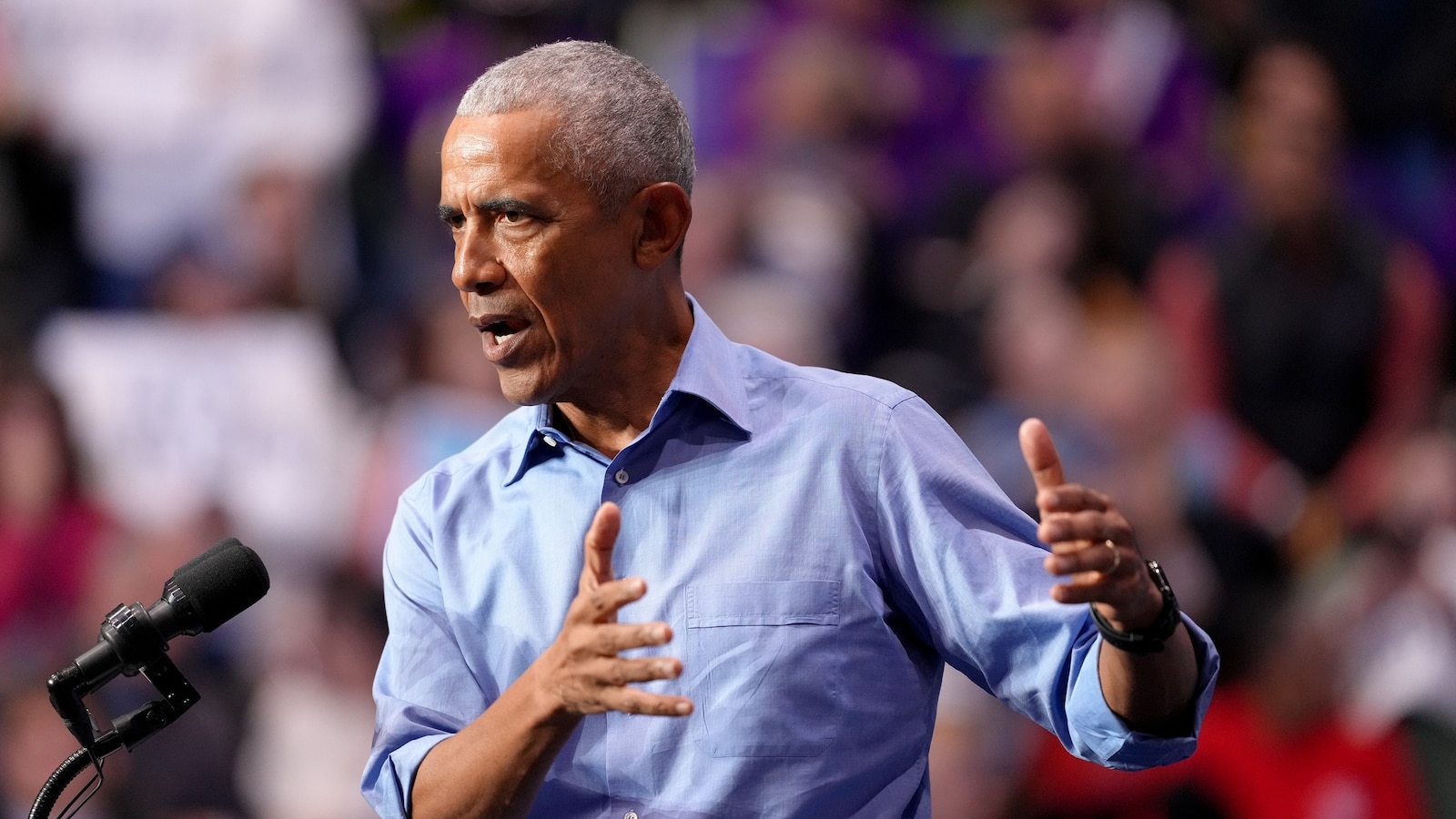
Former President Barack Obama has weighed in on a pivotal redistricting referendum in Virginia, urging voters to support a measure that could reshape the state’s congressional map ahead of the 2026 midterm elections. In an exclusive video shared with ABC News, Obama framed the vote as a necessary step to counter what he described as Republican efforts to gain an unfair advantage through redistricting. The appeal comes just days before Virginia’s April 21 statewide referendum, where over a million residents have already cast early ballots according to the Virginia Public Access Project.
The measure at the center of the debate would allow Virginia’s Democratic-controlled legislature to implement a redistricting plan it previously advanced, which aims to reconfigure four congressional seats to favor Democrats. Proponents argue this would correct a mid-decade redistricting effort in 2025 that Republicans say gave them an advantage across nine seats. Obama’s message emphasized urgency, telling Virginians that voting “yes” would “take a temporary step to level the playing field” in a state he noted remains politically competitive.
“By voting yes, you can push back against the Republicans trying to grant themselves an unfair advantage in the midterms,” Obama said in the video. “By voting yes, you can take a temporary step to level the playing field. And we’re counting on you.” His remarks were delivered in a tone meant to energize Democratic voters ahead of a contest that national parties are closely watching for its potential impact on the balance of power in the U.S. House of Representatives.
The referendum has drawn sharp divisions along party lines. Democrats, including Obama, contend the measure is essential to counteract what they view as an aggressive GOP redistricting push in 2025 that altered district boundaries in ways detrimental to Democratic representation. Republicans and other opponents, though, have criticized the proposal as an overreach that unfairly disadvantages voters in certain regions of the state. U.S. Rep. Jen Kiggans, a Republican whose district would be redrawn under the proposed map, told ABC News that Virginia’s political diversity means “there’s a wide variety of voices” that should be considered in any redistricting effort.
Adding complexity to the vote is an ongoing legal challenge to the redistricting plan, which opponents argue should delay or invalidate the referendum despite its proceedure. Supporters maintain the vote is lawful and necessary to address recent map changes they say tilts the electoral field. The outcome could influence not only Virginia’s congressional delegation but also broader Democratic hopes to narrow the Republican margin in the House following the 2024 elections, in which former President Donald Trump received 46% of the vote in Virginia.
As of April 17, 2026, early voting numbers suggest significant engagement, though final turnout remains uncertain. Election officials have not projected a definitive outcome and both sides are mobilizing last-minute appeals. The Virginia State Board of Elections has confirmed that polls will open statewide on April 21 from 6:00 a.m. To 7:00 p.m. Local time, with results expected to begin flowing in after polls close.
For voters seeking official information, the Virginia Department of Elections provides detailed guidance on polling locations, voter ID requirements, and ballot tracking through its website. The Virginia Public Access Project continues to monitor and report early voting statistics in real time. No further debates or official hearings on the measure are scheduled before the vote, making the coming days critical for voter outreach efforts on both sides.
The redistricting referendum in Virginia stands as a significant test of how battleground states are responding to post-census map disputes and partisan battles over electoral fairness. With national implications potentially hanging in the balance, the April 21 vote will serve as a direct indicator of voter sentiment on one of the most consequential yet under-discussed aspects of American democracy: how electoral districts are drawn.
As the Commonwealth approaches this decision point, the involvement of national figures like Obama underscores the heightened stakes. Whether the measure passes or fails, its outcome will contribute to the ongoing national conversation about redistricting reform, gerrymandering, and the role of state-level votes in shaping federal politics.
We encourage readers to share their thoughts on this developing story in the comments below and to spread awareness by sharing this article with others interested in U.S. Politics and electoral integrity.