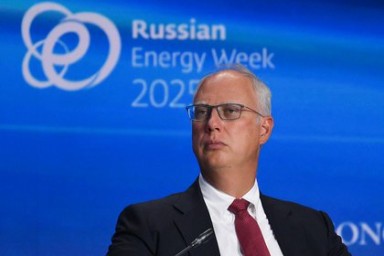
Washington D.C. – Discussions are underway between Moscow and Washington regarding a potential easing of sanctions imposed on Russian oil, according to statements made by Kirill Dmitriev, head of Russia’s sovereign wealth fund, the Russian Direct Investment Fund (RDIF). The development comes amid growing concerns about the impact of Western sanctions on the global economy and escalating tensions in the Middle East.
Dmitriev announced the talks on his social media account, stating that the discussions are focused on the detrimental effects of Western sanctions on the global economic landscape. “We are discussing this with the United States, as Western sanctions have proven detrimental to the world economy,” he wrote, as reported by Lenta.ru. This statement signals a potential shift in the ongoing geopolitical and economic pressures stemming from the conflict in Ukraine and broader international relations.
The possibility of easing sanctions on Russian oil also follows comments from U.S. Treasury Secretary Janet Yellen, who indicated a willingness to consider adjustments based on evolving global circumstances. While not directly linked to Dmitriev’s announcement, Yellen’s remarks in February 2026, highlighted the U.S. Commitment to monitoring the impact of sanctions and adapting its approach as needed, particularly in light of geopolitical events. U.S. Department of the Treasury
Kirill Dmitriev: A Key Figure in Russia’s Economic Diplomacy
Kirill Dmitriev has been a central figure in Russia’s efforts to navigate the complex web of international sanctions and maintain economic ties. As the head of the RDIF, he has been instrumental in attracting foreign investment into Russia and promoting Russian companies on the global stage. His recent visit to Washington in April 2025 – the first by a high-ranking Russian official since the start of the conflict in Ukraine in 2022 – underscored the importance of maintaining communication channels between the two countries, even amidst significant political disagreements. Vedomosti
According to reports from CNN, the U.S. Government temporarily lifted sanctions on Dmitriev to facilitate his participation in the negotiations. This move, while temporary, demonstrated a willingness on the part of the U.S. Administration to engage in direct dialogue with Russian officials. The meetings focused on exploring avenues for restoring economic partnerships and fostering cooperation in areas of mutual interest, including the Arctic region. Dmitriev described the discussions as having moved the two countries “three steps forward,” but acknowledged that further meetings are necessary to resolve outstanding differences.
Dmitriev’s career trajectory began with studies in physics and mathematics, but he quickly transitioned into the world of finance, and investment. Prior to leading the RDIF, he held positions at McKinsey & Company and worked in the Russian government. His background and experience have positioned him as a key negotiator and advocate for Russia’s economic interests internationally.
The Broader Context: Sanctions, Geopolitics, and Global Energy Markets
The imposition of sanctions on Russia following the events in Ukraine in 2022 has had a profound impact on global energy markets. Russia is a major producer and exporter of oil and natural gas, and the sanctions have disrupted supply chains and contributed to rising energy prices. Western nations imposed sanctions aimed at limiting Russia’s access to financial markets and restricting its ability to export key commodities, including oil. These measures were intended to pressure Russia to de-escalate the conflict and comply with international law.
However, the sanctions have also had unintended consequences, contributing to inflation and economic instability in many countries. The disruption of energy supplies has particularly affected Europe, which relies heavily on Russian gas. The situation in the Middle East, with ongoing conflicts and geopolitical tensions, has further exacerbated the challenges facing global energy markets. The potential for further disruptions to oil supplies has prompted calls for a reassessment of sanctions policies.
The U.S. Has been particularly focused on maintaining stable oil prices and ensuring adequate supplies to meet global demand. Secretary Yellen’s recent statements suggest a willingness to consider adjustments to sanctions policies if necessary to achieve these goals. The Biden administration has been balancing the need to hold Russia accountable for its actions with the imperative of protecting the U.S. Economy and maintaining global energy security.
Potential Implications of Easing Sanctions
Any easing of sanctions on Russian oil would likely have a number of significant implications. It could lead to an increase in Russian oil exports, potentially lowering global oil prices. This could benefit consumers and businesses around the world, but it could also reduce the pressure on Russia to change its policies. The move could also be seen as a sign of weakening resolve among Western nations in their efforts to isolate Russia.
easing sanctions could complicate efforts to maintain a united front against Russia. Some countries may view the move as a betrayal of the principles of international law and a reward for aggression. Others may see it as a pragmatic step necessary to address the challenges facing the global economy. The decision to ease sanctions would likely be met with criticism from both sides of the political spectrum.
The impact on the Ukrainian economy is also a key consideration. Ukraine has been heavily reliant on Western support to resist Russian aggression, and any easing of sanctions could weaken its position. The Ukrainian government has consistently called for tougher sanctions on Russia and has warned against any steps that could undermine its efforts to defend its sovereignty.
The Role of the Arctic
Dmitriev’s discussions in Washington also touched upon potential cooperation in the Arctic region. Russia has significant economic interests in the Arctic, including the development of natural resources and the establishment of shipping routes. The U.S. And Russia have historically cooperated on Arctic issues, but that cooperation has been strained in recent years due to geopolitical tensions. RBC Renewed dialogue on Arctic cooperation could offer a potential area for constructive engagement between the two countries.
Next Steps and Ongoing Monitoring
The discussions between Moscow and Washington are ongoing, and it remains to be seen whether they will lead to any concrete changes in sanctions policy. The U.S. Treasury Department is expected to continue monitoring the situation closely and assessing the impact of sanctions on the global economy. Further meetings between Russian and U.S. Officials are anticipated in the coming weeks and months. The situation in the Middle East will also continue to be a key factor influencing the U.S. Approach to sanctions.
The Kommersant newspaper reported that Dmitriev met with officials from the administration of Donald Trump during his visit to Washington in April 2025, continuing negotiations initiated by the former president regarding the restoration of bilateral relations and the resolution of the Russia-Ukraine conflict. Kommersant This suggests a degree of continuity in the U.S. Approach to Russia, despite changes in administration.
Readers interested in staying informed about this evolving situation can follow updates from the U.S. Treasury Department and the Russian Direct Investment Fund. The International Energy Agency also provides regular reports on global energy markets and the impact of sanctions.
What are your thoughts on the potential easing of sanctions on Russian oil? Share your comments below and join the discussion.
Worth a look