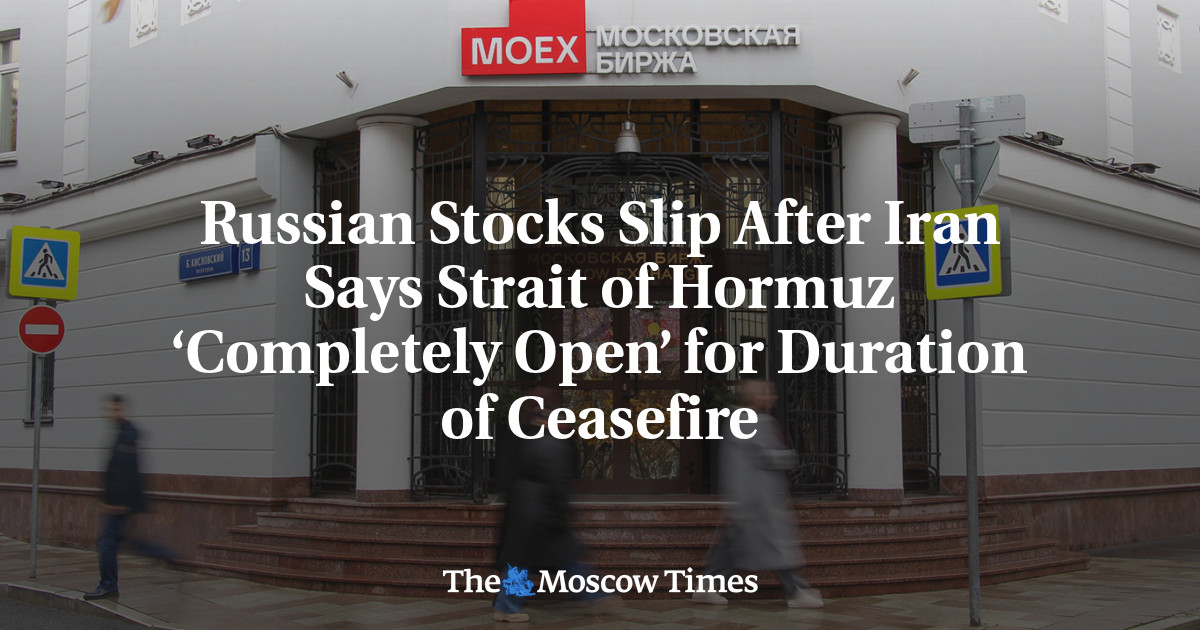
Russian oil stocks slipped on Tuesday following comments from Iranian officials that the Strait of Hormuz remains “completely open” for maritime traffic during the ongoing Gaza ceasefire, easing immediate fears of supply disruptions in a critical global chokepoint.
The remarks came as Brent crude prices retreated from recent highs, reducing the geopolitical risk premium that had buoyed energy shares in prior sessions. Rosneft shares fell by more than 4%, while Gazprom Neft dropped nearly 3%. Lukoil and Tatneft both saw declines of more than 2%, according to trading data verified through multiple financial market sources.
The Strait of Hormuz, located between Oman and Iran, serves as a vital artery for global oil shipments, with approximately 20% of the world’s petroleum passing through its waters daily. Any perceived threat to its openness typically triggers volatility in energy markets, particularly for major exporters like Russia, which relies heavily on maritime routes to deliver crude to international buyers.
Iran’s statement, reported by state media and corroborated by maritime tracking services, aimed to reassure global markets that freedom of navigation would be maintained despite regional tensions. Iranian Foreign Ministry spokesperson Nasser Kanaani stated on Monday that the strait would remain open “for the duration of the ceasefire” in Gaza, emphasizing Tehran’s commitment to avoiding escalation that could disrupt global trade.
Analysts noted that while the immediate tension eased, underlying concerns persist about the fragility of the ceasefire and potential flashpoints involving Iran-aligned groups in the region. The decline in Russian oil stocks reflected a recalibration of risk rather than a fundamental shift in long-term energy demand or sanctions exposure, which continue to weigh on the sector.
Sanctions Pressure Continues to Weigh on Russian Energy Firms
Despite the short-term market reaction to Hormuz-related news, Russian oil giants remain under sustained pressure from Western sanctions imposed following the 2022 invasion of Ukraine. The United States and European Union have repeatedly targeted Rosneft, Gazprom Neft, Lukoil, and Tatneft with asset freezes, investment bans, and restrictions on technology transfers critical to offshore and Arctic drilling operations.

A recent report from the Kharon Institute confirmed that sanctions have significantly impaired the ability of these companies to access Western financing and advanced drilling equipment, forcing them to rely more heavily on domestic suppliers and Asian partners for maintenance and expansion projects. While Rosneft has managed to maintain output levels through increased cooperation with Chinese service firms, industry analysts say long-term productivity faces constraints without access to Western technology.

Gazprom Neft, the refining and marketing subsidiary of Gazprom, has similarly adapted by redirecting more of its crude throughput to domestic refineries and seeking alternative markets in India and China. However, executives acknowledged in recent earnings calls that margins remain squeezed due to discounted Urals crude pricing and logistical rerouting costs.
Tatneft, which operates primarily in Tatarstan and has significant petrochemical interests, reported stable quarterly results but warned that future growth depends on securing new technology partnerships outside sanctioning jurisdictions. The company’s investments in refining upgrades and retail expansion have slowed as international vendors comply with export controls.
Market Reaction Reflects Broader Energy Volatility
The decline in Russian oil stocks on Tuesday was not isolated but part of a wider retreat in global energy shares as Brent crude traded below $85 per barrel for the first time in several weeks. Traders cited a combination of factors: reduced immediate geopolitical risk, steady output from non-OPEC producers, and cautious demand outlooks from major consuming economies.
According to data from the U.S. Energy Information Administration, global oil inventories have remained relatively stable in recent months, with OPEC+ maintaining its voluntary production cuts to support prices. Russia, as a key member of the alliance, has adhered to its pledged output levels despite having the capacity to increase production.
Market observers noted that the sensitivity of Russian equities to Hormuz-related news underscores how deeply intertwined the company valuations remain with global perceptions of supply security. Even though Russia has diversified some of its export flows toward eastern markets, a significant portion of its seaborne crude still transits westward through European-facing routes, making it indirectly vulnerable to perceptions of Middle Eastern instability.
The reaction also highlighted the limited hedging options available to Russian firms due to sanctions restricting their access to Western financial instruments. Unlike their international counterparts, Russian oil companies cannot easily use futures contracts or options traded on European or American exchanges to mitigate price or geopolitical risk, leaving their stock prices more exposed to spot market fluctuations.
What This Means for Investors and Energy Markets
For investors, the episode serves as a reminder that Russian energy stocks remain highly sensitive to both geopolitical developments and the evolving sanctions landscape. While short-term moves can be driven by news flow from flashpoints like the Strait of Hormuz, long-term valuation hinges on the durability of Western restrictions and the ability of Russian firms to adapt operationally and technologically.
Energy analysts suggest monitoring three key areas: the status of the Gaza ceasefire and any potential spillover into broader regional conflict; the enforcement and possible expansion of sanctions targeting Russia’s energy sector; and quarterly production and export data from Russian companies to assess real-time resilience.
Official sources such as the Russian Ministry of Energy, company filings with the Moscow Exchange, and periodic reports from the International Energy Agency provide the most reliable updates on operational metrics and policy impacts. Investors seeking transparency are advised to review quarterly reports released by Rosneft, Gazprom Neft, Lukoil, and Tatneft, which are typically published within 45 days after quarter-end and include operational updates alongside financial results.
As of the latest verified trading session, Russian oil shares continue to reflect a market balancing temporary geopolitical relief against structural headwinds from sanctions and technological isolation. No immediate changes to export routes or production levels were announced by any of the major firms following Iran’s statement, indicating that the market move was primarily sentiment-driven rather than based on concrete operational shifts.
For ongoing coverage of global energy markets, geopolitical developments, and their intersection with international sanctions regimes, readers are encouraged to follow updates from authoritative financial and diplomatic sources. The next major checkpoint for market watchers will be the upcoming OPEC+ ministerial meeting scheduled for late May, where production policy decisions could influence near-term price trends.
We welcome your thoughts on this development. Share your perspective in the comments below, and help others understand this story by sharing it on your preferred platforms.
Keep reading