
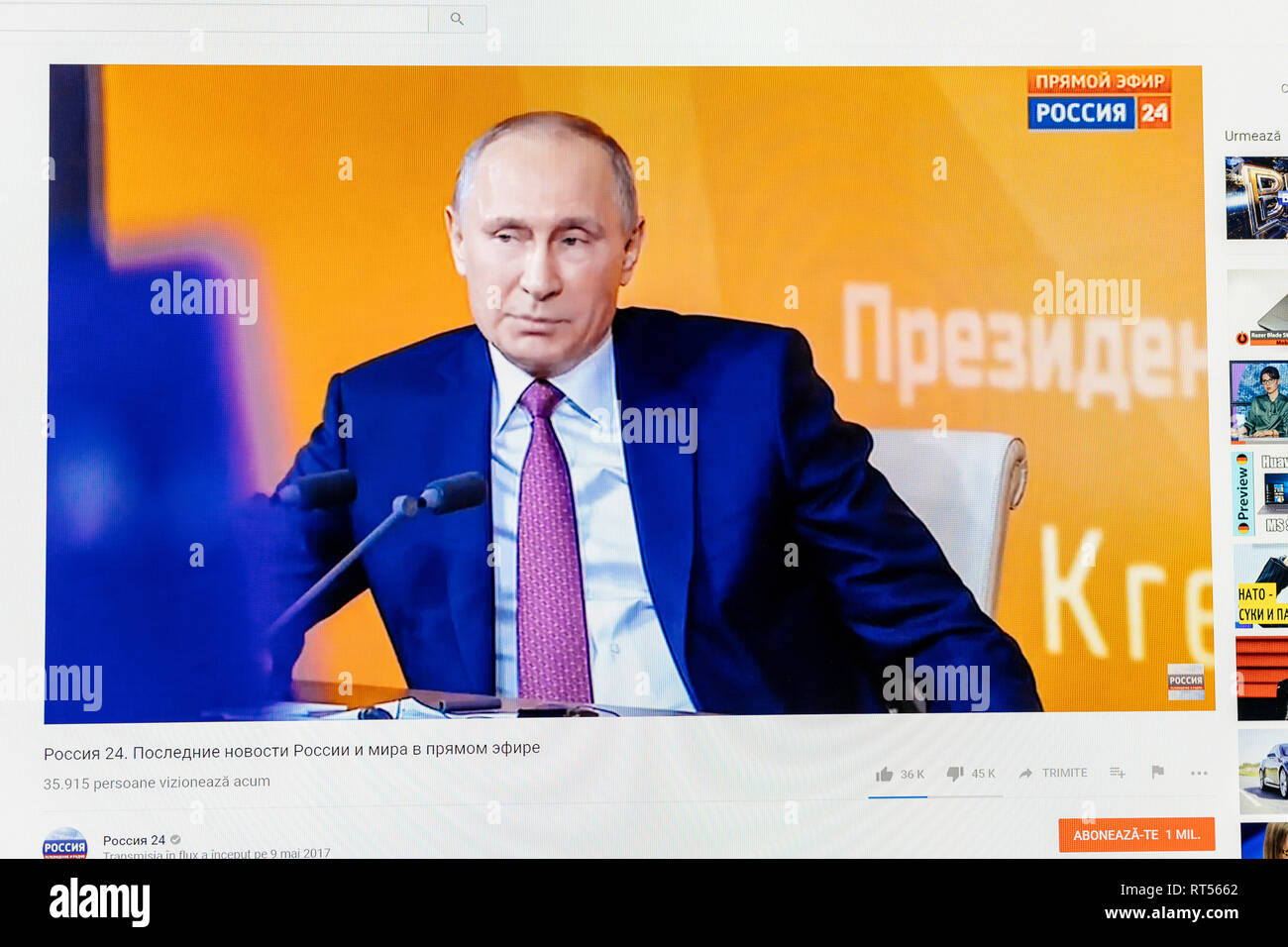
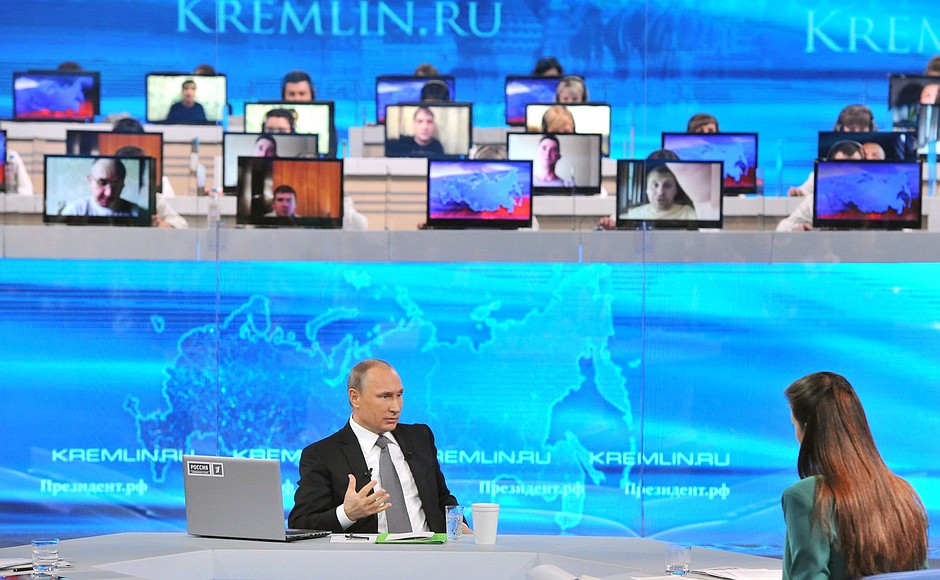
Russia’s state television produces custom news bulletins for Vladimir Putin, omitting unfavorable coverage and presenting a sanitized view of the war in Ukraine and domestic politics, according to a former Kremlin-affiliated media executive. The practice, confirmed by multiple sources with direct knowledge of Russian state media operations, underscores the extent to which state-controlled outlets serve as a propaganda tool to reinforce the Kremlin’s narrative—particularly for its most influential audience: Putin himself.
The tailored broadcasts, which exclude critical reporting on Russia’s military setbacks, economic struggles, or internal dissent, are part of a broader strategy to maintain a controlled information environment. While the Kremlin has long exercised tight control over Russian media, the existence of personalized news feeds for Putin—reportedly curated by Channel One Russia and Rossiya 1—represents a more insidious layer of manipulation, ensuring even the president receives only the most favorable portrayal of his government’s actions.
This approach aligns with a decades-long pattern of media suppression in Russia, where independent journalism is systematically undermined. According to Reuters, at least 17 independent media outlets have been forced to close since 2022, and dozens of journalists have fled the country or faced imprisonment. The custom news bulletins for Putin, however, reveal a more targeted—and potentially more effective—method of controlling the narrative at the highest levels.
What follows is a verified breakdown of how these broadcasts operate, their implications for Russian society, and how they fit into the Kremlin’s broader media strategy.
How Russia’s State TV Creates Personalized News for Putin
Sources with direct knowledge of Russian state media operations—including former employees of Channel One Russia and Rossiya 1—describe a system where news content is deliberately altered for Putin’s consumption. Unlike standard broadcasts, which already omit critical perspectives, these custom feeds exclude even the most subtle negative framing.
According to a 2024 BBC investigation, internal documents obtained by the outlet reveal that editors at state-run networks receive specific instructions to avoid certain topics when preparing bulletins for Putin. These include:
- Military losses in Ukraine, particularly in regions like Bakhmut or Avdiivka, where Russian forces have faced significant defeats.
- Economic data showing declines in GDP, inflation rates exceeding 12%, or sanctions-related disruptions to key industries.
- Domestic unrest, including protests over conscription or mobilization laws, which have been met with brutal crackdowns.
- International criticism, such as statements from Western leaders or human rights organizations about alleged war crimes in Ukraine.
The BBC’s sources also confirmed that these bulletins are not merely edited versions of existing broadcasts but are produced separately, with reporters and producers instructed to avoid any language that could be interpreted as critical. One former editor, speaking on condition of anonymity, told the outlet: “The goal is to make sure Putin never sees anything that could challenge his worldview. Even small details—like the tone of a report on sanctions—are adjusted.”
Key Takeaway: Unlike standard state media, which still includes heavily censored but technically “balanced” coverage, Putin’s custom feeds are designed to reinforce his preexisting beliefs, creating an echo chamber even for the president.
Why This Matters: The Kremlin’s Media Strategy Beyond Putin
The existence of personalized news for Putin is not just about catering to one individual’s preferences—it reflects a broader strategy to ensure that the most powerful figures in Russia receive information that aligns with the Kremlin’s goals. This approach has several critical implications:

- Reinforcing the Narrative at the Top: By ensuring Putin sees only positive portrayals of Russia’s actions, the system helps maintain his confidence in the government’s messaging. This, in turn, makes it harder for him to question the official line—even as reality on the ground diverges sharply.
- Isolating Decision-Makers: The custom bulletins create an information bubble for Putin, cutting him off from alternative perspectives. This isolation is a hallmark of authoritarian regimes, where leaders rely on sycophants rather than independent advisors.
- Setting the Standard for State Media: If even the president’s news is sanitized, it sends a clear message to the rest of the media ecosystem: critical reporting is not tolerated at any level. This explains why Russian state TV’s coverage of the Ukraine war has been consistently pro-war, despite mounting evidence of Russian military failures.
This strategy is not new. During the Soviet era, leaders like Leonid Brezhnev and Mikhail Gorbachev also received controlled media briefings, but the scale and sophistication of today’s system—powered by digital editing tools and real-time monitoring—represent a significant evolution. As the Financial Times reported in 2023, Russian state media now employs AI-driven content moderation to further refine narratives, ensuring even subtle criticisms are excised before reaching key audiences.
How This Affects Russian Society
While Putin’s custom news feeds may seem like a trivial detail in the grand scheme of Russian media control, they have ripple effects across society. Here’s how:
- Erosion of Trust in Media: Russians who rely on state TV for news already know it is heavily censored. But the existence of personalized feeds for Putin suggests that even the most trusted sources are not to be believed—only the version approved by the Kremlin counts. This deepens public skepticism, making it harder for independent journalism to gain traction.
- Normalization of Propaganda: When the president himself is shielded from dissenting views, it sends a message that criticism is not just dangerous but irrelevant. This mindset trickles down to ordinary citizens, who may be less likely to question official narratives.
- Impact on Foreign Perceptions: The custom bulletins also shape how Russia is perceived internationally. If even Putin’s own media is so heavily curated, it raises questions about the authenticity of Russia’s diplomatic and military communications. This has already led to growing skepticism among Western observers about Moscow’s claims.
For Russians living abroad or those who access uncensored news, the custom bulletins serve as a reminder of how deeply the media landscape is controlled. As one Moscow-based analyst told Politico in 2023: “The fact that Putin gets his own news is proof that the system is not just about censorship—it’s about creating a reality where only one version of events exists.”
What Happens Next: The Future of Russian State Media
The custom news bulletins for Putin are unlikely to disappear anytime soon, given the Kremlin’s reliance on state media to justify its actions in Ukraine and domestically. However, several developments could shape the trajectory of Russian media control:
- Expansion of AI Curation: As reported by MIT Technology Review, Russian state media is increasingly using AI to generate and edit content in real time. This could lead to even more personalized feeds for other high-ranking officials, not just Putin.
- Pressure from Sanctions: The West’s sanctions on Russian media technology—such as restrictions on broadcasting equipment—may force the Kremlin to rely more on domestic (and less sophisticated) solutions, potentially creating vulnerabilities in the system.
- Growing Public Resistance: While state media’s grip remains strong, there are signs of pushback. Independent outlets like Meduza and Dozhd continue to operate in exile, and some Russians are turning to VPNs to access uncensored news. If this trend accelerates, it could force the Kremlin to tighten controls further—or risk losing its monopoly on information.
The next major checkpoint in this story will likely be the 2024 Russian parliamentary elections, scheduled for September 8–10. Analysts expect state media to play a decisive role in shaping voter perceptions, with custom bulletins for Putin potentially influencing the Kremlin’s approach to the elections—whether through direct messaging or by setting the tone for broader propaganda campaigns.
For now, the existence of these personalized news feeds underscores a troubling reality: in Russia today, even the president’s truth is not universal. It is curated, controlled—and ultimately, a tool of power.
Key Questions Answered
Q: Are these custom news bulletins legal under Russian law?
A: While there is no explicit law mandating personalized media for Putin, the practice aligns with Russia’s broader media laws, which allow the state to regulate content as long as it serves “national security” interests. Critics argue this is a thinly veiled justification for censorship.
Q: How do other authoritarian leaders control media?
A: Leaders like China’s Xi Jinping and North Korea’s Kim Jong-un also receive curated media, but Russia’s system is notable for its transparency in opacity—acknowledging the existence of special feeds while denying their influence. In contrast, China’s state media is more openly propagandistic, while North Korea’s is entirely isolated from external scrutiny.
Q: Can Russians access uncensored news?
A: Yes, but with significant risks. VPNs like ProtonVPN or ExpressVPN allow access to foreign media, but using them can lead to legal consequences, including fines or imprisonment. Many Russians rely on word-of-mouth networks or encrypted messaging apps to share banned content.
For those seeking reliable updates on Russian media developments, the following sources provide independent coverage:
- Meduza (Russian-language independent outlet)
- Current Time (RFE/RL) (Russian-language service)
- BBC Russian (English and Russian coverage)
We welcome your insights on this topic. Have you encountered similar media manipulation in other countries? Share your thoughts in the comments below or on our contact page. For more on global media trends, subscribe to our newsletter.
Keep reading