
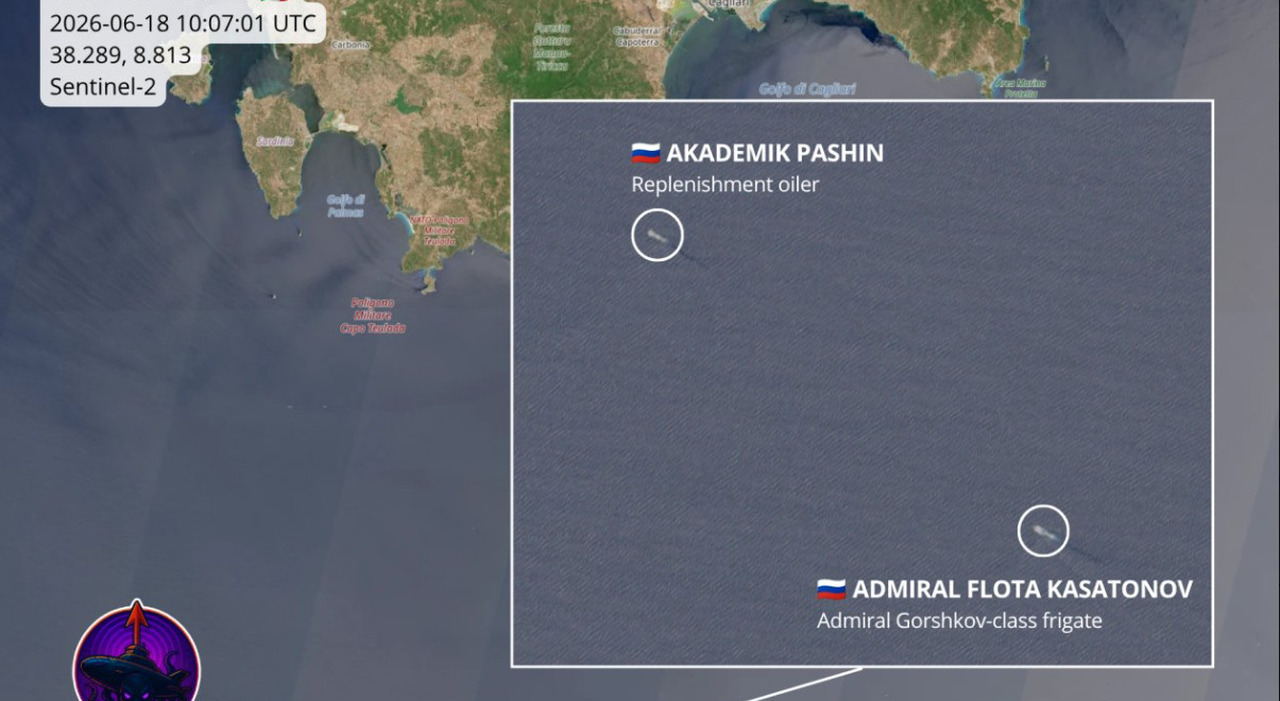
Italian military assets recently monitored the presence of a Russian naval vessel patrolling international waters in the vicinity of Sardinia, according to reports verified by regional maritime tracking data. The mission, which involved an Italian Air Force Beechcraft King Air, underscores the heightened surveillance of Mediterranean transit routes amid ongoing geopolitical tensions in Eastern Europe. While the presence of foreign naval vessels in these waters is not unprecedented, the deployment of specialized intelligence-gathering aircraft highlights the strategic importance Italian authorities place on maintaining maritime domain awareness in the central Mediterranean.
Maritime Surveillance and Regional Security
The Italian Air Force utilized a Beechcraft King Air—a platform frequently configured for intelligence, surveillance, and reconnaissance (ISR) missions—to monitor the movements of the Russian naval unit. According to publicly available flight tracking data, these aerial patrols operate in coordination with the Italian Navy, which maintains a constant presence to safeguard national interests and ensure the security of critical underwater infrastructure. The proximity of Russian warships to Italian coastlines has become a recurring point of interest for defense analysts since the escalation of the conflict in Ukraine in 2022.

The North Atlantic Treaty Organization (NATO) has consistently increased its maritime posture across the Mediterranean to deter potential provocations and monitor naval activity from non-allied powers. By deploying assets like the Beechcraft King Air, the Italian military provides real-time data to allied command centers, ensuring that the movements of Russian vessels are tracked with precision as they transit through the Mediterranean toward other operational theaters or home ports.
Strategic Context of Mediterranean Naval Transit
Geopolitical analysts note that the Mediterranean serves as a primary artery for Russian naval logistics connecting the Black Sea to the Atlantic and the Middle East. The passage of these vessels often requires passage through areas of strategic interest for Italy, including the waters surrounding Sardinia, which host significant military training ranges and Italian Ministry of Defense installations.

International law, specifically the United Nations Convention on the Law of the Sea (UNCLOS), guarantees the right of innocent passage for warships through the territorial seas of other states, provided the transit is continuous and expeditious. However, the Italian government maintains a policy of active monitoring to distinguish between routine transit and activities that might threaten national security. This approach allows Rome to maintain a balance between upholding international maritime norms and asserting its role as a key security provider in the southern flank of the Atlantic Alliance.
Operational Capabilities of Surveillance Assets
The Beechcraft King Air, often adapted for specialized military use, serves as a versatile tool for maritime patrols. Its ability to remain on station for extended periods allows the Italian Air Force to gather high-fidelity data on the composition and intent of passing naval groups. These missions are often integrated into a broader network of radar, sonar, and satellite surveillance managed by the Italian Air Force.
Unlike larger, more visible patrol aircraft, the King Air is cost-effective and highly maneuverable, making it an ideal choice for persistent monitoring in the busy maritime corridors surrounding the Italian peninsula. By maintaining this level of oversight, the Italian military ensures that it can provide immediate situational awareness to government officials should any anomalous behavior be detected at sea. Such operations are routine in nature but gain increased public attention due to the current climate of heightened international vigilance.
Future Monitoring and Official Coordination
The Italian Ministry of Defense has not issued a specific statement regarding this particular transit, consistent with its standard practice of not commenting on routine operational surveillance unless a security incident occurs. Future updates regarding Mediterranean maritime security are typically coordinated through the NATO Allied Maritime Command (MARCOM), which oversees the coordination of allied naval and aerial assets across the region. Readers interested in tracking maritime movements independently can monitor official Italian Navy press releases for updates on regional exercises and security posture. We encourage our readers to share their thoughts on the evolving role of Mediterranean surveillance in the comments section below.
