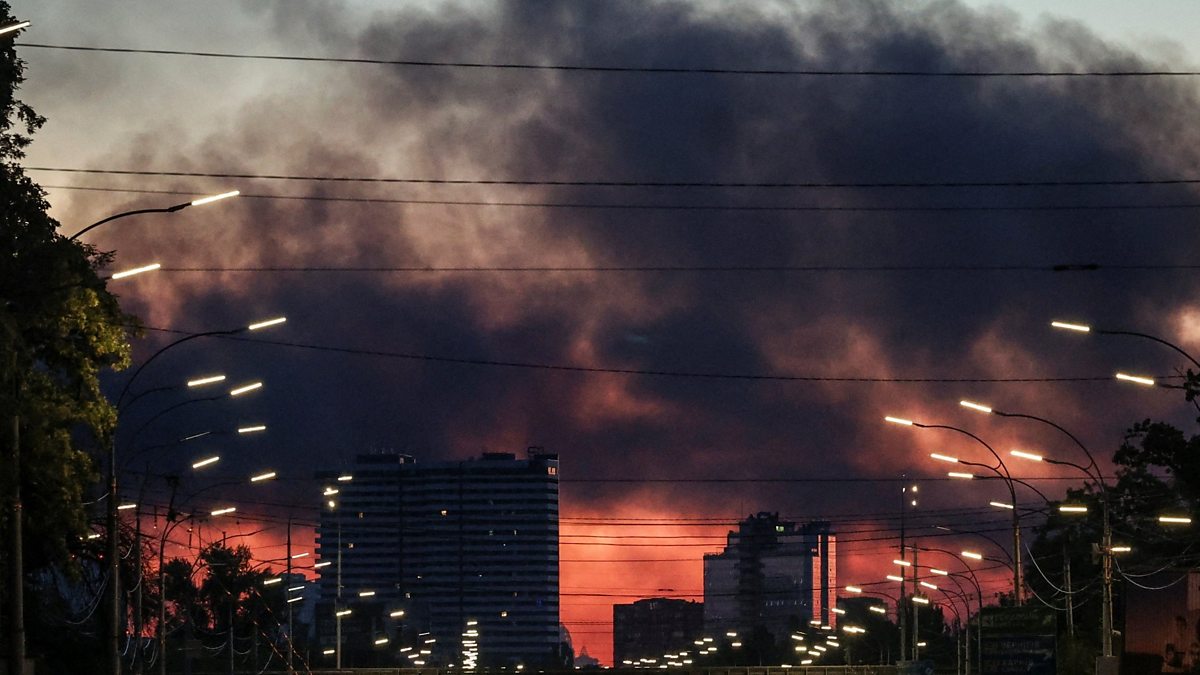
Kyiv, June 2, 2026 — Ukraine endured one of its deadliest nights in months as Russia unleashed a coordinated wave of missile and drone strikes across the country, targeting residential areas, critical infrastructure, and military positions. Officials in Kyiv confirmed at least 18 civilians killed—including an eight-year-old boy and a woman—after strikes on apartment buildings, with rescue teams still pulling survivors from the rubble. The attacks, which also hit western and southern cities, came despite President Volodymyr Zelenskyy’s earlier warnings of impending escalation, raising fears of a broader offensive as summer battles intensify.
In a rare display of vulnerability, Kyiv Mayor Vitali Klitschko described the night as “a really awful night for Ukraine,” calling for international support to counter what he framed as Russia’s deliberate targeting of civilian infrastructure. Meanwhile, Zelenskyy, who had urged Ukrainians to heed air raid alerts after receiving intelligence of a major attack, vowed the country would “continue fighting with all its might.” The strikes follow a pattern of escalation in recent weeks, with Russia increasingly relying on long-range drones and hypersonic missiles to evade Ukrainian air defenses.
As rescue efforts continue and the death toll climbs, the attacks have reignited debates over Western military aid, with NATO allies under pressure to accelerate deliveries of advanced air defense systems. The humanitarian toll, meanwhile, has pushed Ukraine’s already strained healthcare system to its limits, with officials warning of a “humanitarian catastrophe” in hard-hit regions.
Overnight Strikes: Kyiv’s High-Rise Buildings Hit, Rescuers Race Against Time
Rescue teams in Kyiv worked through the night to extricate survivors from the wreckage of two high-rise apartment buildings struck by Russian missiles, with officials confirming at least 18 deaths—including an eight-year-old child and a woman—though the toll is expected to rise as search-and-rescue operations continue. Klitschko, speaking to reporters early Monday, described the scenes as “horrifying,” emphasizing that “people could still be trapped under the rubble.”
Witnesses reported hearing multiple explosions across the capital, with strikes also targeting energy infrastructure in the western city of Lviv and southern regions near the front lines. The attacks came despite Ukraine’s enhanced air defense measures, including the deployment of U.S.-supplied Patriot systems and German-made IRIS-T missiles, which officials say have intercepted a growing number of incoming projectiles but remain overwhelmed by the volume.
In a preemptive address on Sunday, Zelenskyy had warned citizens to “pay special attention to air raid alerts,” citing intelligence suggesting Russia was preparing for a “large-scale attack.” His remarks, delivered via video message, underscored the gravity of the situation, though they did not specify the nature or scale of the anticipated strikes. The president’s office later confirmed that the attacks exceeded initial expectations, describing them as “the most intense in recent weeks.”
As of Monday morning, Ukrainian authorities reported:
- 18+ civilians killed in Kyiv alone, with dozens injured
- Multiple strikes across 12 Ukrainian regions, including Lviv, Odesa, and Dnipro
- Critical infrastructure damaged, including power grids and water supplies
- Rescue efforts ongoing in Kyiv, with emergency services stretched thin
While Russia has not claimed responsibility for the attacks, Western intelligence sources—citing intercepted communications—have attributed the strikes to Moscow, describing them as part of a “deliberate campaign to degrade Ukrainian morale and infrastructure.” The use of long-range drones, including Iran-supplied Shahed-136 models, has become a hallmark of Russia’s recent offensive, allowing strikes deep inside Ukrainian territory with minimal risk to Russian forces.
Humanitarian Crisis Deepens as Medical Facilities Overwhelmed
The attacks have exacerbated an already dire humanitarian situation in Ukraine, with medical facilities in Kyiv and other hard-hit cities overwhelmed by casualties. The Ukrainian Red Cross reported receiving over 200 calls for emergency aid within hours of the strikes, with volunteers rushing to set up field hospitals in makeshift locations. “Our teams are working around the clock, but we are severely under-resourced,” said Red Cross spokesperson Olena Shulga, adding that the organization had appealed for international donations of medical supplies and blood donations.
In a separate development, the United Nations Office for the Coordination of Humanitarian Affairs (OCHA) issued an urgent appeal for $1.5 billion to address the worsening crisis, citing “catastrophic” conditions in frontline regions where displacement has surged. The agency warned that over 3.2 million Ukrainians remain internally displaced, with many living in precarious conditions without access to basic services. “The situation is deteriorating rapidly,” OCHA spokesperson Jens Laerke told reporters, urging the international community to “act now before the summer offensive leads to even greater devastation.”
For the latest updates on humanitarian aid and safety guidance, visit the UNHCR Ukraine Emergency Page or the Ukrainian Red Cross.
Military Response: Ukraine Calls for Urgent NATO Aid as Strikes Intensify
In the wake of the attacks, Ukrainian officials have renewed calls for accelerated delivery of advanced military aid from NATO allies, particularly long-range air defense systems capable of countering Russia’s hypersonic missiles. “We need more Patriots, more IRIS-Ts, and more everything,” Zelenskyy stated in a meeting with Western ambassadors, adding that “time is running out.” The plea comes as Russia has reportedly increased its production of precision-guided munitions, including the Kinzhal hypersonic missiles that have proven difficult to intercept.
U.S. Officials, speaking on condition of anonymity, confirmed that Washington is “expediting” shipments of additional air defense systems to Ukraine, though they acknowledged logistical challenges in transporting the equipment through contested airspace. Meanwhile, Germany’s defense ministry announced plans to send an additional 1,000 IRIS-T missiles, though deliveries are expected to take weeks. “This is not a question of willingness but of capacity,” said a senior NATO official, highlighting the strain on Western arsenals as demand for Ukraine-bound weapons surges.
On the ground, Ukrainian forces reported intercepting 78% of incoming missiles and drones overnight, a figure officials described as a “tactical victory” but warned was unsustainable without additional support. “Our air defenses are holding, but they are being pushed to their absolute limits,” said Andriy Yermak, head of Zelenskyy’s office, in a statement. He added that the strikes had also targeted command-and-control centers near the front lines, raising concerns about Russia’s ability to coordinate large-scale offensives.
International Reaction: NATO Condemns Attacks, Warns of Broader Escalation
NATO Secretary-General Jens Stoltenberg condemned the attacks in a statement, calling them “a clear violation of international law” and reiterating the alliance’s support for Ukraine’s sovereignty. “Russia’s targeting of civilian infrastructure is unacceptable and must stop,” Stoltenberg said, adding that NATO members were “united in their resolve to counter this aggression.” The remarks came as France and the UK announced plans to increase intelligence-sharing with Ukraine to help counter future strikes.
In a separate development, the European Union’s foreign policy chief, Josep Borrell, warned that the attacks could “escalate the conflict beyond Ukraine’s borders,” citing concerns over Russia’s use of proxy forces in neighboring countries. Borrell’s comments followed reports that Russian-backed separatists in Transnistria had mobilized troops near the Moldovan border, raising tensions in the region. Moldova’s government dismissed the reports as “provocative,” but called for an emergency meeting of the Organization for Security and Co-operation in Europe (OSCE).
What Happens Next: The Road Ahead for Ukraine
As rescue efforts continue and the death toll rises, several critical developments will shape Ukraine’s response in the coming days:
- Humanitarian aid delivery: The UN and Red Cross are preparing to dispatch emergency supplies, including medical teams and field hospitals, to the hardest-hit regions.
- Military aid acceleration: NATO allies are expected to announce additional support packages, though delays in transportation remain a major hurdle.
- Frontline assessments: Ukrainian forces will conduct damage assessments to determine if Russia’s strikes have weakened key defensive positions ahead of anticipated summer offensives.
- Diplomatic pressure: Western leaders are likely to convene emergency meetings to discuss further sanctions on Russia, particularly targeting its arms industry.
- Domestic resilience: Kyiv and other cities are bracing for potential follow-up attacks, with civil defense authorities urging residents to remain vigilant.
Key Takeaways
- Deadly civilian toll: At least 18 killed in Kyiv, with dozens injured as rescue operations continue.
- Widespread strikes: Attacks across 12 Ukrainian regions, including critical infrastructure and residential areas.
- Humanitarian crisis: Over 3.2 million internally displaced, with UN appealing for $1.5 billion in aid.
- Military aid urgent: Ukraine calls for accelerated delivery of air defense systems to counter Russia’s hypersonic missiles.
- NATO united: Alliance condemns attacks, warns of broader escalation risks.
- Frontline tensions: Reports of Russian-backed forces mobilizing near Moldova raise regional concerns.
How to Help: Resources for Ukraine
If you wish to support Ukraine during this crisis, consider the following verified channels:
- UNHCR Ukraine Emergency Fund – Donate to provide shelter, food, and medical aid.
- Ukrainian Red Cross – Support local rescue and relief efforts.
- Razom for Ukraine – A U.S.-based nonprofit delivering critical medical supplies.
- USA for Ukraine – Provides humanitarian aid and legal support.
- Ukrainian Government Aid Portal – Official channel for verified donations.
Next Steps: What to Watch For
Ukrainian authorities have requested an emergency session of the OSCE Permanent Council to address the latest escalation, with a meeting expected within 48 hours. Meanwhile, the U.S. State Department will host a briefing on Tuesday to outline new military aid packages, while the EU is preparing a joint statement condemning the attacks.
For real-time updates, follow:
- UK Foreign Office Ukraine Travel Advice
- U.S. State Department Ukraine Updates
- Official Ukrainian Government Twitter
As the situation evolves, World Today Journal will continue to provide verified updates and analysis. Share this article to raise awareness, and join the conversation in the comments below. For direct inquiries or press comments, contact our editorial team at [email protected].
X/Twitter: Latest updates from Ukrainian officials on the ongoing rescue operations and air raid alerts.
YouTube: Rescue teams in Kyiv work through the night to extricate survivors from struck apartment buildings.
Graphic: Strike locations across Ukraine, June 2, 2026 (Source: Ukrainian Air Force)
- Ukraine Drone Strikes Hit Russian Oil Refinery and Wildberries Logistics Center
- Beluga Whales Transferred from Marineland Canada to Chicago and San Antonio
- UFC Fighter Allan Nascimento Dies at 34 After Apparent Heart Attack (archyworldys.com)
- Russia and Ukraine Trade Deadly Strikes as Casualties Mount (newsdirectory3.com)