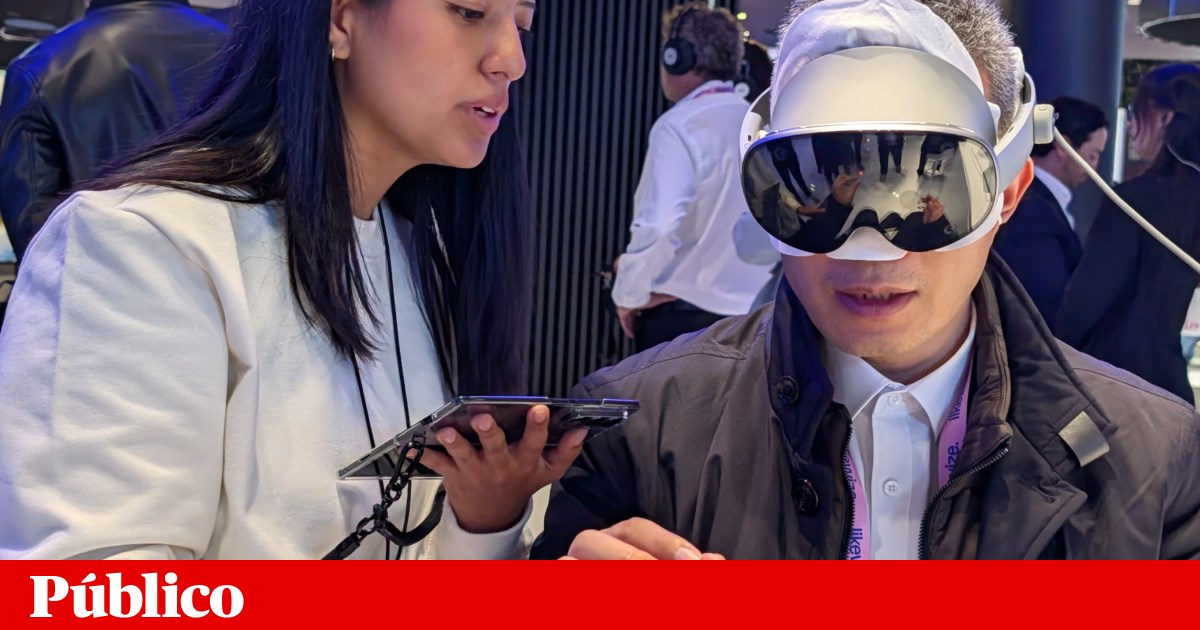
Barcelona played host to what was undoubtedly one of the most anticipated demonstrations at Mobile World Congress 2026. At the center of the South Korean brand’s expansive pavilion, the Galaxy XR finally emerged as a tangible proposal, ready to be tested by event attendees. These glasses represent the culmination of a strategic partnership between Samsung, Google and Qualcomm, aiming to create a spatial computing ecosystem that doesn’t rely on Apple’s walled garden. The unveiling signals a significant shift in the extended reality (XR) landscape, potentially reshaping how we interact with digital content and the physical world. This new era of computing promises immersive experiences, blending virtual elements seamlessly with our surroundings.
The competition in the XR space is heating up, with Apple’s Vision Pro setting a high bar for immersive experiences. However, Samsung, leveraging its expertise in display technology and mobile computing, is positioning the Galaxy XR as a compelling alternative. The collaboration with Google, providing the Android XR operating system, and Qualcomm, supplying the processing power, is a strategic move to challenge Apple’s dominance. The Galaxy XR isn’t just about hardware. it’s about building an open ecosystem that fosters innovation and accessibility. This approach could be key to wider adoption of spatial computing, moving it beyond early adopters and into the mainstream.
A Lightweight Design with Top-Tier Hardware
Upon putting on the Galaxy XR, the first sensation is one of comfort. Weighing in at 545 grams, these glasses are substantially lighter than the primary competitor from Cupertino, Apple’s Vision Pro. This weight reduction is largely due to the decision to keep the battery as an external component, a design choice that prioritizes user comfort during extended employ. The visor utilizes two Micro-OLED panels with a resolution of 3552 by 3840 pixels per eye, resulting in an impressive image density where individual pixels are virtually indistinguishable. This high resolution contributes to a more realistic and immersive visual experience, minimizing screen-door effect and enhancing clarity.
Powering the experience is the Qualcomm Snapdragon XR2+ Gen 2 processor, ensuring smooth and responsive performance. During testing in Barcelona, the spatial mapping capabilities were demonstrated to be nearly instantaneous, allowing virtual application windows and three-dimensional objects to be placed on tables or walls with remarkable stability. This rapid mapping is crucial for creating a believable and interactive augmented reality experience. The announced price for the American market is $1799.99, excluding taxes. While official European pricing remains unconfirmed, rumors suggest a range of €1899 to €1999, positioning the Galaxy XR as a premium product, albeit more accessible than its direct competition. Fierce Network provides comprehensive coverage of Mobile World Congress 2026, including details on pricing and availability.
Google’s Intelligence at a Glance
At the heart of this project lies Android XR, the operating system specifically designed by Google for this new era of computing. The interface employs a design language called “Glimmer,” characterized by rounded icons and green tones, which engineers claim help conserve battery life and reduce eye strain. Control is entirely gesture-based: a thumb-and-index-finger touch confirms selections, while a swipe in the air navigates menus. This intuitive control scheme aims to produce interacting with the virtual environment feel natural and seamless. The focus on gesture control minimizes the need for external controllers, further enhancing the immersive experience.
The integration of artificial intelligence through Gemini Live is where Samsung and Google appear to gain a significant advantage. By pressing a side button, users can ask the assistant for details about what they are seeing in the real world. This feature leverages the power of Gemini to provide contextual information and enhance understanding of the surrounding environment. The operating system functions as an extension of the Android ecosystem, allowing phone notifications and applications to appear naturally within the virtual environment. This seamless integration between the physical and digital worlds is a key differentiator for the Galaxy XR. BGR reports on the kickoff of the 6G era at MWC 2026 and the role of Android XR.
Privacy and Security with Knox
With a device equipped with numerous cameras and sensors, data security is a central concern. Samsung has applied its Knox Matrix architecture to ensure that biometric information, such as iris scanning used for unlocking, remains isolated on a secure chip. This robust security framework is designed to protect sensitive user data from unauthorized access. To reassure those around the person wearing the glasses, an external LED illuminates whenever the device is recording video or capturing images. This visual indicator provides transparency and builds trust, addressing potential privacy concerns.
Google’s privacy policies for Android XR similarly reinforce that raw camera data, used for room mapping, is not shared with third-party applications without explicit authorization. This commitment to data privacy is essential for fostering user confidence and encouraging the adoption of XR technology. The combination of Samsung’s Knox security and Google’s privacy safeguards aims to create a secure and trustworthy XR experience. This focus on privacy is crucial for moving XR technology beyond controlled environments like trade shows and into everyday life.
The phased rollout of these glasses in Europe is expected to begin in the coming months, marking the start of a new battle for the space between our eyes and reality. The Galaxy XR represents a significant step forward in spatial computing, offering a compelling combination of hardware, software, and security features. It remains to be seen how the device will perform in real-world scenarios and whether it can capture a significant share of the growing XR market.
Samsung’s Battery Boost and the XR Landscape
Beyond the Galaxy XR, Samsung is also making strides in other areas of consumer electronics. Recent reports indicate a major battery boost for Samsung’s next smartwatch upgrade. T3 details the improvements, suggesting a focus on extending usability and addressing a common pain point for wearable technology. This commitment to battery life extends to the XR space, where extended use is crucial for immersive experiences. The external battery pack design of the Galaxy XR is a direct response to this need, allowing for longer usage times without compromising comfort.
The XR market is poised for significant growth in the coming years, driven by advancements in hardware, software, and connectivity. The introduction of 6G technology, as discussed at Mobile World Congress 2026, will further enhance the capabilities of XR devices, enabling faster data transfer speeds and lower latency. This will unlock new possibilities for immersive experiences, including remote collaboration, virtual training, and entertainment. The competition between Samsung, Apple, and other players in the XR space will continue to drive innovation and push the boundaries of what’s possible.
The Galaxy XR’s success will depend on several factors, including its price, performance, and ecosystem support. The open nature of the Android XR platform could be a key advantage, attracting developers and fostering a vibrant community of content creators. However, Samsung will also need to address potential concerns about privacy and security to build trust with consumers. The company’s track record in mobile technology and its commitment to innovation position it well to compete in this rapidly evolving market.
Looking ahead, the next key checkpoint will be the official European launch of the Galaxy XR, expected in the coming months. Consumers will be eager to experience the device firsthand and assess its capabilities. The response from developers and content creators will also be crucial in shaping the future of the Android XR ecosystem. As spatial computing continues to evolve, the Galaxy XR has the potential to become a leading platform for immersive experiences.
What are your thoughts on Samsung’s entry into the XR market? Share your comments below and let us know what features you’re most excited about. Don’t forget to share this article with your network to spread the word about the latest advancements in spatial computing!
Related reading