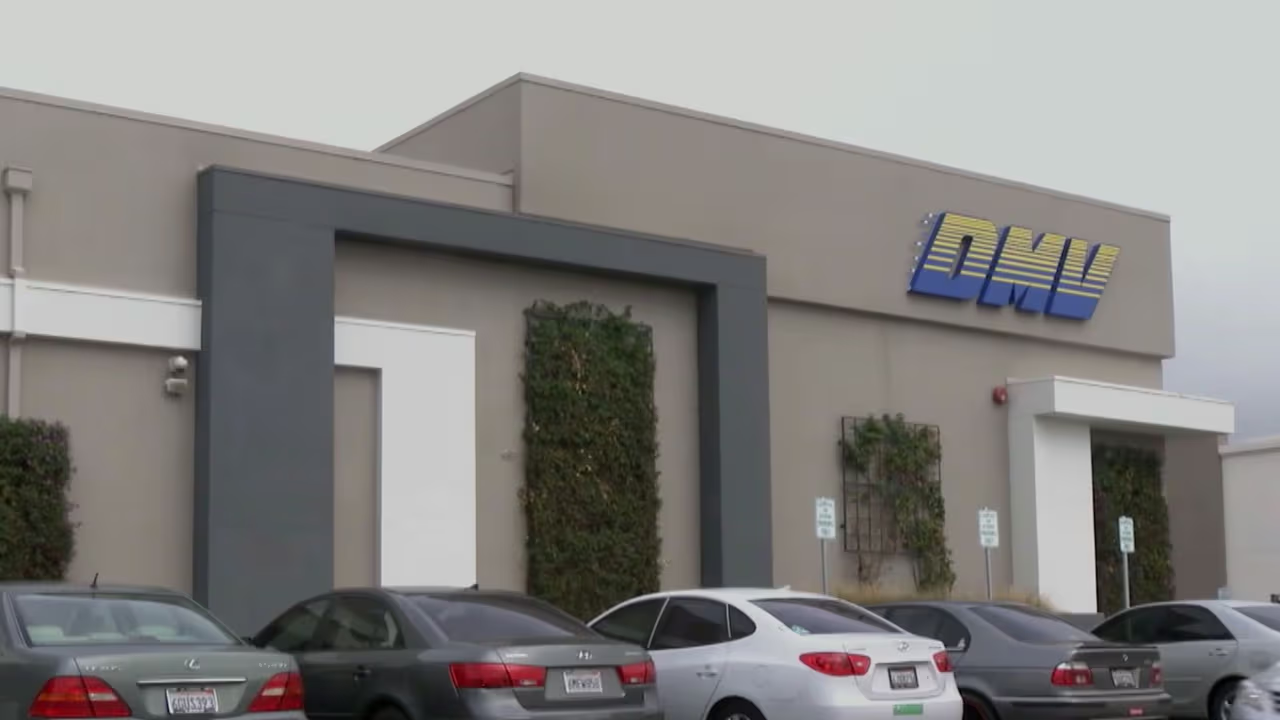
California is implementing a data-sharing agreement with the federal government to facilitate the issuance of REAL ID-compliant driver’s licenses, a move that has sparked warnings from immigration advocates regarding the potential for federal surveillance. The California Department of Motor Vehicles (DMV) will share specific driver data with the U.S. Department of Homeland Security (DHS) to verify the legal presence of applicants, according to state administrative guidelines and federal mandates.
The REAL ID Act, a federal law passed in 2005, establishes minimum security standards for state-issued identification. Under these rules, states must verify an applicant’s lawful status in the U.S. before issuing a REAL ID-compliant license. While California continues to offer non-compliant licenses to undocumented residents under the Vehicle Code, the process for obtaining the federal-standard ID requires a level of data exchange that critics argue could be repurposed for immigration enforcement.
This transition occurs as the federal government prepares for the full enforcement of REAL ID requirements. According to the U.S. Department of Homeland Security, the deadline for the full implementation of REAL ID has been extended to May 7, 2025. After this date, standard state licenses that are not REAL ID-compliant will no longer be accepted for boarding domestic flights or entering secure federal facilities.
The Mechanics of DMV Data Sharing and Federal Verification
To comply with federal law, the California DMV utilizes the SAVE (Systematic Alien Verification for Entitlements) program. According to U.S. Citizenship and Immigration Services (USCIS), SAVE is the official federal database used to verify the immigration status of non-citizens seeking public benefits or licenses. When a resident applies for a REAL ID, the DMV submits the applicant’s information to this system to confirm their legal status.
The data shared typically includes full names, dates of birth, and alien registration numbers. The DMV’s role is to act as a conduit, ensuring that the documents provided by the resident match the federal records maintained by DHS. This verification is a prerequisite for the “gold star” or “REAL ID” marking on the license, which signifies the ID meets federal security standards.
California law distinguishes between these federal IDs and the standard driver’s licenses available to all residents regardless of immigration status. Under the California Vehicle Code, the state allows individuals who cannot provide proof of legal presence to obtain a license, but these documents explicitly state they are “Federal Non-Compliant” and cannot be used for federal purposes.
Immigration Concerns and the Risk of Surveillance
Despite the stated purpose of the data exchange, immigration rights organizations have expressed concern that the centralization of this data creates a digital roadmap for deportation efforts. Advocates argue that once data enters a federal system like SAVE, the “firewall” between state service provision and federal enforcement may be porous.
The primary fear is that DHS could use the data collected for REAL ID verification to identify and locate undocumented individuals who may have attempted to apply for the ID or who are interacting with the DMV for other services. This concern is heightened in California, which has historically positioned itself as a “sanctuary state” through laws like the California Values Act, designed to limit state cooperation with federal immigration authorities.
Legal analysts note that while the DMV is mandated to share data for the specific purpose of REAL ID verification, the broader infrastructure of federal data collection remains a point of contention. The risk, according to advocacy groups, is that the administrative necessity of a license becomes a tool for federal surveillance of marginalized populations.
Impact on Undocumented Residents and the May 2025 Deadline
For the millions of undocumented residents in California, the May 7, 2025, deadline creates a practical divide in mobility. While they can still drive legally with a standard California license, they will be unable to use that identification to enter federal buildings or fly domestically within the U.S. without a passport.
The disparity in identification creates a two-tiered system of access. Those with legal status can obtain the REAL ID through the DMV’s data-sharing process, while those without legal status must rely on passports or other federally accepted forms of identification to navigate the country. This puts a disproportionate burden on undocumented families who may not have access to foreign passports or who fear that attempting to obtain federal documentation will alert authorities to their presence.
State officials have urged residents to check their current licenses for the REAL ID symbol to avoid travel disruptions. However, immigration experts advise undocumented residents to be cautious about the specific types of identification they request at DMV offices to avoid triggering federal verification processes that could expose their status.
Comparison of California License Types
To clarify the difference between the available options, the following table outlines the primary distinctions between the licenses issued by the California DMV:
| Feature | REAL ID (Compliant) | Standard License (Non-Compliant) |
|---|---|---|
| Federal Access | Permitted (Airports, Federal Buildings) | Not Permitted |
| Legal Status Req. | Proof of Lawful Presence Required | No Proof of Lawful Presence Required |
| Data Sharing | Verified via DHS/SAVE System | No Federal Status Verification |
| Driving Authority | Valid for Operating Vehicles | Valid for Operating Vehicles |
The next critical checkpoint for residents is the May 7, 2025, enforcement date, at which point the U.S. government will begin strictly requiring REAL ID or alternative federal identification for domestic air travel. Residents are encouraged to visit the official California DMV REAL ID portal for specific document checklists and appointment scheduling.
World Today Journal encourages readers to share this report and leave comments regarding how these identification changes are affecting their local communities.