
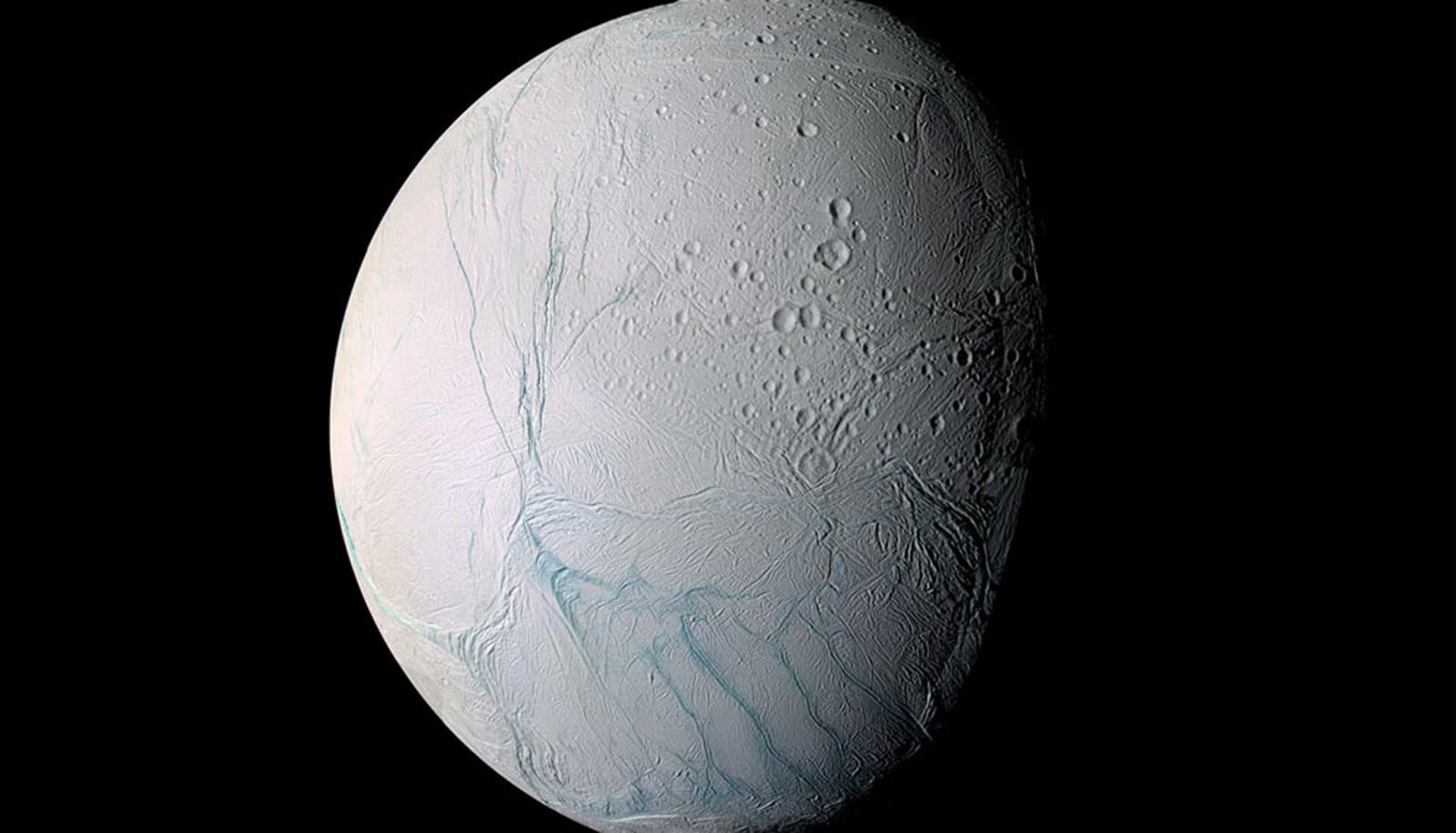
Enceladus: Saturn’s Moon Reveals Building Blocks of Life in Ocean Plume
Recent analysis of data collected by NASA’s Cassini spacecraft has revealed a wealth of organic compounds erupting from the subsurface ocean of enceladus, a moon of Saturn. This revelation substantially bolsters the possibility that this icy world could harbor life. Scientists are calling it a pivotal moment in the search for extraterrestrial life,suggesting Enceladus possesses nearly all the necessary ingredients.
A Deep Dive into Enceladus’ Potential
For years,Enceladus has captivated researchers. the moon’s unusual brightness and the origin of Saturn’s faint E ring were long-standing mysteries. Cassini’s years-long mission,launched in 1997,finally provided answers.
Here’s what we now know:
* Global Ocean: Beneath a 16-19 mile thick shell of ice lies a global saltwater ocean.
* Icy plumes: Fissures in the South Polar Terrain eject massive amounts of icy water into space,some of which forms Saturn’s E ring.
* hydrothermal Activity: Evidence suggests hydrothermal vents exist on the ocean floor - similar to those on Earth where life is believed to have originated.
New Organic Compounds Identified
The latest findings, published in nature Astronomy, stem from a close flyby of Enceladus’ plume. This allowed scientists to analyze material directly from the moon’s interior, just minutes after its ejection.
Researchers identified several new organic compounds not previously detected in the E ring, including:
* Esters
* Alkenes
* Ether Compounds
“Having clear evidence of a variety of organic compounds from inside an extraterrestrial water world is incredible,” explains Fabian Klenner, a University of Washington postdoctoral researcher. “It appears that Enceladus has all the ingredients for life as we know it.”
These compounds are especially exciting because esters and ethers can be components of lipids – essential building blocks for cell membranes and, therefore, life itself.
Building on Cassini’s Legacy
Cassini’s Cosmic Dust Analyzer (CDA) previously identified organic compounds within Saturn’s E ring. This new data, however, provides a more direct and detailed look at the ocean’s composition.
“The high-speed flyby of Enceladus enabled us to identify new compounds,” says Klenner, who helped validate the CDA results. “These findings represent a significant step forward in understanding the moon’s habitability.”
Lead author Nozair Khawaja, from Freie Universität Berlin, notes the parallels to Earth. “We suspect that so-called hydrothermal fields exist ther-these are vents at the bottom of the ocean from which hot water rises. There is evidence that life on Earth originated in such fields.”
What’s Next for Exploration?
The success of Cassini has fueled investment in future missions to the outer solar system. NASA’s Europa Clipper, currently en route to Jupiter, will study Europa – another moon with a subsurface ocean and potential for life.
However, there’s still a wealth of untapped data from Cassini. “Its phenomenal to continue learning from the Cassini mission,” says Klenner. “Much of the CDA data still isn’t analyzed and I’m so excited about what it may reveal next.”
This ongoing analysis underscores the importance of continued exploration and the potential for groundbreaking discoveries in our search for life beyond Earth.You can stay updated on the latest findings from the University of washington here and the University of Stuttgart here.
Funding: This research was supported by the European Research Council, the German Aerospace Center, the state of Berlin, and NASA.
Collaborators: Researchers from Freie Universität Berlin; the University of Colorado, Boulder; the Institute of Science Tokyo; and the University of Stuttgart contributed to this work.





