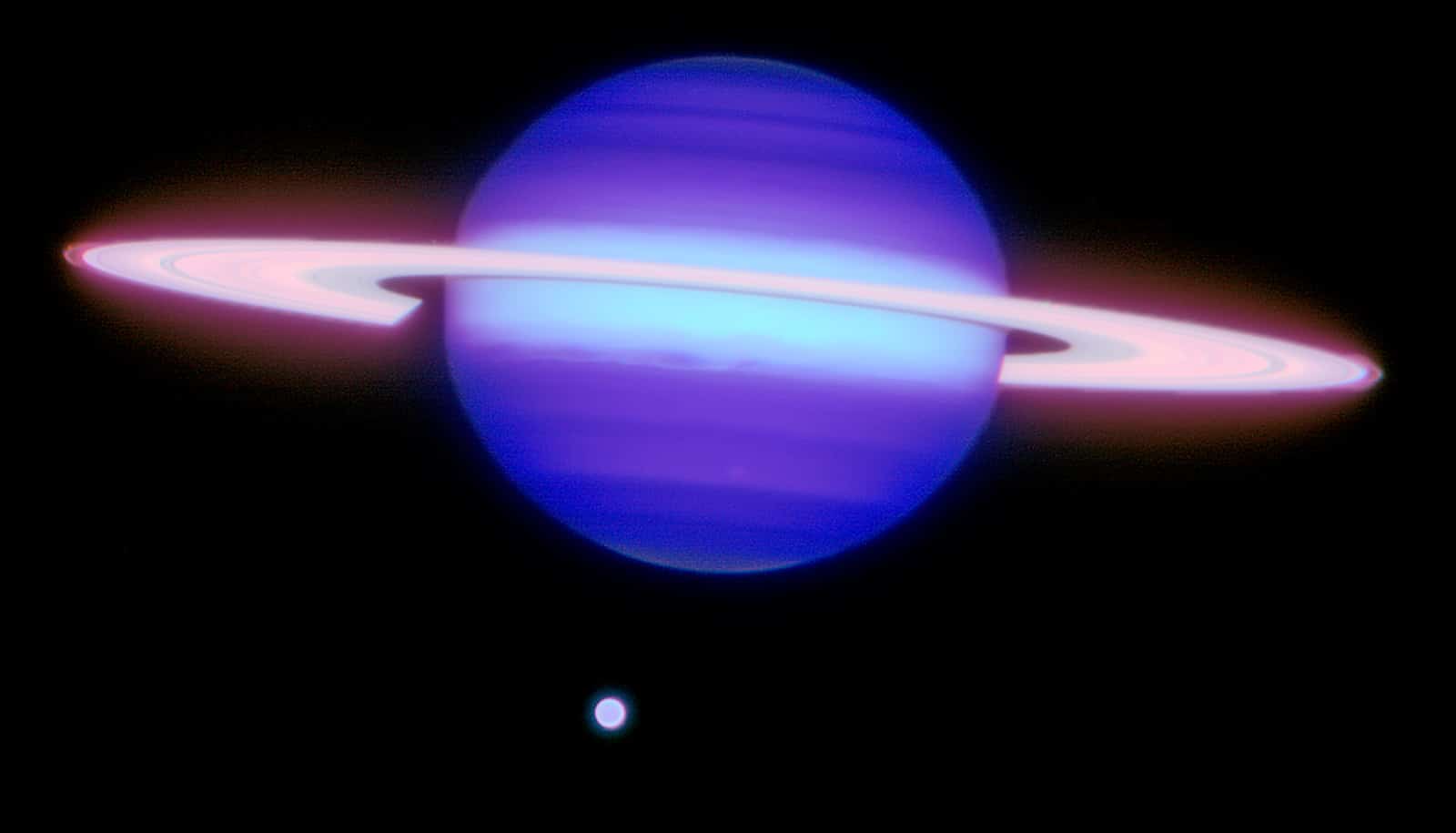
Saturn’s largest moon, Titan, has long captivated scientists with its potential for harboring life, and recent research is reshaping our understanding of its internal structure. For years, the prevailing theory suggested a global ocean existed beneath Titan’s icy shell, but new findings indicate a more complex, slushy interior. This discovery considerably impacts our assessment of the moon’s habitability and the potential for life beyond Earth.
Unveiling Titan’s Interior: Beyond the Global Ocean
Initially, data from the Cassini mission hinted at a global ocean, as the moon’s surface appeared to flex under saturn’s gravitational pull in a way consistent with a liquid layer. Though, further analysis revealed this wasn’t the complete picture. I’ve found that understanding the timing of these shifts is crucial. Researchers discovered that Titan’s shape changes lag approximately 15 hours behind the peak of Saturn’s gravitational influence.
This delay is key. Just as it requires more effort to stir a thick substance like honey compared to water,the lag indicates a higher viscosity within Titan.Measuring this delay allowed scientists to estimate the energy needed to deform the moon, providing insights into the composition of its interior.
The energy dissipation observed within Titan was surprisingly high, exceeding expectations for a simple global ocean model. Nobody was expecting very strong energy dissipation inside Titan. That was the smoking gun indicating that Titan’s interior is different from what was inferred from previous analyses,
explained Flavio Petricca,a postdoctoral fellow at NASA’s Jet Propulsion Laboratory,who spearheaded the study.
The new model proposes a substantial layer of slush, a mixture of ice and water, with less liquid water than previously thoght. This slushy consistency explains the observed lag in Titan’s response to Saturn’s gravity, while still allowing for the necesary deformation.
Did You Know? Titan is the only moon in our solar system with a dense atmosphere, primarily composed of nitrogen, much like Earth’s. Though, Titan’s atmosphere is about 50% denser and contains methane and other hydrocarbons.
The Role of Pressure and Thermodynamics
Petricca’s findings were bolstered by research into the extreme pressures found deep within Titan. He analyzed radio wave frequencies from Cassini flybys, while Journaux focused on the thermodynamics of water and minerals under immense pressure.This is where things get really engaging. The immense pressure on Titan alters the physical properties of water and ice, causing them to behave differently than they do on Earth.
Journaux’s laboratory at the University of Washington has been instrumental in simulating these extraterrestrial environments.He provided the team with data describing the anticipated physical properties of water and ice at those depths. We could help them determine what gravitational signal they should expect to see based on the experiments made here at UW,
Journaux stated,highlighting the collaborative nature of the research.
Here’s what works best: understanding the unique conditions on Titan is paramount to accurately interpreting the data we receive. The watery layer is so thick and the pressure so intense that the physics of water fundamentally changes.
Implications for the Search for Life
This discovery isn’t just about understanding Titan’s geology; it has profound implications for the search for extraterrestrial life. The presence of a slushy layer expands the range of environments we consider potentially habitable. As reported by NASA in November 2024, the search for biosignatures in subsurface oceans is a major focus of upcoming missions.
Interestingly, the new findings might actually *improve* the odds of finding life on titan.Analyses suggest that pockets of freshwater within the slush could reach a surprisingly temperate 68 degrees Fahrenheit. This concentrated environment would allow for a higher concentration of nutrients, potentially fostering the growth of simple organisms.
While we aren’t likely to find fish swimming through slushy channels, any life on Titan might resemble ecosystems found in Earth’s polar regions.The conditions,while extreme,aren’t necessarily prohibitive to life as we know it.
Pro Tip: When considering the habitability of celestial bodies, remember that life finds a way
– it often thrives in environments we once considered impractical.
Journaux is now part of the team for NASA’s dragonfly mission, slated to launch in 2028.The data gathered from this mission will be crucial in validating these findings and potentially uncovering evidence of life on Titan. He hopes to return with definitive answers about the moon’s ocean and the possibility of life within it.
The research involved contributions from NASA,the Swiss National Science foundation,and the Italian Space Agency,demonstrating a global collaborative effort.
Here’s a quick comparison of the two models:
| feature | Global Ocean Model | Slushy Interior Model |
|---|---|---|
| Viscosity | Low | High |
| Energy Dissipation | Low | High |
| Water Content | High | Moderate |
| shape Shifting Lag | Minimal | Meaningful (approx. 15 hours) |
Titan: An Evergreen Resource for Astrobiological Study
titan remains a prime target in the search for life beyond Earth, and the ongoing research continues to refine our understanding of its potential. The moon’s unique combination of liquid hydrocarbons, a dense atmosphere, and now, a slushy interior, makes it a fascinating and complex world.The study of Titan provides valuable insights into the conditions necessary for life to arise and evolve, informing our search for habitable environments throughout the universe. This is a field that will continue to evolve as we gather more data and develop new technologies.
Frequently Asked Questions About Titan’s Interior
- What is the primary keyword? What is the composition of Titan’s interior? The latest research suggests a slushy mixture of ice and water, rather than a purely liquid global ocean.
- How does Titan’s gravity affect its interior? Titan’s interior responds to Saturn’s gravitational pull, but with a significant lag, indicating a higher viscosity than a simple ocean would exhibit.
- What role does pressure play in Titan’s interior? The immense pressure deep within Titan alters the physical properties of water and ice, causing them to behave differently than on earth.
- could life exist in Titan’s slushy interior? The concentrated pockets of freshwater within the slush could potentially support simple life forms, with temperatures reaching 68 degrees Fahrenheit.
- What is the Dragonfly mission’s role in studying Titan? The Dragonfly mission, launching in 2028, will gather data to validate these findings and search for evidence of life on Titan.
- What are the key differences between a global ocean and a slushy interior on Titan? A global ocean would have lower viscosity and energy dissipation, while a slushy interior exhibits higher viscosity, significant lag in response to gravity, and greater energy dissipation.
- How does the study of Titan contribute to the broader search for extraterrestrial life? Studying Titan expands our understanding of habitable environments and informs our search for life beyond Earth.
The ongoing exploration of Titan promises to reveal even more about this enigmatic moon. As we continue to gather data and refine our models, we move closer to answering the fundamental question: are we alone in the universe?