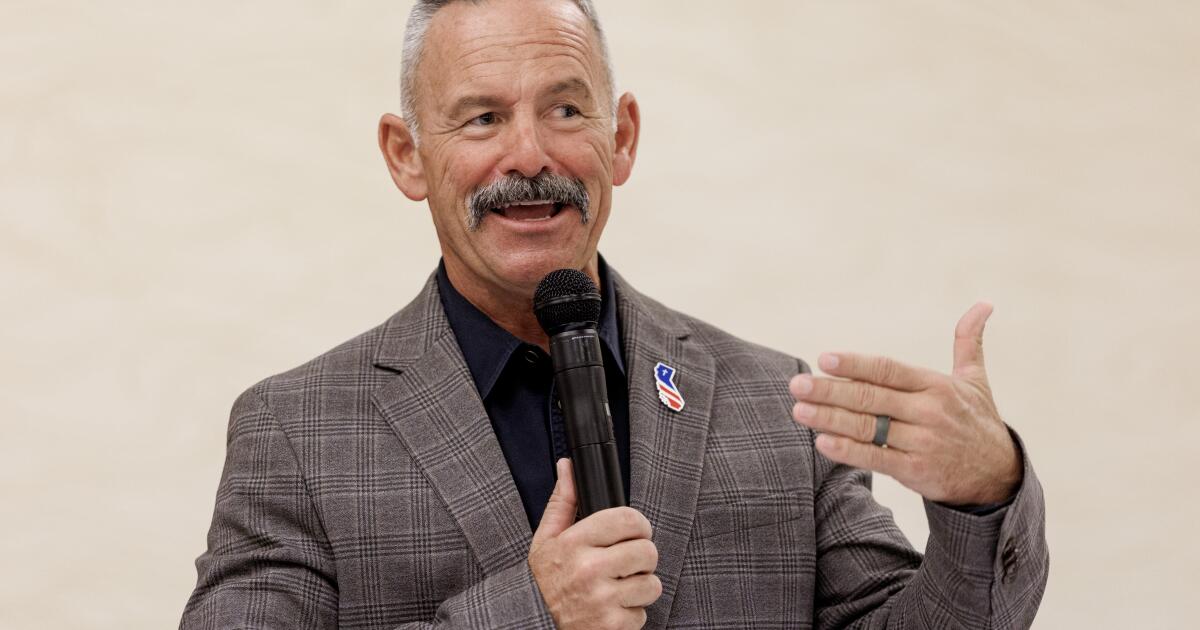
California Governor Hopefuls Clash Over Education Reform at CSBA Forum
Sacramento, CA – The future of California’s K-12 education system took center stage this week as candidates vying for the governorship addressed a packed forum hosted by the California School Boards Association (CSBA). The event, held at Sacramento’s SAFE Credit Union Convention Center, brought together over 3,500 education leaders and sparked a robust debate on critical issues facing the state’s 5.8 million public school students. From funding models and teacher shortages too achievement gaps and ambitious environmental mandates, the candidates presented distinct visions for improving educational outcomes.
A System under Strain: Common Ground on the Need for Change
A unifying message resonated throughout the forum: California’s current education system is demonstrably failing too manny students. “Something is broken,” declared former Los Angeles Mayor Antonio Villaraigosa, echoing a sentiment shared by all participants. He highlighted the stark reality that students struggling with foundational literacy and numeracy are disproportionately from low-income and minority backgrounds – a disparity he deemed “unacceptable” for a state of california’s economic power.
This acknowledgement of systemic challenges sets the stage for a pivotal election, as voters grapple with how best to address these deeply rooted issues. Recent polling data from the UC Berkeley Institute of Governmental Studies, co-sponsored by The Los Angeles Times, indicates a tight race. While businessman Mark Bianco currently holds a slight lead,former Orange County Representative Katie Porter is the frontrunner among Democratic contenders. Xavier Becerra and Steve Hilton are also vying for voter attention.
Divergent Paths to Improvement: Funding, Accountability, and innovation
The candidates offered a range of solutions, revealing fundamental differences in their approaches to education reform. The debate centered around three key areas: funding, accountability, and innovative solutions to address systemic challenges.
Funding the Future: The question of adequate funding proved notably contentious. state Superintendent of public Instruction Tony Thurmond advocated for increased revenue through a tax on billionaires, arguing that the wealthiest Californians must “pay their fair share” to support public education. He also proposed a novel solution to the teacher housing crisis: developing two million housing units on surplus school-owned land to provide affordable living options for educators.
However, Bianco challenged the premise of a funding shortage, asserting that California’s robust economy – the fourth largest in the world – is not the problem. “We have never, never had a revenue problem,” he stated, framing the issue as a “100% spending problem” requiring greater fiscal obligation.
Former State Controller Betty Yee offered a more nuanced perspective, prioritizing improved healthcare and safer working conditions for teachers, and emphasizing the importance of incorporating local expertise into state policy. “The local perspective…about how to improve student achievement is what needs to inform state policy,” she argued, criticizing the current lack of recognition given to educators’ insights.
Accountability and Parental Involvement: Former Assembly Majority Leader Ian Calderon stressed the critical role of parental involvement, urging schools to strengthen outreach efforts and forge stronger partnerships with families. He also underscored the link between housing security and academic success, arguing that addressing the state’s housing crisis is paramount to closing achievement gaps. “You cannot narrow an achievement gap if there is not secure housing for people,” he explained.
Navigating Mandates and Modernization: The candidates also expressed reservations about California’s mandate to phase out gas-powered school buses by 2035. Most called for a more flexible timeline or exemptions, with Bianco advocating for the complete removal of the mandate, arguing against government interference in local transportation decisions.
CSBA’s Selection Process and the Road Ahead
The CSBA’s decision to invite only a select group of candidates – Bianco, Yee, Villaraigosa, Calderon, and Thurmond – drew some scrutiny. A spokesperson for the association explained that the invitation list was based on factors like name recognition and previous office held, acknowledging that including all candidates would have presented logistical challenges.
As the 2026 gubernatorial race heats up, the education debate will undoubtedly intensify. california’s future hinges on finding effective solutions to the challenges facing its public schools, and voters will be closely scrutinizing each candidate’s vision for ensuring that all students have the prospect to thrive.
[AuthorBio-[AuthorBio-[AuthorBio-[AuthorBio-Important for E-E-A-T]
[Your Name/Institution Name] is a leading voice in California education policy, with [number] years of experience analyzing and reporting on the state’s K-12 system. We are committed to providing accurate, insightful coverage of the issues that impact students, educators, and communities across the state. our team includes former educators, policy analysts
Keep reading