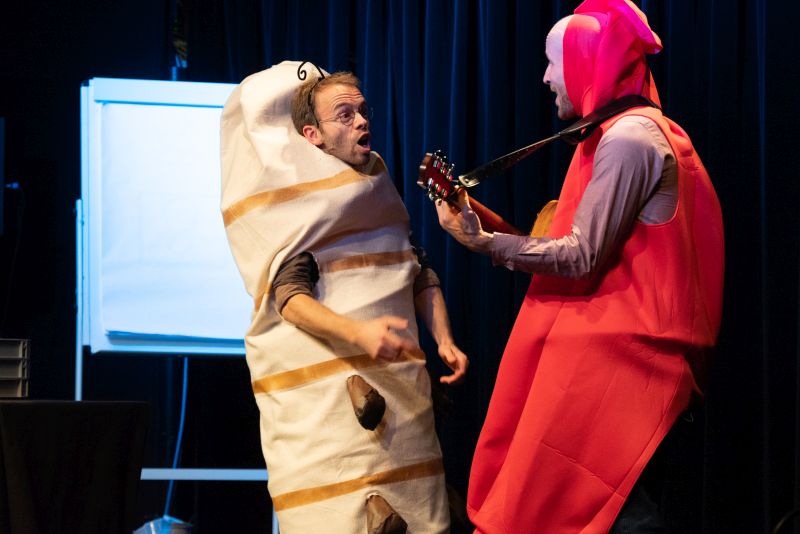
Science Slams Bring Cutting-Edge Research to the Public Stage
The pursuit of knowledge doesn’t always reside within the hallowed halls of academia. Increasingly, researchers are taking their work directly to the public, transforming complex scientific concepts into engaging and accessible presentations. This movement is exemplified by the growing popularity of Science Slams – events where researchers compete to explain their work in a compelling and concise manner, often with a healthy dose of humor. These events, gaining traction across Europe and beyond, aim to bridge the gap between the scientific community and the wider world, fostering a greater understanding and appreciation for research and innovation. The format typically involves short, dynamic presentations, judged by the audience, creating an interactive and lively atmosphere.
A prime example of this trend is the upcoming Science Slam focused on sustainability, organized jointly by the Wuppertal Institute and the Bergische University of Wuppertal in Germany. Scheduled for November 22, 2023, this event promises to showcase the latest research related to environmental and social responsibility. The event’s organizers hope to demonstrate that even the most intricate scientific findings can be communicated effectively and entertainingly to a non-specialist audience. This approach is particularly crucial in addressing pressing global challenges like climate change and resource depletion, where public understanding and engagement are paramount.
What is a Science Slam?
Science Slams originated in Berlin in 2009, according to the official Science Slam website, and have since spread to numerous cities throughout Germany and internationally. The core concept is simple: researchers are given a limited amount of time – typically ten minutes – to present their work to a live audience. Unlike traditional academic presentations, Science Slams prioritize clarity, creativity, and entertainment value. Participants are encouraged to use props, performances, and visual aids to make their presentations more engaging and accessible. The audience then votes for their favorite presentation, awarding a prize to the “slam winner.”
The format is designed to break down the barriers between scientists and the public, making research more relatable and less intimidating. As the Science Slam website explains, the events aim to present “neueste Arbeiten aus Molekularbiologie, Geschichte oder Astrophysik, aus Literaturwissenschaften oder Medizin” – the latest work from molecular biology, history, astrophysics, literature, and medicine – in an accessible and entertaining way. This approach not only informs the public but too encourages young people to consider careers in science and research.
The Wuppertal Sustainability Slam: Topics and Participants
The Wuppertal Institute and Bergische University of Wuppertal’s inaugural Science Slam will focus specifically on the theme of sustainability. According to a press release from the Bergische Universität Wuppertal, the event will feature six young researchers presenting their work on topics ranging from the surprising connections between cows and mattresses to the relationship between chocolate and mosquitoes. These seemingly disparate topics all tie into broader questions about environmental impact, resource management, and sustainable practices.
The researchers will explore questions such as: What do cows have to do with an old mattress? What do sunscreen and a solar shower have in common? And what impact do meals in the cafeteria have on biodiversity, and what connection exists between mosquitoes and chocolate? The event aims to highlight the interdisciplinary nature of sustainability research, demonstrating that solutions to complex environmental challenges require collaboration across a wide range of fields. The presentations will be judged not only on their scientific accuracy but also on their ability to engage and inform the audience.
Bernhard Weingartner: The Master of Science Communication
The Wuppertal Science Slam will be moderated by Bernhard Weingartner, a physicist dedicated to making complex scientific topics understandable to a broad audience. Weingartner, as described in the event information, has a mission to simplify complex topics, sharing them with people in parks, cabaret venues, and even on Austrian national television (ORF). He is also an author of popular science books and a coach for educators at universities and colleges, and he organizes Science Slams throughout Austria. Weingartner’s experience in science communication makes him an ideal host for the event, ensuring that the presentations are both informative and engaging.
Weingartner’s approach emphasizes the importance of clear and concise communication, avoiding jargon and technical terms whenever possible. He believes that everyone should have access to scientific knowledge, regardless of their background or education. His work reflects a growing recognition within the scientific community of the need to improve public engagement with science and research.
The Growing Trend of Science Communication
The rise of Science Slams is part of a broader trend towards greater emphasis on science communication. Researchers are increasingly recognizing the importance of sharing their work with the public, not only to raise awareness of important issues but also to build trust and support for scientific endeavors. This trend is driven by several factors, including the increasing complexity of scientific challenges, the growing importance of public policy decisions based on scientific evidence, and the proliferation of misinformation and pseudoscience.
Events like the Wuppertal Sustainability Slam provide a platform for researchers to connect with the public in a meaningful way, fostering a dialogue about the challenges and opportunities facing society. By presenting their work in an accessible and engaging format, they can inspire the next generation of scientists and encourage greater public participation in the scientific process. The Science Slam format, with its emphasis on brevity and creativity, is particularly well-suited to capturing the attention of a diverse audience.
How to Get Involved
For researchers interested in participating in future Science Slams, the event organizers encourage them to contact [email protected]. The Science Slam website provides further information about the event format and guidelines for submissions. For members of the public, attending a Science Slam is a great way to learn about the latest research and engage with the scientific community. Events are held regularly in cities across Germany and beyond, offering a unique and entertaining way to explore the world of science.
The Wuppertal event, taking place on November 22, 2023, at the Campus Grifflenberg of the Bergische University Wuppertal, Max-Horkheimer-Straße 15, AStA-Ebene ME.04, promises to be a stimulating and informative evening. The event is open to all interested individuals and offers a unique opportunity to delve into the world of sustainability research.
Key Takeaways
- Science Slams are a dynamic and engaging way to communicate complex research to the public.
- The Wuppertal Institute and Bergische University of Wuppertal are hosting a Science Slam focused on sustainability on November 22, 2023.
- Bernhard Weingartner, a renowned science communicator, will moderate the event.
- The trend of Science Slams reflects a growing emphasis on public engagement with science and research.
The organizers of the Wuppertal Science Slam will announce the winner of the event following the presentations. Further details about upcoming Science Slam events can be found on the Science Slam website. We encourage readers to explore these events and engage with the exciting world of scientific discovery. Share your thoughts on the importance of science communication in the comments below.
- Gentse Feesten 2026 Review: Highlights, Controversies, and Final Report
- Best New Releases on Netflix, Prime Video, Disney+, and Apple TV+: Top 5 Must-Watch Picks
- Rothamsted Research Studies World’s Oldest Permanent Grassland Experiment (archyworldys.com)
- Tour de France Stage 21: Results and Training Tips for Repeatable Efforts (archynewsy.com)