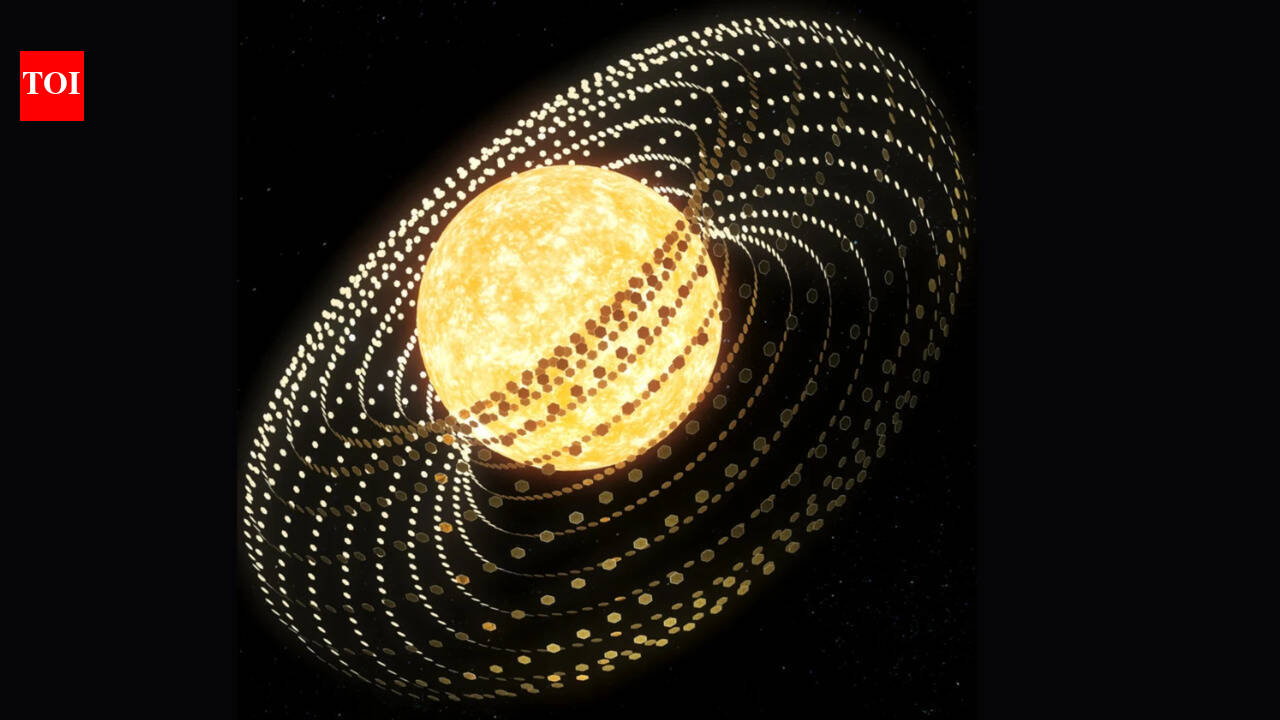
Astronomers and researchers are currently investigating whether certain low-temperature celestial objects, often classified as the coldest “stars” in the Milky Way, could be manifestations of advanced extraterrestrial technology. Scientific interest has intensified around the possibility that these entities, which exhibit anomalous thermal signatures, might function as colossal energy-harvesting structures rather than naturally occurring stellar bodies. This inquiry leverages data from the James Webb Space Telescope (JWST), which provides unprecedented infrared sensitivity to detect heat signatures that might otherwise remain obscured.
The search for such technology is often categorized under the pursuit of “technosignatures”—detectable evidence of past or present extraterrestrial technology. While mainstream astrophysics attributes the existence of brown dwarfs and other substellar objects to natural gravitational collapse, some researchers are applying the framework of Search for Extraterrestrial Intelligence (SETI) protocols to determine if any of these objects display characteristics inconsistent with natural formation. Project Hephaistos, an initiative dedicated to the systematic search for Dyson spheres and other megastructures, serves as a primary framework for these investigations. By analyzing infrared excess—a phenomenon where an object emits more heat than its visible light would suggest—scientists aim to distinguish between legitimate astronomical phenomena and potential artificial constructs.
Understanding Technosignatures and Thermal Anomalies
In the study of potential alien megastructures, thermal emissions are the primary metric for identification. A Dyson sphere, a theoretical megastructure that completely encompasses a star to capture its energy output, would theoretically absorb nearly all visible light and re-emit that energy as infrared radiation.

Researchers involved in these efforts emphasize that the vast majority of “cold” objects identified in the galaxy are confirmed brown dwarfs—objects too small to sustain nuclear fusion but too large to be classified as traditional planets. The challenge lies in identifying outliers that deviate from known stellar evolution models. By mapping the Milky Way’s infrared sky, teams are looking for objects that maintain a consistent temperature range—typically between 300 and 600 Kelvin—which could theoretically represent the waste heat of an advanced civilization’s energy collection system.
The Role of Advanced Observatories
The James Webb Space Telescope has become the most vital tool in this search due to its ability to peer through interstellar dust and capture faint infrared signals. As reported by the European Space Agency (ESA), the telescope’s sensitivity allows for the characterization of atmospheric compositions and thermal outputs of objects that were previously invisible to ground-based observatories. This capability is essential for Project Hephaistos, which relies on high-fidelity data to filter out “false positives”—natural objects that might mimic the heat signature of a megastructure.
The process involves cross-referencing infrared data from JWST with visible light catalogs like those from the Gaia mission. If an object displays a strong infrared signature but lacks a corresponding visible light signature, it triggers further investigation. While this methodology is rigorous, researchers note that the distance of these objects often precludes definitive classification, leaving the nature of these “cold stars” a subject of ongoing debate within the astrophysical community.
Distinguishing Science from Speculation
It is important to distinguish between theoretical frameworks and confirmed discoveries. To date, no entity has provided definitive evidence that any celestial object is artificial. The scientific community maintains a cautious stance, emphasizing that “extraordinary claims require extraordinary evidence.” Most anomalies in stellar data are eventually explained by complex, yet natural, physical processes, such as magnetic activity, variability in stellar atmospheres, or the presence of unseen companions.

For the public and amateur astronomers interested in these findings, official updates are typically published through peer-reviewed journals and the archives of major space agencies. The pursuit of technosignatures remains a legitimate, albeit speculative, branch of modern astronomy. As data processing techniques improve—particularly through the application of machine learning to vast astronomical datasets—the ability to identify truly anomalous objects will increase. The next phase of this research will likely involve deeper follow-up observations of candidate objects identified by current surveys, with results expected to be published as researchers refine their statistical models for identifying non-natural light patterns.
Readers interested in the latest developments in space exploration and the search for life beyond Earth can follow official bulletins from the NASA Science Mission Directorate. We welcome your thoughts on the intersection of advanced technology and space exploration in the comments section below.