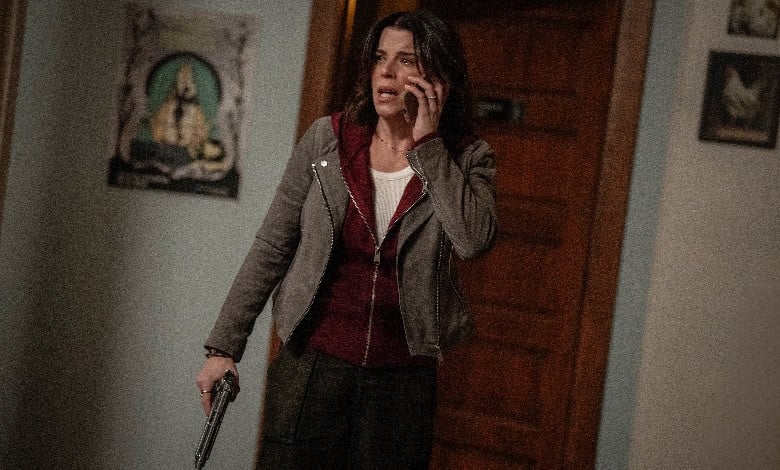
Los Angeles, CA – The premiere of “Scream 7” in Los Angeles this week was met with a small but vocal demonstration, as pro-Palestinian protesters called for a boycott of the latest installment in the popular horror franchise. The protest stems from the firing of actress Melissa Barrera last year, a decision that ignited a debate about free speech and the consequences for expressing political views. Still, the calls for a boycott appear unlikely to impact the film’s projected box office success, with analysts predicting a strong opening weekend.
The controversy surrounding “Scream 7” highlights a growing tension within the entertainment industry regarding the intersection of political activism and professional repercussions. Barrera, who starred in “Scream” (2022) and “Scream VI” (2023), was dismissed from the project following social media posts perceived as antisemitic. The posts, shared in the wake of the October 7th Hamas attacks on Israel, drew widespread criticism and ultimately led to her removal from the film. The situation quickly became a flashpoint, with supporters arguing that Barrera was unfairly penalized for her political beliefs, while others maintained that her statements were harmful and unacceptable.
A Small Protest, A Larger Debate
Approximately 30 protesters gathered outside the “Scream 7” premiere, chanting slogans such as “Free Palestine” and “Stand for Free Speech,” according to reports. Variety reported on the demonstration, noting the protesters’ connection between Barrera’s firing and broader concerns about censorship and the suppression of pro-Palestinian voices. The protest underscores a pattern of activism surrounding the Israeli-Palestinian conflict, extending into the realm of entertainment and cultural expression.
Despite the protest, industry projections remain optimistic for “Scream 7.” The Hollywood Reporter forecasts an opening weekend gross of $40-45 million domestically, potentially making it the biggest opening in the franchise’s history. This anticipated success suggests that the boycott call is unlikely to significantly impact the film’s financial performance. The enduring appeal of the “Scream” franchise, coupled with a strong marketing campaign, appears to be outweighing the controversy surrounding Barrera’s departure.
The Hypocrisy of “Cancellation” in Hollywood
The debate over Barrera’s firing has also sparked a wider discussion about the inconsistent application of standards regarding speech and accountability within the entertainment industry. Protesters and commentators have pointed to instances where other actors and public figures have made controversial statements without facing similar professional consequences. Bette Midler and Alec Baldwin, for example, have faced criticism for their public comments but have largely avoided career repercussions.
Conversely, Gina Carano, an actress known for her role in “The Mandalorian,” was fired by Lucasfilm in 2021 after sharing social media posts that were deemed offensive. In August 2025, Disney and Lucasfilm settled a lawsuit brought by Carano, signaling a potential willingness to work with the actress again, as reported by Libby Emmons on Twitter.
Congrats to @ginacarano!
BREAKING: Disney, Lucasfilm settle Gina Carano lawsuit, signal desire to work with actress againhttps://t.co/A6lgofIofL
— Libby Emmons (@libbyemmons) August 7, 2025
This disparity in treatment has fueled accusations of hypocrisy and selective enforcement of “cancel culture” within Hollywood.
Free Speech and Its Limits
The core of the controversy lies in the complex question of free speech and its boundaries, particularly when it comes to expressing opinions on sensitive political issues. While the First Amendment of the U.S. Constitution protects freedom of speech, this protection is not absolute. Private employers, such as film studios, have the right to set standards of conduct for their employees and to terminate employment for reasons that are not discriminatory.
The debate over Barrera’s comments also raises questions about the responsibility of public figures to consider the potential impact of their words. Critics argued that her statements were not only offensive but also contributed to a climate of hostility towards Jewish people. Supporters, however, maintained that she was simply expressing her solidarity with Palestinians and that her views were being unfairly demonized. This clash of perspectives highlights the deeply divisive nature of the Israeli-Palestinian conflict and the challenges of navigating these issues in the public sphere.
Beyond “Scream”: A Broader Pattern of Controversy
The situation surrounding “Scream 7” is not an isolated incident. Similar controversies have erupted in other areas of the entertainment industry, demonstrating a growing trend of political activism and the potential for professional repercussions. Michael Rapaport, a Jewish actor and comedian, was targeted by anti-Israel protesters last year who attempted to disrupt his performances. The goal, as reported by several sources, was to silence his voice due to his support for Israel.
Bari Weiss, a former New York Times opinion editor, has also been a target of protests and criticism for her views on Israel and other political issues. These incidents illustrate a pattern of attempts to silence dissenting voices and to create a chilling effect on free expression. The increasing polarization of political discourse, coupled with the power of social media, has amplified these tensions and made it more difficult to engage in constructive dialogue.
Academic Freedom and Censorship
The issue of free speech extends beyond the entertainment industry and into the realm of academia. Inside Higher Ed reported on a growing number of incidents on college campuses where students and faculty have faced backlash for expressing controversial opinions. A similar event occurred in Great Britain last month, as detailed by the BBC, highlighting the global nature of this issue. These incidents raise concerns about the erosion of academic freedom and the suppression of intellectual diversity.
The common thread running through these controversies is the tension between the right to express one’s views and the potential consequences of those views. While free speech is a fundamental principle, it is not without limits. The challenge lies in finding a balance between protecting individual expression and ensuring a respectful and inclusive environment for all.
The Future of Political Expression in Entertainment
The controversy surrounding “Scream 7” and other similar incidents suggests that the entertainment industry is likely to continue grappling with the issue of political expression. As actors, directors and other creative professionals grow more vocal about their beliefs, they may face increasing scrutiny and potential repercussions.
The question remains whether studios and other employers will adopt more consistent and transparent standards regarding speech and accountability. Some argue that a clear set of guidelines would help to avoid arbitrary or discriminatory decisions. Others believe that employers should have the right to protect their brand and values, even if it means taking action against employees who express controversial views.
the future of political expression in entertainment will depend on a complex interplay of legal, ethical, and social factors. As the debate continues, it is crucial to foster a climate of open dialogue and mutual respect, where diverse perspectives can be shared without fear of censorship or retribution.
As “Scream 7” opens this weekend, the film’s box office performance will be closely watched as a barometer of public sentiment. Beyond the financial success of the film, however, the controversy surrounding its production serves as a reminder of the ongoing challenges of navigating the intersection of politics, entertainment, and free speech. The next development to watch will be the full box office numbers released early next week, providing a clearer picture of the film’s commercial success and the impact, if any, of the boycott.
What are your thoughts on the controversy surrounding “Scream 7”? Share your opinions in the comments below and join the conversation.
Related reading