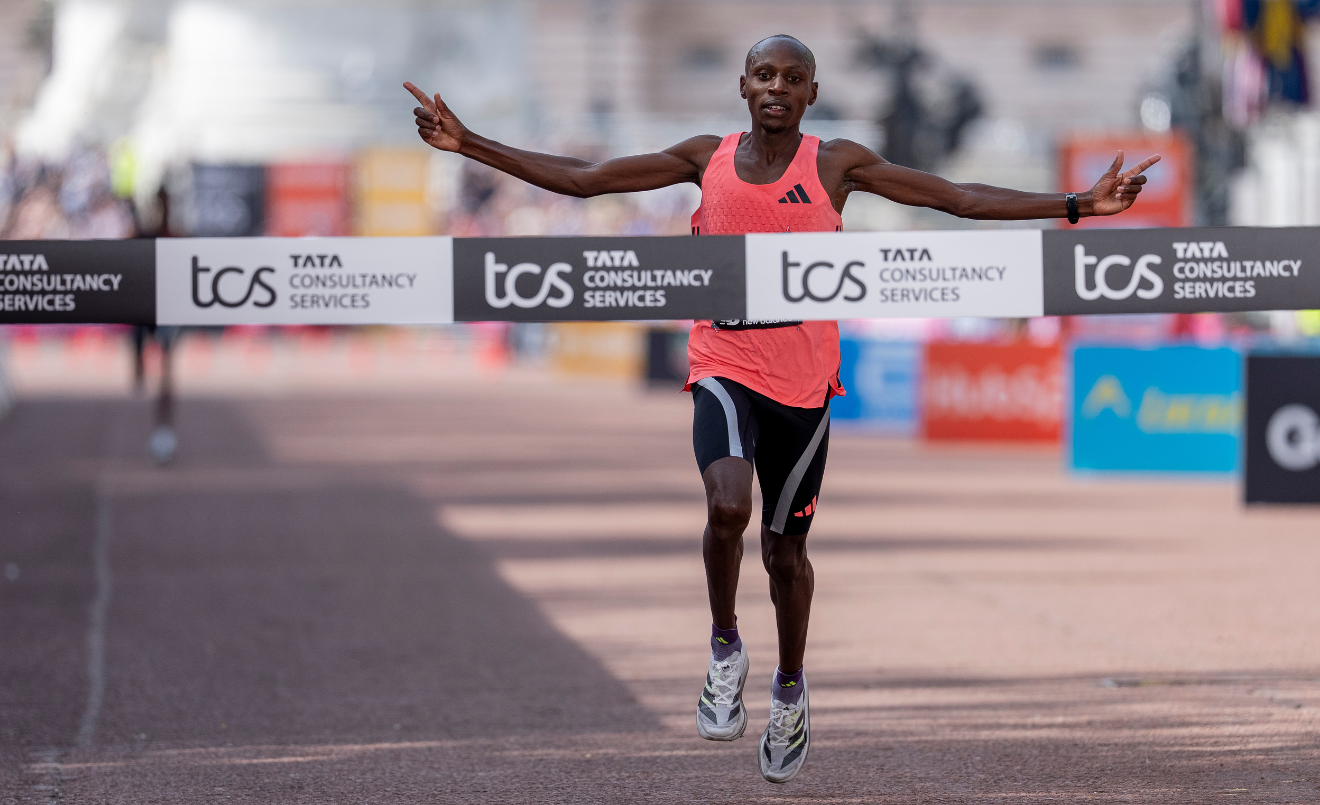
Historic Milestone: Sabastian Sawe Breaks Two-Hour Marathon Barrier at London Marathon
In a performance that will be remembered as one of the greatest achievements in athletic history, Kenyan runner Sabastian Sawe shattered the once-unthinkable two-hour barrier in the marathon, finishing the London Marathon in 1 hour, 59 minutes, and 30 seconds. The 26.2-mile race, held on Sunday, April 26, 2026, saw Sawe not only claim victory but also obliterate the previous men’s world record by an astonishing 65 seconds, cementing his place in sports history as the first person to run a marathon in under two hours in a legal race.
Sawe’s triumph in London marks a watershed moment for distance running, a sport that has long been defined by incremental improvements and the relentless pursuit of human limits. His time of 1:59:30 eclipsed the previous record of 2:00:35, set by the late Kelvin Kiptum at the 2023 Chicago Marathon, and redefined what was considered possible in the marathon. The achievement is all the more remarkable given the competitive field, which included Ethiopia’s Yomif Kejelcha, who finished just 11 seconds behind Sawe in 1:59:41—also under two hours—in his marathon debut.
“I have made history, for the generation we know the record is possible,” Sawe told reporters after the race, his voice still carrying the weight of the moment. “The preparation and discipline we had. I have shown them nothing is impossible; everything is possible. It’s a matter of time.” His words captured the essence of a barrier that had stood as an almost mythical challenge for decades, one that had eluded even the greatest distance runners of previous generations.
The Race That Redefined Limits
The London Marathon has long been a stage for historic performances, but Sunday’s race will be remembered as the day the two-hour barrier fell. Sawe’s pacing was nothing short of masterful, with splits that demonstrated both his endurance and his tactical brilliance. According to race data, Sawe ran the first half of the marathon in 59:45, a pace that would have been unthinkable for most elite runners just a few years ago. He then accelerated in the second half, covering the final 10 kilometers in under 29 minutes—a segment that would be considered a world-class standalone 10K time for many athletes.
Kejelcha, the Ethiopian runner who finished second, was no mere spectator in this historic race. A two-time world indoor champion over 3,000 meters, Kejelcha’s transition to the marathon was seamless, and his time of 1:59:41 made him the second-fastest marathon debutant in history. His performance underscored the depth of talent in East African distance running, a region that has dominated the sport for decades. “I knew I could run fast, but to break two hours in my first marathon is beyond my dreams,” Kejelcha said after the race. “I am proud to be part of this moment.”
The women’s race also delivered a record-breaking performance, with Ethiopia’s Tigst Assefa defending her London Marathon title and breaking her own women’s-only world record. Assefa finished in 2:15:41, nine seconds faster than her winning time in 2025, and just 16 minutes behind Sawe’s historic mark. “I came into the race wanting to beat my record—I knew I was in good shape,” Assefa told reporters. “I desire to celebrate with my family, with my mother, my child, coach, with all the people who have supported me.” Her achievement, even as overshadowed by Sawe’s milestone, further solidified the London Marathon as the premier stage for world-record performances in 2026.
A Legacy of Preparation and Innovation
Sawe’s journey to the two-hour barrier was years in the making, built on a foundation of relentless training, scientific innovation, and mental resilience. The Kenyan runner, who has now won all four major marathons he has entered (London, Berlin, Tokyo, and New York), has been at the forefront of a new generation of athletes who have embraced data-driven training and cutting-edge sports science. His team, led by coach Patrick Sang—a former Olympic silver medalist in the steeplechase—has focused on optimizing every aspect of Sawe’s preparation, from altitude training in Kenya’s Rift Valley to meticulous pacing strategies during races.
One of the key factors in Sawe’s success has been his ability to maintain an aggressive pace without succumbing to the “wall” that has derailed so many marathoners in the past. This is partly due to advances in nutrition and hydration strategies, as well as the use of pacemakers—elite runners who set the pace for the lead athletes in the early stages of the race. At the London Marathon, Sawe was supported by a rotating group of pacemakers, including some of the world’s best middle-distance runners, who helped him maintain a sub-2:00 pace through the first 30 kilometers. The use of pacemakers, while controversial in some circles, has become a standard feature of record attempts in major marathons, and their role in Sawe’s achievement cannot be overstated.
Sawe’s victory also highlights the growing role of technology in distance running. From wearable devices that monitor heart rate and oxygen levels to advanced biomechanical analysis that optimizes running form, athletes like Sawe are pushing the boundaries of human performance with the help of science. “We are in a new era of marathon running,” said Dr. Ross Tucker, a sports scientist and consultant to World Athletics. “The two-hour barrier was always a psychological limit as much as a physical one, and breaking it opens up new possibilities for what athletes can achieve.”
What’s Next for Sawe and the Marathon?
For Sawe, the immediate future will likely involve celebration and reflection. The 31-year-old runner, who has become a national hero in Kenya, has already hinted at the possibility of retiring from competitive running on a high note. “I have achieved what I set out to do,” he said in a post-race interview. “Now, I want to spend time with my family and think about what comes next.” However, given his relatively young age for a marathoner and his dominance in the sport, it would not be surprising to spot him attempt to lower his world record further in the coming years.
The broader implications of Sawe’s achievement extend far beyond his personal legacy. The breaking of the two-hour barrier is likely to inspire a new generation of runners to push the limits of human endurance, much like Roger Bannister’s sub-four-minute mile did in 1954. It also raises questions about the future of the marathon as a sport, including the role of pacemakers, the use of performance-enhancing technology, and the potential for even faster times in the years to come.

World Athletics, the governing body for the sport, has already signaled its intention to review the rules surrounding pacemakers and record eligibility in the wake of Sawe’s performance. While his time is officially recognized as a world record, some purists argue that the use of pacemakers—who are not competing for a place in the race—undermines the purity of the marathon as a solo endurance event. Others, however, see the breaking of the two-hour barrier as a natural progression in the evolution of the sport, one that should be celebrated rather than scrutinized.
For now, the focus remains on Sawe’s historic achievement and the doors it has opened for the future of marathon running. As he stood on the podium in London, holding the winner’s trophy aloft, it was clear that the sport had entered a new era—one in which the impossible had become possible.
Key Takeaways
- Historic Milestone: Sabastian Sawe became the first person to run a marathon in under two hours in a legal race, finishing the London Marathon in 1:59:30.
- World Record Smashed: Sawe’s time broke the previous men’s world record by 65 seconds, set by Kelvin Kiptum at the 2023 Chicago Marathon.
- Competitive Field: Ethiopia’s Yomif Kejelcha finished second in 1:59:41, also under two hours, in his marathon debut.
- Women’s Race: Tigst Assefa won the women’s race in 2:15:41, breaking her own women’s-only world record by nine seconds.
- Scientific Innovation: Sawe’s achievement was supported by advances in training, nutrition, and pacing strategies, including the use of pacemakers.
- Future Implications: The breaking of the two-hour barrier is expected to inspire new records and spark debate about the role of technology in marathon running.
What Happens Next?
The next major marathon on the calendar is the Boston Marathon, scheduled for April 20, 2027. While Sawe has not confirmed his participation, his historic performance in London is likely to set the stage for a new wave of record attempts in the coming years. Fans and analysts alike will be watching closely to see if other runners can match or surpass Sawe’s achievement, or if the two-hour barrier will remain a rare and elusive milestone.
For now, the world of distance running is celebrating a moment that will be remembered for generations. As Sawe himself put it: “I have shown them nothing is impossible; everything is possible.”
What do you think about Sawe’s historic achievement? Will we see more runners break the two-hour barrier in the near future? Share your thoughts in the comments below and join the conversation.
Related reading