
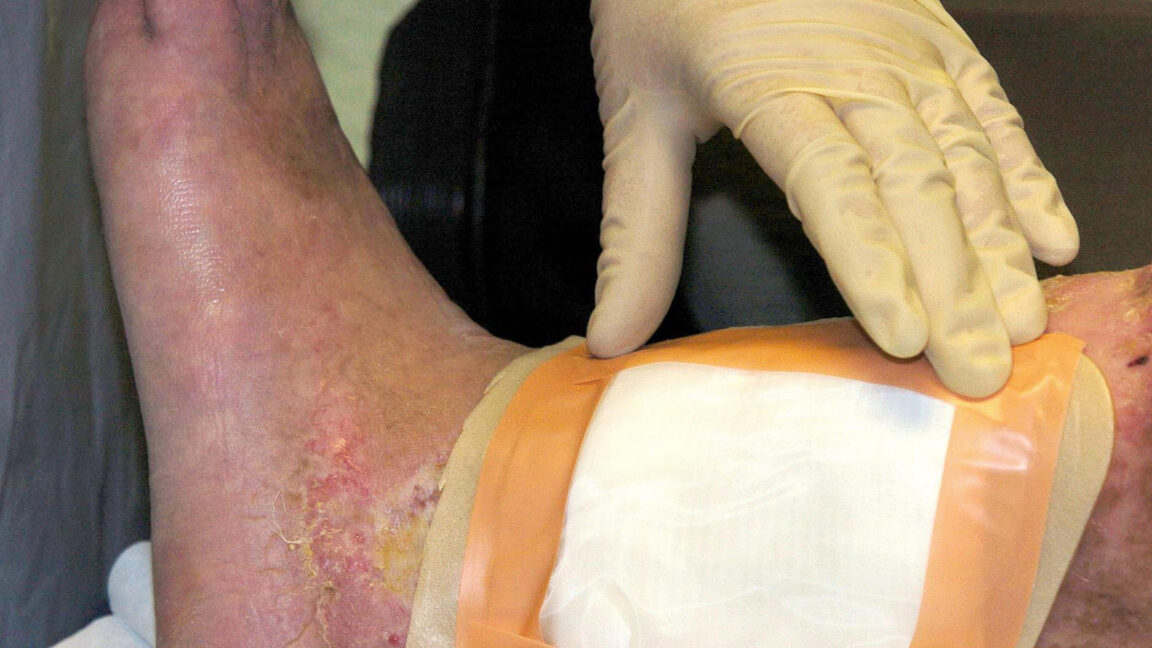
The U.S. Food and Drug Administration (FDA) has granted marketing clearance for a second species of fly larvae, Lucilia cuprina, to be used in medical wound debridement therapy. This regulatory decision allows the use of the Australian sheep blowfly as a live medical device, expanding the clinical options for maggot debridement therapy (MDT) beyond the previously cleared Lucilia sericata, commonly known as the green bottle fly. The clearance was issued to Cuprina, a medical technology firm, which now holds the authorization to market two distinct species for clinical wound care applications, according to the FDA 510(k) premarket notification database.
Maggot debridement therapy involves the application of disinfected, medical-grade larvae to non-healing wounds. The larvae feed on necrotic, or dead, tissue while leaving healthy tissue intact, a biological process that helps clean wounds and may promote healing in chronic conditions such as diabetic foot ulcers or pressure sores. According to the National Institutes of Health, this form of biosurgery has been utilized for centuries, though modern clinical implementation requires rigorous sterilization and regulatory oversight to ensure patient safety and efficacy.
Understanding the Role of Lucilia cuprina in Wound Care
The newly cleared Lucilia cuprina, or Australian sheep blowfly, functions similarly to the Lucilia sericata species that has been the industry standard for decades. Medical-grade larvae are raised in controlled laboratory environments to ensure they are free of pathogens before being applied to a patient’s wound. The primary mechanism of action remains the mechanical removal of slough and necrotic tissue, which can otherwise harbor bacteria and impede the body’s natural regenerative processes.
The FDA’s 510(k) clearance process focuses on establishing “substantial equivalence” to a legally marketed predicate device. By clearing L. cuprina, the agency has determined that the species is as safe and effective for its intended use as the existing medical-grade larvae already on the market. This regulatory milestone provides clinicians with an alternative biological agent for patients who may respond differently to specific larval species or for supply chain stability in clinical settings, as noted in the FDA’s official regulatory archives.
The Evolution of Biosurgery and Regulatory Oversight
The use of maggots in modern medicine was institutionalized in the United States when the FDA first granted clearance for larval therapy in 2004. That initial authorization established the framework for classifying medical-grade larvae as a prescription-only medical device. Since that time, the clinical application of MDT has been documented in various peer-reviewed journals, highlighting its utility in treating wounds that are resistant to conventional surgical or chemical debridement methods.

Ronald Sherman, a physician who has been a leading figure in the advancement of modern maggot therapy, serves as the Medical and Scientific Director for Cuprina. His work over the past two decades has been instrumental in transitioning MDT from an unconventional practice to a recognized, FDA-regulated therapy. According to records maintained by the U.S. National Library of Medicine, ongoing research continues to evaluate the comparative effectiveness of different blowfly species in diverse wound environments, ensuring that clinical practitioners have evidence-based guidance for patient selection.
Clinical Considerations for Patients and Providers
For patients considering maggot debridement therapy, the decision is typically made in consultation with a wound care specialist. The therapy is generally reserved for patients with wounds that have failed to respond to standard care, such as those caused by peripheral artery disease or diabetes. Because the larvae require a moist environment and specific temperature conditions to thrive, the dressing applied to the wound is critical to both the success of the debridement and the comfort of the patient.
Healthcare providers looking for the latest information on approved medical devices can access the FDA’s searchable 510(k) database, which provides the full scope of authorized applications for both Lucilia sericata and Lucilia cuprina. As the medical community integrates this second species into practice, further clinical data regarding the specific debridement rates and patient outcomes of L. cuprina will likely be published in medical literature, providing a broader evidence base for this ancient, yet refined, medical practice.
The next steps for the integration of this therapy will involve the distribution of the newly cleared larvae to hospitals and specialized wound care centers. Clinicians are encouraged to monitor updates from the FDA and professional wound care associations for guidance on the use of these larvae in clinical protocols. We invite our readers to share their thoughts or experiences with advancements in wound care technology in the comments section below.