New Black Hole Mergers Offer Clues to the Universe’s Most Violent Events
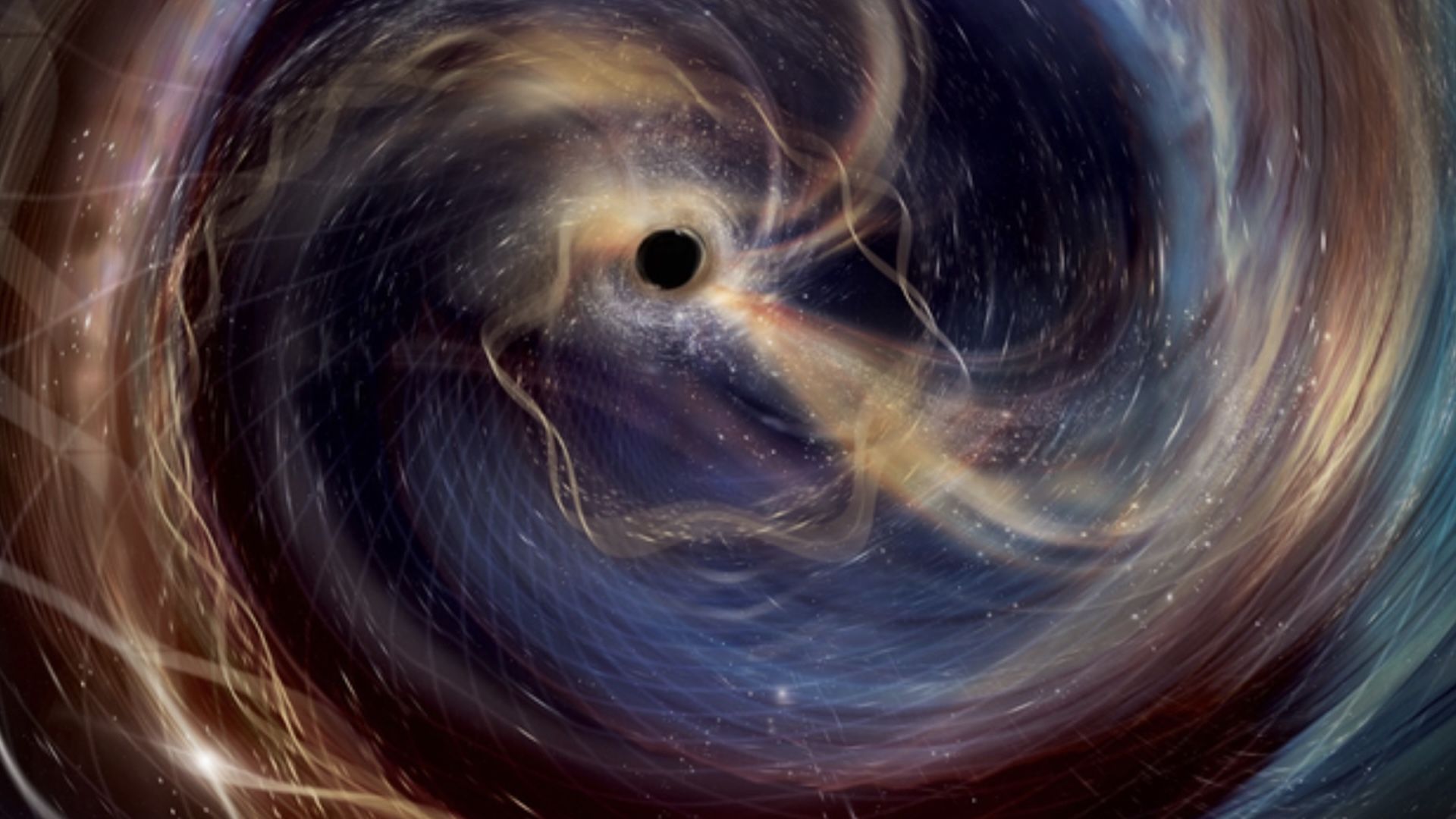
Recent detections of gravitational waves – ripples in spacetime – have revealed two black hole mergers with unusual characteristics, offering scientists unprecedented insights into the lives and deaths of massive stars. These events aren’t just confirming Einstein’s theories; they’re hinting at a hidden, bustling side of the universe where black holes frequently collide and grow.
A New Class of Black Hole Collisions
The Laser Interferometer gravitational-Wave Observatory (LIGO) first detected gravitational waves in 2015, opening a new window into the cosmos. Since then, hundreds of these events have been observed. Though, the two newly discovered mergers, designated GW241011 and another unnamed event, stand out.
Here’s what makes them unique:
* Size Disparity: the larger black hole in each merger was almost double the size of its companion. This is significantly different from previously observed mergers.
* Unusual Spin: The larger black holes were spinning in a way that differed from the typical patterns seen in other gravitational wave events.
* Hierarchical Mergers: Scientists believe these larger black holes may have formed through a “hierarchical merger” - essentially, a black hole that already merged with another.
These characteristics suggest these aren’t first-generation black holes formed directly from collapsing stars. Instead, they point to a more complex evolutionary pathway.
What Do These Mergers Tell Us?
the findings support the idea that dense stellar environments, like star clusters, are hotbeds for black hole activity. In these crowded regions, black holes frequently encounter each other, merging and growing over time.
“This is one of our most exciting discoveries so far,” says Jess McIver, an astrophysicist at the University of British columbia and co-author of the study. “These events provide strong evidence that there are very dense, busy pockets of the universe driving some dead stars together.”
Confirming Einstein – Again
Beyond revealing new details about black hole populations, these mergers are further validating Albert Einstein’s theories of general relativity, formulated over a century ago.
Specifically,the event GW241011 provided a remarkably clear signal.This allowed scientists to:
* Observe Black Hole Deformation: Witness the larger black hole physically distorting as it spun due to its rapid rotation. The observed distortion perfectly matched predictions from Einstein and mathematician Roy Kerr regarding rotating black holes.
* Detect a ”Hum” in Spacetime: Identify a subtle “hum” within the gravitational wave signal. This hum arose because of the important size difference between the two merging black holes – similar to the overtones produced by musical instruments.
These observations reinforce the accuracy of Einstein’s equations in extreme gravitational environments.They also help refine our understanding of fundamental particles and the very fabric of spacetime.
The Future of Gravitational Wave Astronomy
These latest discoveries highlight the incredible potential of gravitational wave astronomy. As LIGO and other detectors become more sensitive, you can expect even more frequent and detailed observations. This will allow scientists to:
* Map Black Hole Populations: Create a complete census of black holes throughout the universe.
* Test General Relativity: Push the limits of Einstein’s theories in increasingly extreme conditions.
* Uncover New Physics: Possibly reveal phenomena that challenge our current understanding of the universe.
The universe is full of surprises, and gravitational waves are providing us with a powerful new tool to unlock its secrets. Stay tuned – the next groundbreaking finding might potentially be just around the corner.
Resources:
* LIGO’s Historic First Detection
* Einstein’s Confirmed Theories
* [Stephen Hawking’s Black Hole Theory Confirmed](https://www.livescience.com/space/black-holes/stephen-hawkings-long-contested-black-hole-theory-finally