
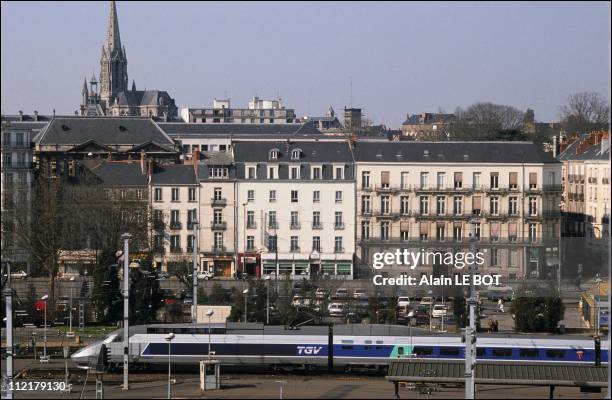
State authorities, the Pays de la Loire regional government, and the SNCF have launched a comprehensive security pact for the Gare de Nantes, aiming to address long-standing concerns regarding public safety and transit order. The agreement, finalized between the Préfecture de Loire-Atlantique, the regional council, and the national rail operator, establishes a coordinated framework for police presence, video surveillance upgrades, and social support services within the station complex.
As the Sports Editor at World Today Journal, I have spent over a decade covering the intersection of public infrastructure and urban safety across Europe. This collaborative effort represents a significant shift from reactive, incident-based policing to a structured, multi-agency strategy designed to manage the high volume of daily commuters and travelers passing through one of France’s busiest regional hubs. According to official statements from the Préfecture de Loire-Atlantique, the plan prioritizes the deployment of both uniformed officers and specialized transit security teams.
Strategic Objectives of the Security Pact
The primary goal of the security pact is to harmonize the efforts of the Police nationale, the Gendarmerie, and SNCF’s internal security division, known as SUGE (Surveillance Générale). Historically, the Gare de Nantes has faced challenges related to platform congestion, unauthorized access, and public order, which have prompted local officials to seek a more integrated approach. The agreement mandates a permanent increase in patrols during peak hours and late-night services, ensuring that security personnel are visible and responsive to the needs of passengers.
Beyond physical security, the pact includes provisions for enhanced technical infrastructure. The SNCF Gares & Connexions branch has committed to upgrading the station’s existing CCTV network to provide real-time monitoring capabilities. By integrating these feeds with local law enforcement dispatch centers, the authorities aim to reduce response times for incidents occurring within the station’s perimeter. This data-driven approach is intended to provide a more accurate picture of safety trends, allowing for the tactical reallocation of resources where they are most needed.
Addressing Social and Transit Challenges
A distinctive feature of this security agreement is the inclusion of social mediation teams. Regional authorities in the Pays de la Loire recognized that a purely punitive approach to station safety often fails to address the underlying issues of homelessness and social vulnerability frequently encountered in transit hubs. The pact provides funding for social workers who will operate alongside security staff, offering support and redirection services to individuals in need. This reflects a broader trend in French urban management, where safety is increasingly viewed through the lens of social cohesion rather than just law enforcement.
For the average commuter, these changes are expected to manifest as a more orderly environment. The coordination between the SNCF and municipal police services is intended to minimize the disruption caused by illicit vending, aggressive solicitation, and platform overcrowding. While the initial phase focuses on the main terminal, the agreement provides a framework that could be extended to surrounding transit nodes if the pilot program proves successful in reducing reported incidents.
Institutional Collaboration and Oversight
The success of the initiative hinges on the ongoing cooperation between the three primary stakeholders. The Préfecture de Loire-Atlantique is tasked with the overarching coordination of public order, while the Région Pays de la Loire provides the financial and regional policy support necessary for long-term implementation. The SNCF, for its part, remains responsible for the daily operation and physical hardening of the station’s infrastructure.
Periodic evaluations are scheduled to ensure the pact remains effective. Officials have indicated that they will assess the impact of the new measures based on public feedback and internal safety audits. This transparency is vital for maintaining public trust, particularly in a high-traffic area where traveler perception of safety is just as important as the statistical reality. The next formal review of the security protocols is expected to occur in the coming months, as data from the initial rollout is compiled and analyzed by the regional security committee.
If you have feedback on your experiences with transit security in Nantes or wish to share your thoughts on these new measures, we encourage you to join the conversation in the comments section below. Our reporting on regional infrastructure and public safety remains an ongoing commitment as we track the progress of this security pact.
Related reading
- Washington Millionaires Tax Repeal: Judge Rules on I-645 Ballot Disclosure
- AI Accountability: Who Is Responsible When AI Acts Autonomously?
- EU Nations Urge Internal Affairs Commissioner on New Migration and Security Policies (archyde.com)
- Samsung August Security Update Patches 56 Vulnerabilities (archynewsy.com)