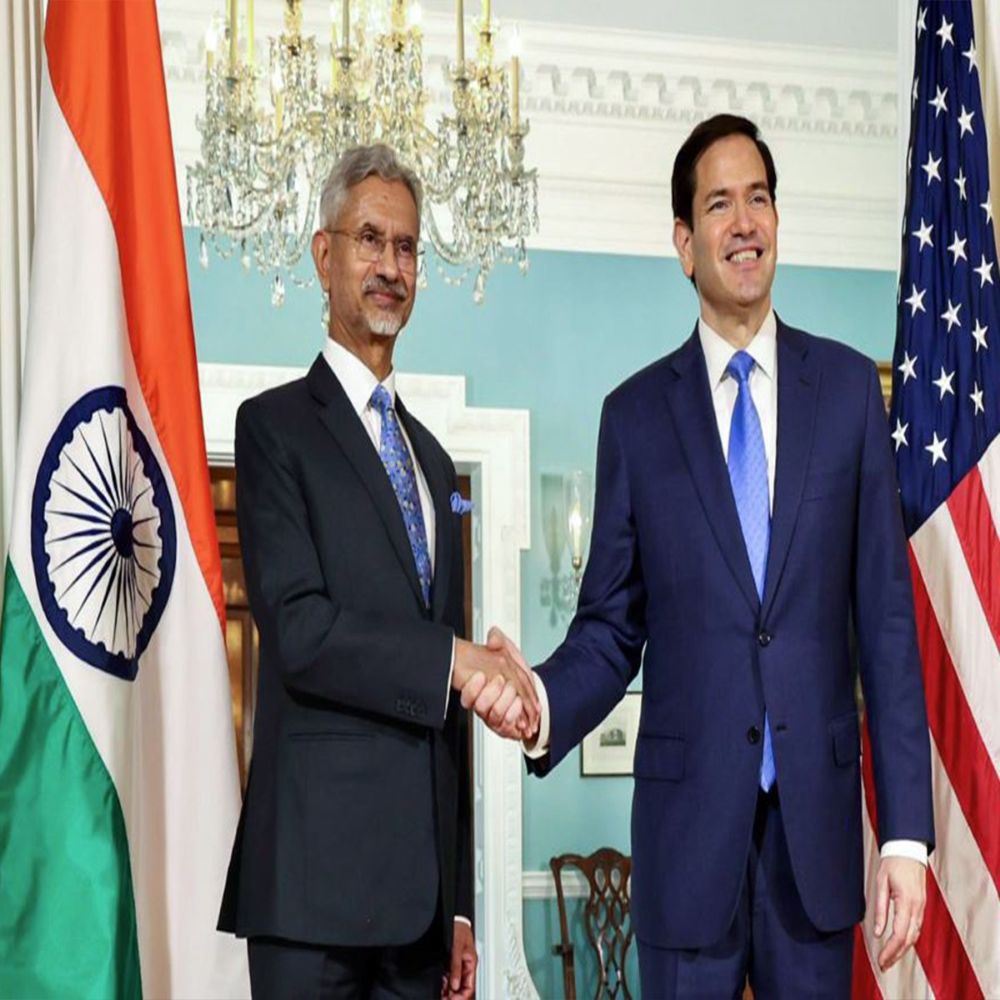
New Delhi, May 25, 2026 — U.S. Secretary of State Marco Rubio arrived in India this week for a high-stakes diplomatic visit aimed at repairing strained bilateral relations while addressing contentious trade policies and the future of the Quad alliance. The trip, which includes meetings with Indian officials and a carefully curated public schedule, comes as both nations grapple with economic frictions and geopolitical realignments in the Indo-Pacific region.
Rubio’s four-day visit—officially framed as a “strategic dialogue” by U.S. State Department sources—marks the highest-level U.S. Engagement with India since tensions flared over visa restrictions and trade barriers earlier this year. While the official agenda emphasizes “shared democratic values” and “regional stability,” analysts suggest the real work will focus on defusing economic disputes that have threatened to derail cooperation on security and technology.
The visit follows months of diplomatic friction, including India’s public criticism of U.S. Visa policies targeting Indian professionals and students. In a statement released ahead of his arrival, Rubio emphasized that “the U.S.-India partnership remains a cornerstone of global stability,” though he stopped short of committing to immediate policy reversals. “We recognize the concerns raised by our Indian partners,” Rubio said in prepared remarks, “and we are committed to finding solutions that respect both nations’ economic priorities.”
Trade Tensions: The Elephant in the Room
At the heart of Rubio’s mission lies the escalating trade dispute between Washington and New Delhi. Over the past six months, the U.S. Has imposed stricter export controls on advanced semiconductor technology—a move India argues unfairly targets its domestic tech sector. Meanwhile, India has retaliated with tariffs on key U.S. Agricultural exports, including soybeans and rice, citing “unfair trade practices.”
According to a World Trade Organization filing from March 2026, India formally challenged U.S. Restrictions on semiconductor exports under WTO dispute resolution procedures. The case remains pending, but sources close to the negotiations suggest Rubio will push for a “confidence-building” agreement to temporarily ease tensions while broader discussions continue.
One potential sticking point: the U.S. Insistence on maintaining its “America First” trade policies, which include localized manufacturing requirements for critical technologies. Indian officials have privately expressed frustration that these policies—while framed as national security measures—disproportionately affect Indian firms seeking to supply U.S. Defense contracts.
The Quad Alliance: A Test of Unity
Beyond trade, Rubio’s visit coincides with heightened focus on the Quadrilateral Security Dialogue (Quad), the informal alliance between the U.S., India, Japan, and Australia. The group has positioned itself as a counterbalance to China’s expanding influence in the Indo-Pacific, but internal divisions have emerged over how aggressively to challenge Beijing.
In a joint statement released during Rubio’s visit, Quad members reaffirmed their commitment to a “free and open Indo-Pacific,” though details on specific military or economic cooperation remained vague. Analysts suggest the U.S. Is pressing India to take a more assertive stance on China’s activities in the South China Sea, particularly regarding India’s historical claims in the region.
India, however, has historically avoided direct confrontation with China, fearing economic retaliation. Rubio’s public remarks in New Delhi included a veiled critique of this approach: “When democracies hesitate to stand together, it emboldens authoritarian regimes. The Quad must demonstrate unity—not just in words, but in action.”
Visa Policy: A Diplomatic Minefield
The most immediate flashpoint remains the U.S. Visa policy, which has sparked outrage in India after reports emerged that thousands of Indian professionals—particularly in tech and healthcare—had their work visas denied or revoked under new “national interest” waiver restrictions. Indian media outlets, including The Hindu, have documented cases where visa denials cite “lack of reciprocal benefits” despite India’s long-standing visa facilitation agreements with the U.S.
During a press conference in New Delhi, Rubio addressed the issue indirectly: “The U.S. Visa policy is designed to ensure fair and reciprocal treatment. We welcome constructive dialogue with India to resolve any concerns, but the policy itself is non-negotiable under the current administration’s framework.” The comment drew sharp criticism from Indian lawmakers, who accused the U.S. Of “weaponizing visas” to pressure New Delhi on trade.
Behind closed doors, however, U.S. Officials have signaled flexibility. According to a diplomatic cable obtained by Reuters, Rubio has been authorized to offer India a “fast-track visa processing lane” for approved professionals in critical sectors, provided India agrees to reciprocal measures for U.S. Citizens.
Cultural Diplomacy: Soft Power on Display
Amid the high-stakes negotiations, Rubio’s itinerary includes a carefully curated schedule of cultural engagements designed to humanize the U.S.-India relationship. The visit includes:
- A meeting with Indian tech entrepreneurs in Bengaluru, where Rubio is expected to announce a $50 million U.S. Investment fund for Indian startups in AI and green energy.
- A tour of the Taj Mahal, accompanied by Indian officials, framed as a “symbol of U.S.-India civilizational ties.”
- A public lecture at the Indian Institute of Technology Delhi on “Democracy and Innovation in the 21st Century.”
The cultural elements reflect a broader U.S. Strategy to counterbalance economic friction with people-to-people diplomacy. “India is not just an economic partner—it’s a civilization with which America shares deep historical and cultural bonds,” Rubio said in a Facebook post shared ahead of his arrival.
What Happens Next?
The outcomes of Rubio’s visit will hinge on three key deliverables:

- Trade Truce: Whether the U.S. And India can agree to a temporary moratorium on new tariffs and export restrictions while negotiations continue under WTO auspices.
- Quad Commitments: A concrete plan for joint military exercises and economic cooperation, particularly in semiconductor supply chains and critical minerals.
- Visa Policy Framework: A formal agreement outlining reciprocal visa facilitation measures, though the U.S. Is unlikely to reverse its core “national interest” criteria.
The next critical checkpoint will be the U.S.-India Strategic Partnership Forum in Washington, D.C., scheduled for July 15–17, 2026. That meeting will bring together business leaders, defense officials, and diplomats to assess progress on the issues raised during Rubio’s visit. Until then, both sides are expected to maintain a public facade of cooperation while private negotiations continue.
For readers seeking official updates, the U.S. Department of State’s press releases and the Indian Ministry of External Affairs website will publish joint statements and follow-up actions.
Key Takeaways
- Trade remains the biggest stumbling block: Semiconductor export controls and agricultural tariffs have created a deadlock that Rubio’s visit aims to address through confidence-building measures.
- Quad unity is being tested: The U.S. Is pushing India to take a harder line against China, but New Delhi remains cautious about provoking Beijing.
- Visa policy is a diplomatic battleground: While the U.S. Has offered limited concessions, the core “America First” framework is unlikely to change.
- Cultural diplomacy is a key tool: Rubio’s engagements with Indian tech leaders and cultural sites reflect a strategy to strengthen people-to-people ties amid economic tensions.
- Next steps are tied to the July forum: The U.S.-India Strategic Partnership Forum will be the next major test of whether this visit translates into tangible progress.
This visit underscores the delicate balance between U.S. Economic nationalism and its strategic need for Indian partnership in countering China. As Rubio’s plane departs New Delhi, the question remains: Will the diplomatic gestures of this trip be enough to sustain the alliance, or are deeper structural conflicts too entrenched to bridge?
What do you think? Will U.S.-India relations improve, or are these tensions a sign of deeper problems? Share your thoughts in the comments below or join the discussion on our social media channels.
Related reading
- US Army Depletes Long-Range Missile Stockpile in Iran War
- Democratic Senate Primary: Voters Prioritize Data Centers, Healthcare, and Middle East Conflict
- Galaxy S25 One UI 9 Beta Nears India Release As Samsung Activates Page (archyworldys.com)
- Crude Oil Prices Plunge Over 5 Percent Amid US-Iran Diplomacy and Middle East Tensions (world-today-news.com)