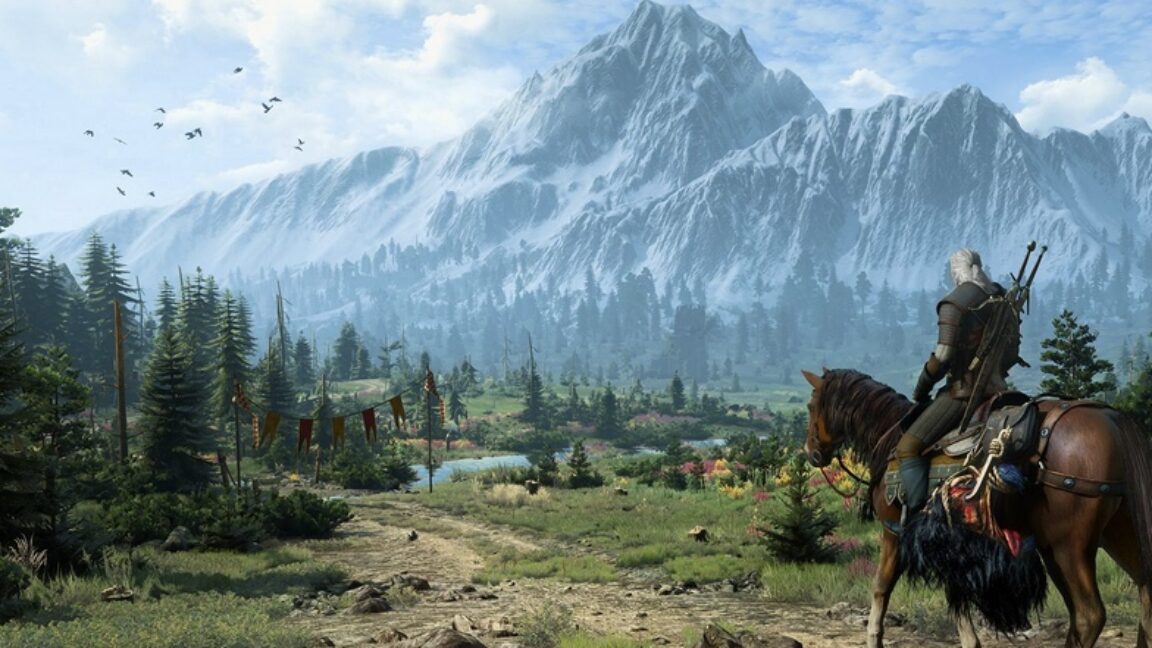
The Witcher 3: Why I Forced Myself Through 100 Hours—and Why You Shouldn’t
By Linda Park | Technology Editor | May 25, 2026
The Witcher 3: Wild Hunt is often called one of the greatest games ever made. It won 200+ Game of the Year awards. Critics and players alike have spent years dissecting its storytelling, side quests, and world-building. And yet, for me—a player who’s spent decades analyzing software design and user experience—it was a game I had to force myself to finish. Why? Because the hype doesn’t always align with the reality of playing it.
I’m not alone. In 2025, Clair Obscur: Expedition 33 faced a similar backlash: a game hyped as revolutionary that left many players underwhelmed. The pattern isn’t new. What The Witcher 3 teaches us isn’t just about its merits—but about how games, like software, can suffer from design oversights that frustrate even their most devoted fans.
Here’s what I learned from my 100-hour struggle—and why you might want to approach The Witcher 3 with caution.
Just finished The Witcher 3 for the 3rd time. Still love the world, still hate the combat. CD Projekt Red, if you’re reading this: #GameDesign matters more than lore.
The Game That Defied Expectations (And Then Some)
When The Witcher 3 launched in 2015, it wasn’t just a game—it was a cultural phenomenon. Critics praised its open-world design, its branching narratives, and its unprecedented attention to detail. The game’s director, Konrad Tomaszkiewicz, described it as a love letter to fantasy literature, blending Geralt of Rivia’s morally gray choices with a living, breathing world.
But here’s the catch: The Witcher 3 was designed for a different era of gaming. Its 100+ hour playtime wasn’t just a feature—it was a design flaw. In 2015, players had time. Today? Not so much. Between work, streaming, and other games vying for attention, The Witcher 3’s narrative density can feel like a marathon with no finish line.

Consider this: The game’s side quests—often its strongest asset—can take 30 minutes to an hour each. Multiply that by the dozens of side quests, and suddenly, you’re not just playing a game; you’re committing to a second job. And for what? Many of these quests, while well-written, don’t deliver on their promises. The infamous “Blood and Wine” DLC, for example, was criticized for repetitive dialogue and underwhelming payoffs after hours of setup.
Why a Tech Journalist Struggled Where Others Thrived
As someone with an MSc in Computer Science and a background in software development, I approach games through a UX lens. And here’s what stood out:
- Combat feels clunky. The game’s real-time-with-pause mechanic was innovative in 2015, but today’s players expect smoother, more responsive controls. The monster AI often feels predictable, turning battles into pattern-recognition exercises rather than dynamic challenges.
- The world is beautiful—but overwhelming. The Witcher 3’s open-world design is a masterclass in environmental storytelling. But without clear wayfinding tools or progressive unlocks, players can spend hours wandering, only to realize they’ve missed a key quest marker.
- Narrative fatigue is real. The game’s dialogue choices are legendary, but after 50 hours, the repetition of themes (betrayal, loss, redemption) can feel exhausting. It’s like reading a 1,000-page novel where every chapter starts with the same three plot beats.
I’m not saying The Witcher 3 is a bad game. But I am saying that its design choices were made for a different time—when players had the time and patience to indulge in its epic scale. Today? That’s a luxury few can afford.
What The Witcher 3 Can Teach Newer Games (And Players)
Games like Clair Obscur: Expedition 33 (2025) made the same mistake: assuming players would adapt to their design rather than adapting to players. The solution? Modular storytelling and player-centric pacing.
Here’s how:
- Shorten the commitment. The Witcher 3’s 100+ hour goal is intimidating. Newer RPGs like Elden Ring and Horizon Forbidden West offer meaningful experiences in 30–50 hours, with optional content that doesn’t punish players for skipping.
- Improve combat feedback. Players don’t want perfectly balanced combat—they want responsive combat. Games like Starfield (2023) took criticism from The Witcher 3’s clunky mechanics and refined their action systems for smoother execution.
- Use data to guide players. The Witcher 3’s world is rich but directionless. Modern games use dynamic quest markers (like Assassin’s Creed Valhalla) and AI-driven recommendations to keep players engaged without overwhelming them.
A Honest Verdict: Who Should (And Shouldn’t) Play?
If you’re a casual gamer with limited time, The Witcher 3 might not be the best choice. But if you’re a story-driven player who loves fantasy worlds and doesn’t mind long play sessions, it’s still worth the experience.
Here’s my two-part advice:
- Play it in chunks. Don’t treat it like a single marathon. Break it into 10–15 hour sessions with clear goals (e.g., “finish Novigrad’s main questline” or “explore Skellige’s coastal villages”).
- Skip the filler. Use guides to prioritize high-quality side quests (like “A Towerful of Mice” or “The Last Wish”) and skip repetitive fetch quests. Your time is valuable.
What Comes Next?
The gaming industry is evolving. Players today want depth without density—games that respect their time while still delivering immersive storytelling. The Witcher 3 was a pioneer, but its design philosophy needs updating for the attention-span economy of 2026.
Games like Cyberpunk 2077 (post-2020 update) and Hellblade II (2024) are already experimenting with modular narratives and player-driven pacing. The lesson? Great games adapt. And if The Witcher 3’s legacy is to teach us anything, it’s that player experience matters more than hype.
Key Takeaways
- The Witcher 3’s 100+ hour playtime is a double-edged sword: Its world is unparalleled, but modern players often lack the time to fully experience it.
- Combat and pacing feel outdated: While innovative in 2015, today’s players expect smoother mechanics and clearer progression.
- Narrative fatigue is real: Even the best stories lose impact when stretched too thin across hundreds of hours.
- Modern RPGs are learning from its mistakes: Games like Starfield and Horizon Forbidden West balance depth with accessibility.
- Play smart: Use guides to skip filler content and play in manageable sessions.
FAQ: The Witcher 3 in 2026
Q: Is The Witcher 3 still worth playing in 2026?

A: Yes, but with caveats. If you love deep lore and don’t mind long play sessions, it’s a masterpiece. If you’re short on time, consider Cyberpunk 2077 or Elden Ring for a more streamlined experience.
Q: What’s the best way to play it without burning out?
A: Break it into 10–15 hour chunks and prioritize high-quality side quests. Use guides to avoid repetitive content.
Q: Are there any games like The Witcher 3 but better?
A: Elden Ring (2022) and Horizon Forbidden West (2022) offer similar world-building with tighter pacing. Starfield (2023) improves on combat and exploration.
The Witcher 3 remains a landmark in gaming—but like any legacy system, it’s due for an upgrade. The takeaway? Don’t let hype dictate your playtime. If a game demands more of you than you can give, it’s okay to walk away. After all, even the greatest RPGs were designed by humans—and humans make mistakes.
Have you forced yourself through a game you later regretted? Share your stories in the comments—or let us know what modern RPGs you’d recommend for a 2026 attention span.
Next Checkpoint: Keep an eye on CD Projekt Red’s upcoming announcements—rumors suggest a The Witcher 4 reveal later this year.
—Linda Park
Related reading