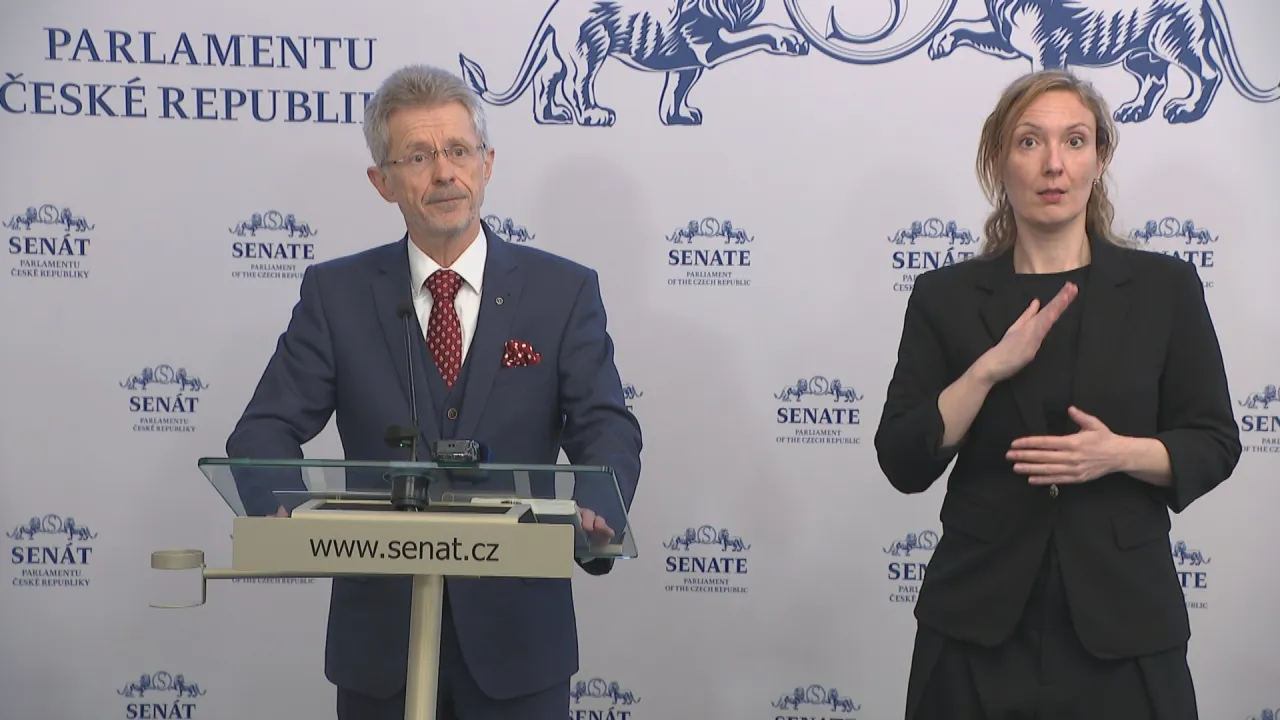
Czech Senate President Miloš Vystrčil has publicly criticized the government’s decision to deny him the use of a state aircraft for a planned trip to Taiwan, calling the refusal a “betrayal” in remarks reported by Czech Television. The dispute highlights ongoing tensions between the legislative and executive branches over foreign policy direction, particularly regarding relations with China, and Taiwan.
According to verified reports from Czech news outlets, Prime Minister Andrej Babiš confirmed that the government refused to provide a military aircraft for Vystrčil’s planned visit to Taiwan with a business delegation scheduled for late May and early June 2026. Babiš stated that the Senate president could travel on a regular commercial flight instead, emphasizing that foreign policy is the responsibility of the government, not the Senate.
The government’s justification centers on avoiding any appearance of endorsing Taiwan’s international status, which Beijing considers a renegade province. Babiš explained that granting the use of a state aircraft would imply official government backing for the visit, which contradicts Prague’s current approach to China relations. This stance reflects a broader disagreement over how Czech institutions should engage with Taiwan amid Beijing’s sensitivities.
Vystrčil, who previously visited Taiwan in September 2020 during a similar controversy, has maintained that legislative diplomacy serves an important role in representing Czech interests abroad. His earlier trip, undertaken despite warnings from Chinese officials and criticism from then-President Miloš Zeman, involved a delegation of Czech technology firms and was conducted using a government aircraft at that time.
The current disagreement underscores the constitutional division of foreign policy responsibilities in the Czech Republic, where the executive branch holds primary authority whereas parliament retains certain oversight and representative functions. Vystrčil’s characterization of the decision as a “betrayal” suggests he views the denial not merely as a logistical matter but as a challenge to the Senate’s institutional role in international engagement.
As of mid-April 2026, Vystrčil indicated he would provide further commentary on the matter in the coming days. The planned Taiwan visit remains on schedule, with the Senate president preparing to proceed via commercial aviation despite the denial of state aircraft support.
Constitutional Tensions Over Foreign Policy Conduct
The conflict between Vystrčil and the Babiš government illustrates a recurring debate in Czech politics about the appropriate boundaries of parliamentary diplomacy. While the president and government conduct formal foreign relations, the Senate and Chamber of Deputies often organize visits and delegations that carry symbolic weight, particularly when involving regions of geopolitical sensitivity like Taiwan.
Legal experts note that although the Czech Constitution assigns the primary conduct of foreign policy to the government and president, it does not explicitly prohibit parliamentary leaders from undertaking international visits. However, the use of state resources such as government aircraft introduces a layer of complexity, as such assets are typically reserved for officially sanctioned state missions.

In this case, the government’s refusal to allocate a military aircraft appears aimed at preventing the visit from being perceived as an official state endorsement of Taiwan’s international standing. Beijing consistently opposes any foreign engagement that could be interpreted as recognizing Taiwan’s sovereignty, maintaining its position that the island is an inalienable part of China under the One-China principle.
Vystrčil’s supporters argue that limiting parliamentary access to state resources for international travel unduly restricts the legislature’s ability to perform its oversight and representative functions, especially when executive foreign policy diverges from legislative priorities. Critics counter that such distinctions are necessary to prevent mixed signals in international diplomacy and to maintain a unified national stance toward China.
The situation echoes similar disagreements in other parliamentary democracies where legislative leaders have pursued independent diplomatic initiatives, sometimes creating friction with executive branches over protocol and resource allocation. In the Czech context, the Taiwan issue has become particularly salient due to China’s heightened sensitivity to any form of official recognition or support for the island’s international participation.
Historical Context of Czech-Taiwan Engagement
Czech engagement with Taiwan has periodically sparked diplomatic friction with China, most notably during Vystrčil’s 2020 visit as Senate president. That trip, which included meetings with Taiwanese officials and a focus on technology cooperation, drew sharp criticism from Beijing, which issued formal protests to Prague and warned of consequences for bilateral relations.
Despite the Chinese objections, the 2020 visit proceeded with the support of a government aircraft and was framed by Vystrčil as a effort to strengthen economic ties and share expertise in areas such as cybersecurity and industrial innovation. The delegation included representatives from 36 Czech firms, many specializing in advanced technologies.
Then-President Miloš Zeman expressed disapproval of the trip, reflecting broader divisions within Czech leadership over how to balance relations with Taiwan against the risk of offending China, a major global trading partner. Zeman had previously advocated for closer ties with Beijing and criticized what he viewed as provocative actions by Czech officials regarding Taiwan.
The 2020 episode established a precedent for how Czech institutions navigate the competing pressures of engaging with Taiwan while managing China’s sensitivities. It also highlighted the willingness of some Czech leaders, particularly in the legislature, to pursue contacts with Taiwan despite diplomatic risks.
In the intervening years, Czech-Taiwan relations have continued through economic and cultural channels, though high-level political contacts have remained cautious. The current disagreement over aircraft use for Vystrčil’s planned 2026 visit suggests that the underlying tensions persist, with differing views on how assertively Czech institutions should engage with Taiwan.
Government Stance on China Relations
The Babiš government has consistently emphasized a pragmatic and cautious approach to China, seeking to preserve economic ties while avoiding actions that could provoke Beijing. This stance aligns with the broader European trend of balancing criticism of China’s human rights record and assertive foreign policy with the desire to maintain access to its markets.
In public statements, Babiš has stressed that foreign policy decisions must reflect national interests and be conducted through constitutionally designated channels. His rejection of the military aircraft request for Vystrčil’s trip was framed as a defense of this principle, arguing that allowing legislative use of state aircraft for Taiwan visits would undermine the government’s authority over foreign affairs.
The government’s position also reflects concerns about setting a precedent that could encourage other parliamentary leaders to seek similar resources for visits to politically sensitive destinations. By limiting the use of state aircraft to officially sanctioned executive missions, authorities aim to maintain clarity in how Czech foreign policy is perceived internationally.
At the same time, the administration has not ruled out all forms of engagement with Taiwan, instead advocating for such interactions to occur through appropriate channels that do not imply state endorsement. Babiš has suggested that commercial travel remains a viable option for legislative leaders wishing to visit Taiwan, preserving the possibility of engagement while maintaining procedural distinctions.
This approach seeks to allow for dialogue and exchange while minimizing the risk of misinterpretation by Beijing, which monitors foreign visits to Taiwan closely for signs of shifting international support. The government appears to favor a strategy that permits economic and cultural ties to develop while avoiding political gestures that could be construed as challenging the One-China framework.
Implications for Legislative Diplomacy
The denial of state aircraft for Vystrčil’s Taiwan trip raises questions about the future of legislative diplomacy in the Czech Republic, particularly when it comes to engaging with regions that provoke strong reactions from Beijing. If the precedent holds that government aircraft are reserved exclusively for executive-led foreign missions, it could limit the Senate’s ability to organize high-profile visits requiring significant logistical support.
Legislative leaders may increasingly rely on commercial flights and self-funded delegations to conduct international outreach, potentially reducing the scale and perceived importance of such trips. This shift could affect how Czech parliamentary diplomacy is viewed by foreign counterparts, who may interpret travel via commercial channels as less significant than government-sponsored missions.
Conversely, proponents of the government’s stance argue that maintaining clear distinctions between executive and legislative foreign policy activities helps prevent confusion in international relations. They contend that a unified approach to sensitive regions like Taiwan is essential to avoid sending mixed signals that could be exploited by Beijing or undermine Czech diplomatic credibility.
The debate also touches on broader questions about resource allocation and the use of state assets for parliamentary functions. While government aircraft are typically reserved for the president, prime minister, and other executive officials on official business, the question of whether legislative leaders should have comparable access for international engagements remains unresolved.
As the Czech Republic continues to navigate its relationship with Taiwan amid China’s sensitivities, the resolution of this dispute may influence how future legislative initiatives are conducted and what resources are made available to support them. The outcome could shape the balance between executive authority and legislative independence in foreign policy conduct for years to come.
For now, Vystrčil prepares to proceed with his Taiwan visit using commercial aviation, with the Senate president indicating he will elaborate on his criticisms of the government’s decision in the near future. The trip remains a focal point in the ongoing discussion about how Czech institutions should engage with Taiwan while managing the complexities of their relationship with China.
Related reading
- Taiwan’s “Oil Not For You” Controversy: Selective Law Enforcement or Legal Accountability?
- Controversy Over Public Book Box in Lyon’s Point-du-Jour
- SpaceX’s stock falls to a new low despite a near-flawless Starship flight (archyde.com)
- Volleyball Star Begins Mission to Inspire Young Athletes (world-today-news.com)