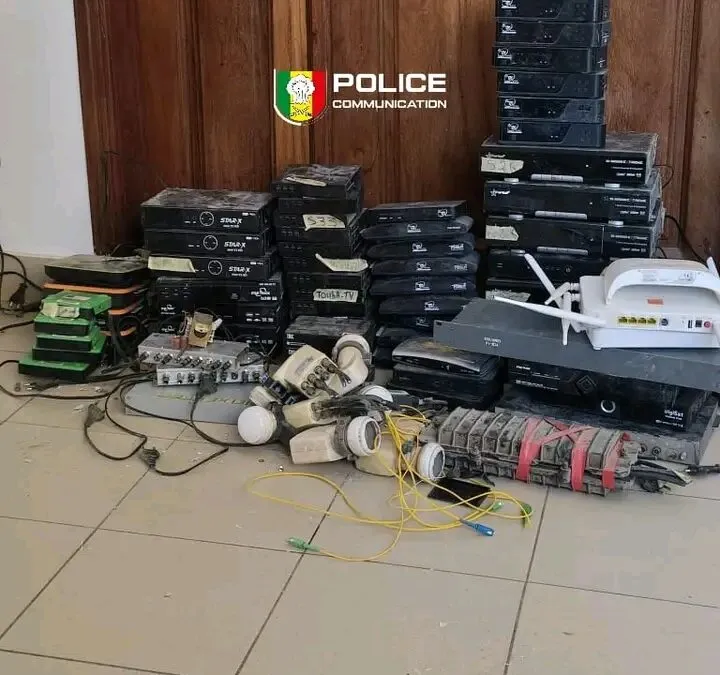
Guédiawaye, Senegal – Authorities in Senegal have dismantled a clandestine cable distribution network operating in the Guédiawaye area, a suburb of Dakar. The operation, carried out by the Brigade Nationale de Lutte contre la Piraterie et la Contrefaçon (BNLPC) on March 11, 2026, targeted illegal television signal interception and redistribution, a growing concern for content owners and legitimate broadcasters across the region. This crackdown underscores the ongoing efforts to combat intellectual property theft and ensure fair competition within Senegal’s media landscape.
The BNLPC’s intervention in the Hamo 06 and Sam Notaire neighborhoods followed intelligence gathering indicating widespread unauthorized access to and broadcasting of television channels. Piracy of this nature not only deprives content creators and distributors of revenue but also poses potential risks to consumers through unregulated signal quality and security. The issue of illegal cable distribution is particularly prevalent in areas where access to affordable, legal television services is limited, creating a demand for cheaper, albeit unlawful, alternatives. The BNLPC’s actions represent a significant step in addressing this complex challenge.
Operation Uncovers Structured Network
According to police reports, the initial raid on March 11th led to the seizure of a substantial amount of equipment used for signal piracy and the arrest of one suspect. The individual, identified as a clandestine cable distributor, admitted to operating as part of a well-established network with deep roots in the Dakar suburbs. Further investigations conducted on March 12th resulted in the apprehension of two additional individuals allegedly involved in the operation. This suggests a more organized and sophisticated operation than initially suspected, raising questions about the scale and reach of the illicit network.
One of the newly arrested individuals confessed to supervising the network’s activities in Hamo 06. While claiming the seized equipment belonged to a collective structure comprising approximately forty members, this assertion is currently under investigation. The second individual admitted to being connected to the network for two years, illegally distributing television programs within his neighborhood using technical relay devices. This highlights the longevity of the operation and its established infrastructure for disseminating pirated content. The BNLPC is now focused on identifying all members of this collective and dismantling the entire network.
Legal Ramifications and Suspects’ Defense
The individuals apprehended have acknowledged operating without any administrative authorization or licensing agreements with the legitimate rights holders of the broadcast channels. They reportedly attempted to deflect criminal responsibility, attributing it to the leadership of their organization. This tactic is common in cases of organized crime, where lower-level operatives often claim to be acting under the direction of others. The suspects have been formally charged with offenses including illegal capture and distribution of audiovisual content, piracy of television programs, and broadcasting television programs without prior authorization.
Following the investigation, the suspects were brought before the Public Prosecutor’s Office at the Tribunal de Grande Instance (TGI) in Pikine-Guédiawaye. The TGI handles serious criminal cases in the region, and the prosecution will now build a case based on the evidence gathered by the BNLPC. The charges carry potentially significant penalties, including fines and imprisonment, reflecting the seriousness with which the Senegalese government views intellectual property rights violations. The legal proceedings are expected to shed further light on the structure and operation of the illegal cable network.
The Broader Context of Piracy in Senegal
The BNLPC’s recent operation is part of a broader national effort to combat piracy and counterfeiting, which are significant economic challenges for Senegal. The country has been working to strengthen its legal framework and enforcement capabilities to protect intellectual property rights and attract foreign investment. Piracy not only impacts the television industry but also affects other sectors, including music, software, and pharmaceuticals. The government recognizes the require for a multi-faceted approach, involving law enforcement, judicial reforms, and public awareness campaigns.
The rise of digital piracy, facilitated by the internet and readily available technology, has further complicated the issue. While traditional cable piracy remains a concern, online streaming and downloading of copyrighted content are becoming increasingly prevalent. The BNLPC and other law enforcement agencies are adapting their strategies to address these new challenges, including monitoring online platforms and collaborating with international organizations to track down sources of illegal content. The fight against piracy is an ongoing battle that requires constant vigilance and innovation.
The economic impact of piracy in Senegal is substantial. Lost revenue for legitimate broadcasters and content creators translates into reduced investment in local programming and job creation. Piracy can undermine the quality of television services, as illegal operators often provide substandard signals and customer support. Combating piracy is therefore essential for fostering a sustainable and competitive media industry in Senegal. The BNLPC’s work is crucial in protecting the interests of both consumers and legitimate businesses.
Social and Economic Factors Contributing to Piracy
Several factors contribute to the prevalence of cable piracy in Senegal. High subscription costs for legitimate television services can make them unaffordable for many households, particularly in low-income communities. Limited access to reliable internet connectivity also hinders the adoption of legal online streaming services. These economic realities create a demand for cheaper alternatives, which illegal cable operators are quick to exploit. Addressing these underlying social and economic issues is essential for tackling the root causes of piracy.
a lack of awareness about the legal and ethical implications of piracy can contribute to its acceptance. Many consumers may not fully understand the harm that piracy causes to content creators and the broader economy. Public awareness campaigns are needed to educate consumers about the importance of respecting intellectual property rights and supporting legitimate businesses. These campaigns should emphasize the benefits of legal television services, such as higher quality signals, better customer support, and a wider range of programming options.
The BNLPC’s ongoing investigations are expected to reveal further details about the network’s operations and the individuals involved. The case is likely to set a precedent for future prosecutions of piracy offenses in Senegal, sending a strong message to those involved in illegal activities. The outcome of the legal proceedings will be closely watched by the media industry and law enforcement agencies across the region. The fight against piracy is a collective responsibility, requiring the cooperation of governments, businesses, and consumers.
As of today, March 14, 2026, the BNLPC has not released further details regarding the ongoing investigation or the identities of the suspects. The next step in the legal process will be the preliminary hearing at the TGI in Pikine-Guédiawaye, where the prosecution will present its evidence and the defense will have an opportunity to respond. The date of this hearing has not yet been announced. We will continue to monitor this story and provide updates as they become available.
Key Takeaways:
- The BNLPC successfully dismantled a clandestine cable distribution network in Guédiawaye, Senegal.
- Three suspects have been arrested and charged with multiple offenses related to television piracy.
- The operation highlights the ongoing challenges of combating intellectual property theft in Senegal.
- Economic factors and a lack of awareness contribute to the prevalence of piracy in the region.
We encourage readers to share their thoughts on this vital issue in the comments below. Your feedback is valuable as we continue to report on the evolving landscape of intellectual property rights and enforcement in Senegal and beyond.
Worth a look