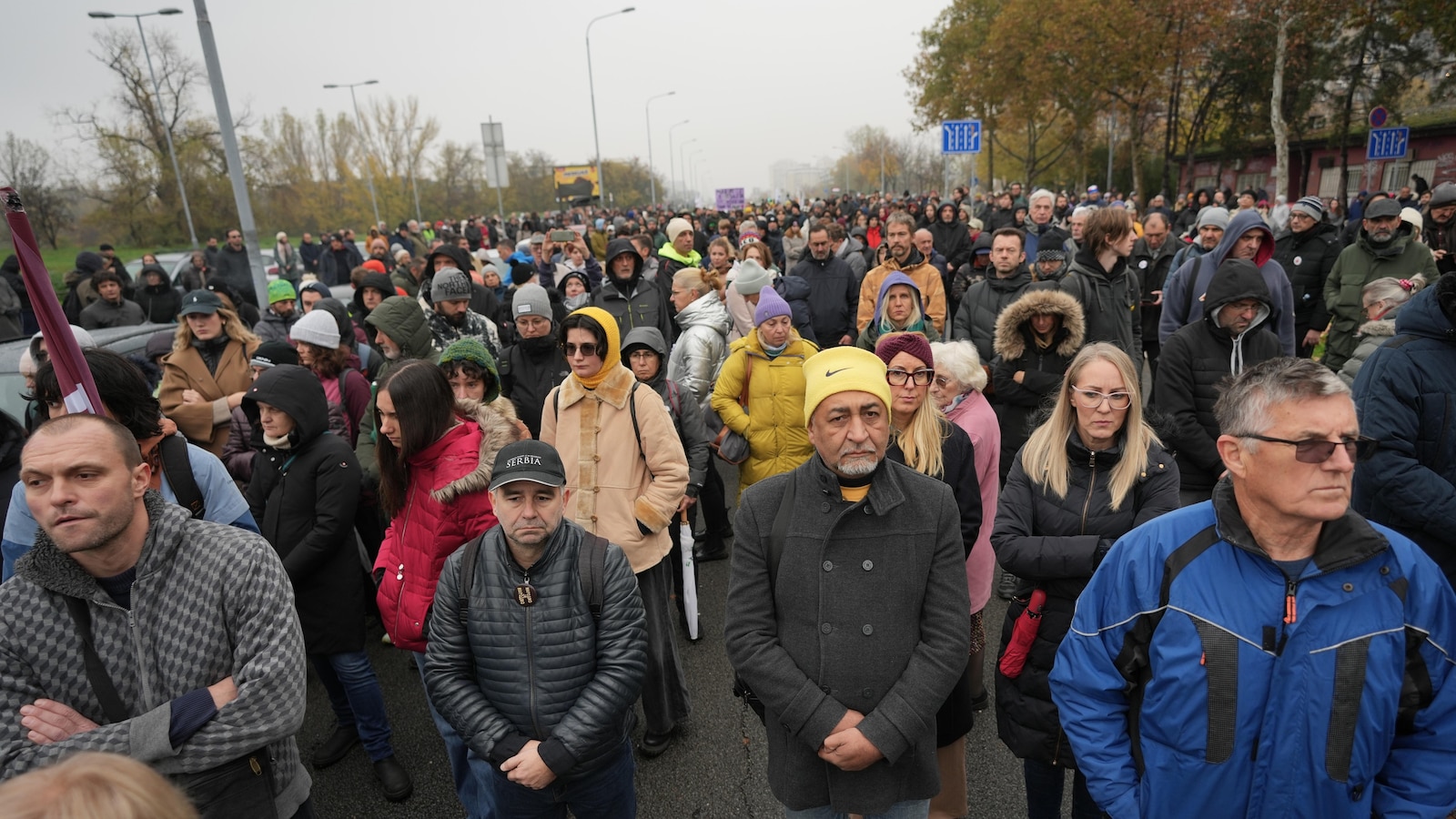
Mounting protests in Serbia Challenge Government Authority
Recent demonstrations in Belgrade highlight growing discontent with the Serbian government,fueled by concerns over corruption,political repression,and a tragic infrastructure failure. You’ve likely seen reports emerging about these escalating tensions, and understanding the context is crucial. Here’s a breakdown of the situation, what’s driving it, and what it means for the future of Serbia.
A Year of Unrest: From Tragedy to Protest
Initially sparked by a devastating train station collapse in novi Sad on november 1, 2024, the protests have evolved into a broader movement demanding systemic change. Sixteen people lost their lives when a renovated concrete canopy unexpectedly gave way, prompting accusations of negligence and corruption within state infrastructure projects – particularly those involving Chinese investment.
This tragedy acted as a catalyst, igniting a year-long wave of demonstrations lead primarily by university students. They’re calling for accountability and demanding an early parliamentary election, a request President Aleksandar Vučić has so far refused.
Demonstrations Escalate: A Show of Force and Resistance
Saturday saw a powerful display of protest as demonstrators marched through Belgrade,led by drummers and carrying large dummy heads representing perceived pro-government attackers. This symbolic act underscores the escalating animosity and the protesters’ determination to be heard.
Specifically, the march included these key actions:
* Demanding judicial accountability: Protesters gathered outside the city’s main court building, seeking justice for attacks on previous demonstrations.
* Confronting Loyalists: The march passed a camp established by Vučić’s supporters, which appears to be acting as a protective barrier around the presidential building.
* Targeting State Media: The demonstration culminated outside the headquarters of RTS, the public broadcaster, which protesters accuse of pro-government bias.
Government Response: Crackdowns and Repression
Vučić’s response to the protests has been firm, characterized by a crackdown on dissent. Police have repeatedly used force to disperse anti-government rallies, resulting in hundreds of detentions and job losses for those expressing support for the students.
This heavy-handed approach is raising serious concerns about the state of democratic freedoms in Serbia. It’s a pattern that’s drawing international scrutiny and hindering the country’s aspirations for European Union membership.
Serbia’s EU Ambitions and International Concerns
Serbia is formally seeking to join the European Union, but its progress has stalled. This is largely attributed to Vučić’s close ties with Russia and China, coupled with the aforementioned erosion of democratic principles.
Critics consistently accuse Vučić of widespread corruption and connections to organized crime – allegations he vehemently denies. However, these accusations contribute to a climate of distrust and fuel the ongoing protests.
What Does This Mean for You and the Future of Serbia?
The situation in Serbia is complex and evolving. It represents a critical juncture for the country, with the potential to reshape its political landscape and its relationship with the international community.
Here’s what you should keep in mind:
* The protests are not simply about one event. They represent a deep-seated frustration with corruption, lack of transparency, and the perceived authoritarian tendencies of the government.
* The government’s response is crucial. Continued repression could further radicalize the opposition and lead to increased instability.
* International pressure is mounting. The EU and other international actors are closely monitoring the situation and may consider further action if democratic norms continue to be violated.
Ultimately, the future of Serbia hinges on the government’s willingness to engage in meaningful dialog with the protesters and address their legitimate concerns. The coming weeks and months will be pivotal in determining whether the country can navigate this crisis and move towards a more democratic and prosperous future.
Worth a look